

Why Sad Music Feels Good
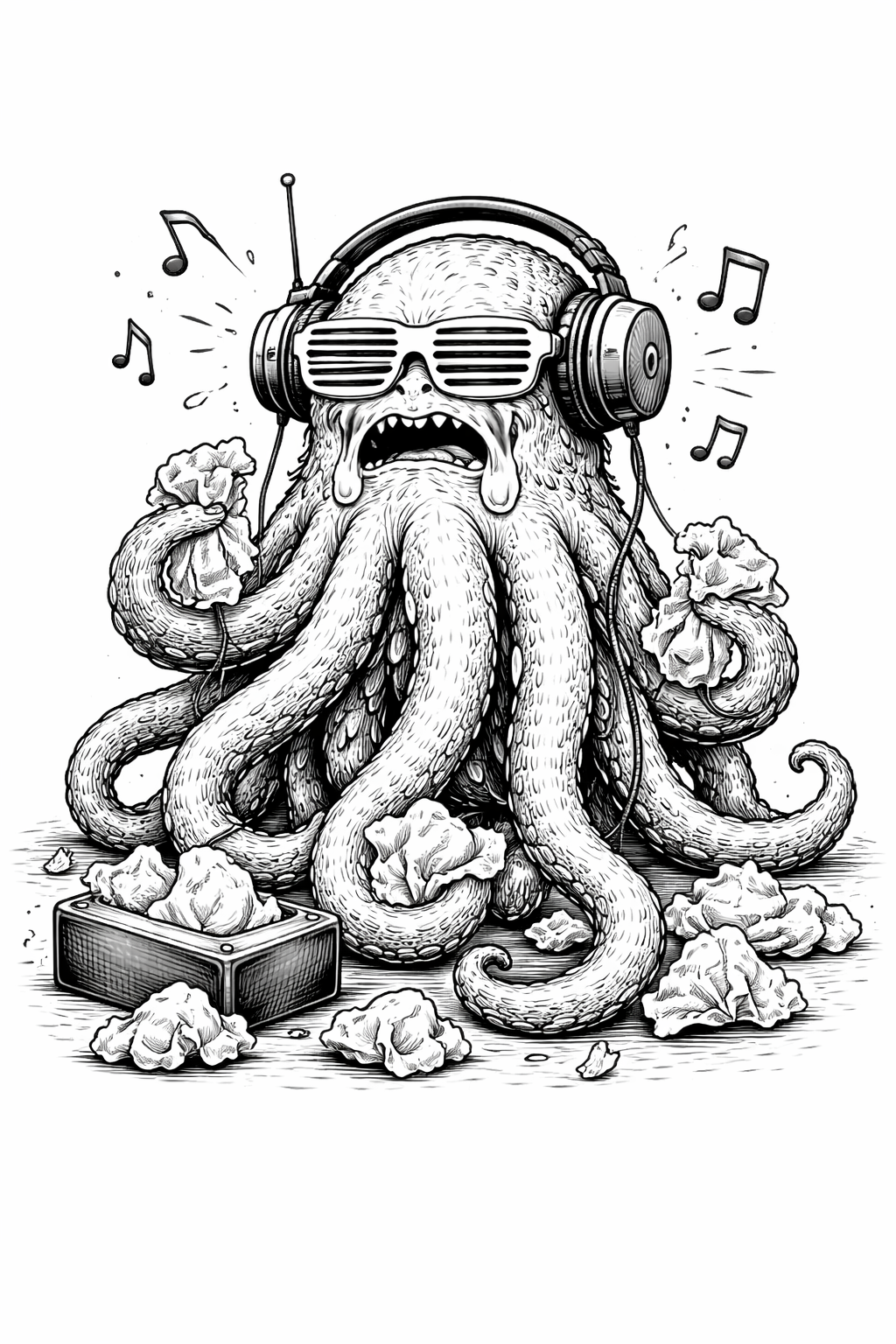
The paradox of enjoying emotional pain through sound
Monster on the Mic
Alright, real talk, crew.
Why is it that when you’re already down, you don’t reach for the happy bangers —
you reach for the song that hurts?
The one that cracks your chest open.
The one that sounds like it knows you.
That’s the paradox, baby:
sad music feels good — and not in a guilty pleasure way. In a deeply human way.
Let’s drop the needle on why.
🧠 First Principle: Your Brain Likes Safe Pain
Here’s the radical truth:
Sad music is emotional pain with the safety on.
You’re feeling:
loss
longing
regret
nostalgia
…but without real-world consequences.
Neuroscience shows that when we listen to sad music, the brain activates empathy and emotional regulation systems, not panic systems. You’re experiencing sadness, not being threatened by it.
That’s why a slow, minor-key melody can feel comforting instead of crushing.
When Hurt plays, you’re not John Hurt.
You’re witnessing pain — from a safe distance.
🧠 Brain effect: Controlled emotional simulation.
🎼 Minor Keys, Slow Tempos, Heavy Feels
Sad music tends to share a few musical traits:
Minor keys
Slower tempos
Descending melodies
Sparse arrangements
These features mirror the sound of human speech during sadness — lower pitch, slower pacing, less energy.
Your brain hears it and goes:
“Oh… this is familiar.”
That’s why something like Someone Like You hits so hard. Not because it’s dramatic — but because it sounds like emotional truth.
🧠 Brain effect: Emotional recognition → emotional resonance.
💔 The Catharsis Effect (AKA: Crying Is a Feature)
Sad music gives you permission to feel.
In daily life, we suppress emotions constantly:
be professional
don’t be dramatic
keep it together
Sad songs say, nah — let it out.
Studies show that people who enjoy sad music often report relief, not distress, afterward. That’s catharsis — emotional release through art.
When Everybody Hurts swells, it’s not trying to fix you.
It’s sitting with you.
🧠 Brain effect: Emotional purging without social risk.
🕰️ Nostalgia: Sadness With a Time Machine
Here’s where it gets extra spicy.
Sad music often overlaps with nostalgia, which is emotionally complex:
happy memories
tinged with loss
wrapped in time
That’s why a track from your past can feel both warm and devastating.
Think of how 1979 feels — it’s not sad on paper, but it sounds like remembering something you can’t go back to.
🧠 Brain effect: Memory + emotion = amplified feeling.
🤝 You’re Not Alone (Even When You’re Alone)
One of the sneakiest reasons sad music feels good?
It reduces loneliness.
When you hear a song that articulates your feelings better than you can, your brain interprets it as emotional companionship.
Someone else felt this.
Someone else survived it.
That’s why heartbreak anthems work. That’s why people cling to songs during grief.
When Fix You plays, it’s not about fixing — it’s about being there.
🧠 Brain effect: Social bonding without social interaction.
🎛️ Why Happy Music Can Feel Wrong Sometimes
Here’s the kicker.
Happy music demands energy.
Sad music meets you where you are.
If you’re already emotionally low, upbeat music creates cognitive dissonance — it asks you to feel something you can’t access yet.
Sad music doesn’t ask.
It understands.
That’s why the sad playlist comes out at night.
That’s why nobody cries to club music at 3am unless something’s gone terribly wrong.
🎤 Monster Sign-Off
So nah — you’re not broken for loving sad songs.
You’re not wallowing.
You’re not addicted to misery.
You’re using music the way humans always have:
to process
to connect
to survive
Sad music doesn’t make you weaker.
It makes the weight bearable.
Stay radical.
Feel the feels.
And remember — sometimes the best beats don’t lift you up…
They sit down next to you in the dark.
— Music Monster 🎧🐙
📚 Sources & Further Reading
Huron, D. — Why Do We Like Sad Music?
Taruffi & Koelsch — The Paradox of Sad Music
Levitin, D. J. — This Is Your Brain on Music
Zatorre & Salimpoor — Music, Emotion, and Dopamine
Psychology Today — Why Sad Songs Make Us Feel Good