

Failure Without Consequence
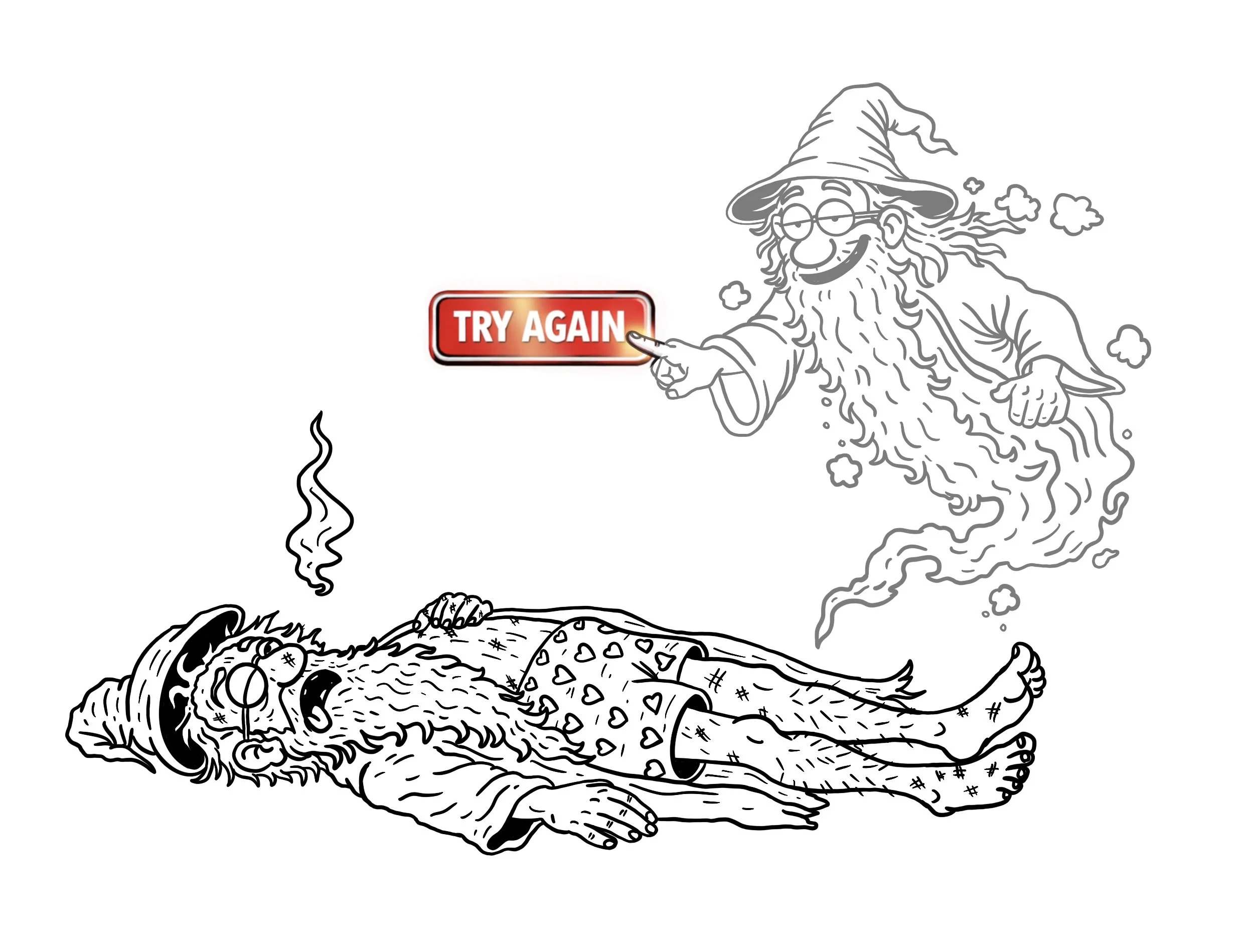
Why Dying in Games Feels Productive While Failing in Life Doesn’t
I’m The Game Wizard and today we’re talking about failure.
Specifically:
why dying in games feels like progress, but failing in real life feels like punishment.
You can die 47 times in a boss fight and feel closer to success.
Miss one deadline in real life and suddenly you’re questioning your entire trajectory.
Same word. Very different experience.
That’s not accidental.
Ready to keep going?
What “Failure” Means in Games
In most games, failure is non-terminal.
You die. You respawn. You try again, but with more information than before.
Failure is framed as:
feedback
data collection
practice
You didn’t “lose.” You learned something.
Game Over is a different thing, but let’s not focus on that….
Games treat failure like a checkpoint, not a verdict and that changes everything.
How You Know a Game Handles Failure Well
You’re probably in a “safe failure” system if:
Dying doesn’t erase progress
The cost of failure is time, not identity
You immediately want to retry
You understand why you failed
The game subtly says “yeah, that happens”
This is why games like Dark Souls, Celeste, or roguelikes like Hades can be brutally hard without being discouraging.
You’re failing constantly, but it never feels final.
Just a quick visit to the hospital and we’re fine!
Failure as Feedback (Not Punishment)
Psychologically, this aligns with learning-oriented failure.
Research on learning environments shows that people improve more when failure is:
expected
informative
low-stakes
Carol Dweck’s work on growth mindset demonstrates that when failure is framed as part of learning, people persist longer and improve more effectively (Dweck, 2006).
Games do this instinctively.
Every death answers a question:
Wrong timing
Bad positioning
Greedy play
Poor build
The game isn’t judging you. It’s coaching you aggressively.
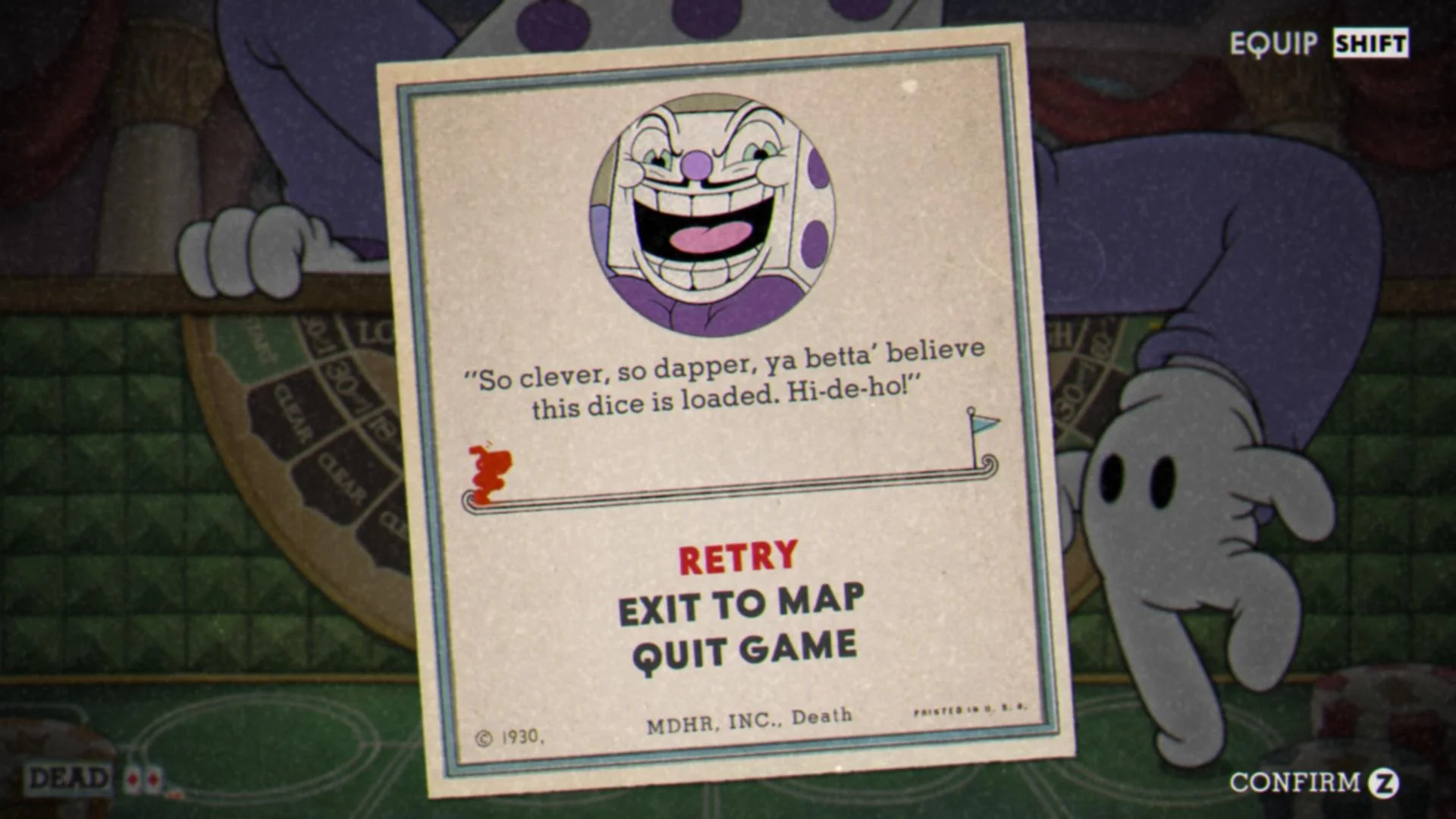
Get used to seeing this screen a lot.
Why This Feels Good (Yes, Really)
Here’s the key difference:
In games, failure is effort-preserving.
You keep:
your knowledge
your muscle memory
your progress checkpoints
your sense of competence
Psychologically, this aligns with self-efficacy theory (Bandura, 1977), which shows that people are more motivated when they believe their actions meaningfully affect outcomes.
Every death proves:
“I can still win this.”
That belief matters more than success itself.
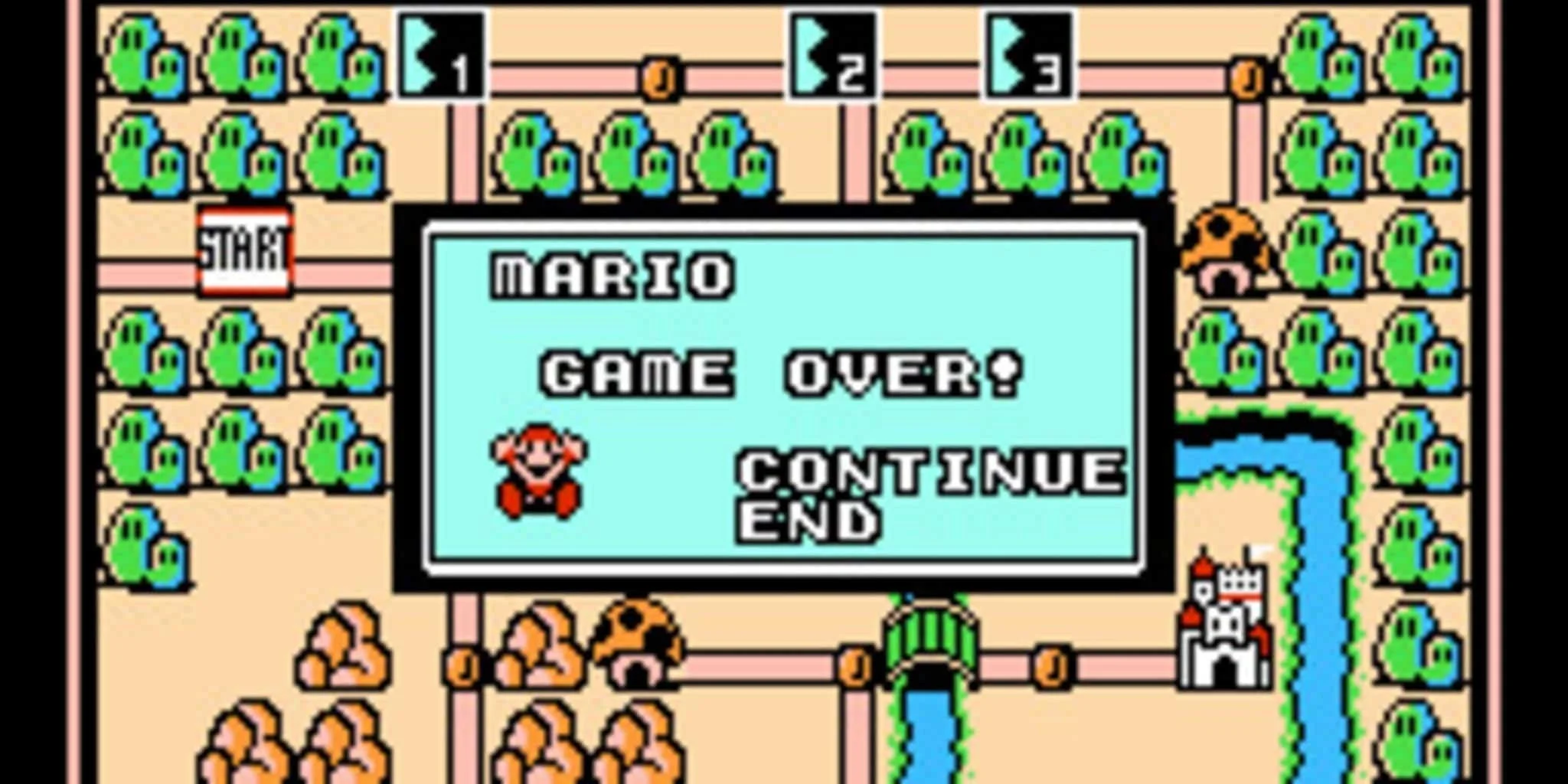
You gotta try again! You just gonna leave Mario hanging??
Why Failure in Life Hits Differently
Real-world failure is usually:
socially visible
poorly explained
costly
irreversible
Failing an exam, job interview, relationship, or project often comes with:
judgment
lost opportunity
unclear feedback
delayed recovery
There’s no respawn screen, no patch notes explaining what went wrong, and no “Try Again” button glowing in the corner.
So instead of data, failure becomes identity-threatening.
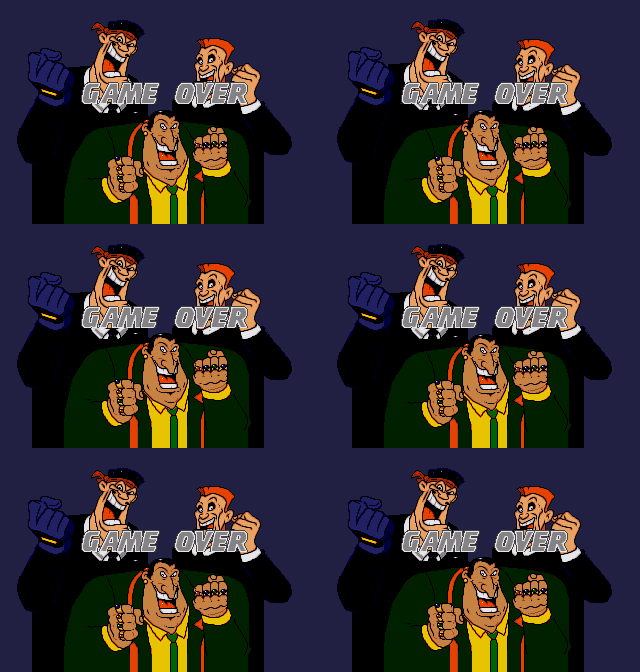
Real life feels like this sometimes.
Games Remove the Ego Tax
Games do something life rarely does:
They separate failure from self-worth.
You didn’t fail because you’re bad.
You failed because:
your timing was off
your build was wrong
the pattern wasn’t learned yet
This lines up with research on attribution theory (Weiner, 1985), which shows that people cope better when failure is attributed to controllable factors rather than personal deficiency.
Games always give you controllable factors.
Life… not so much.
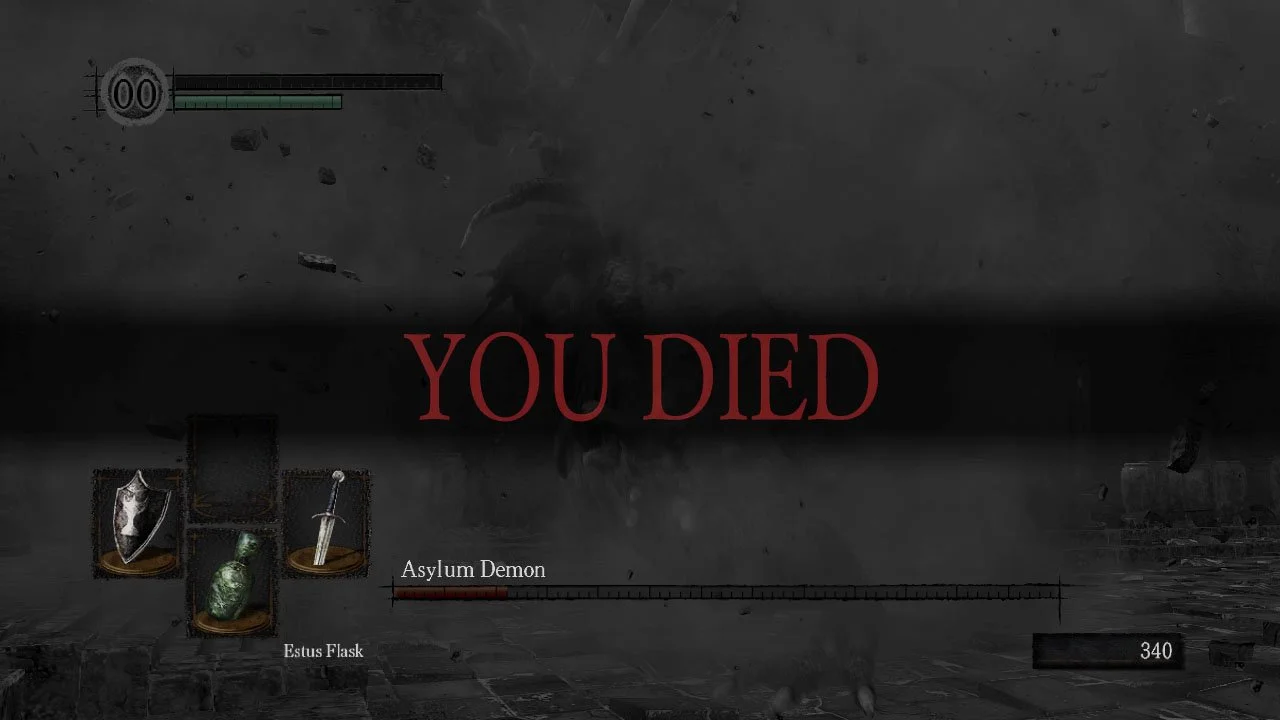
Uhg….this screen again.
Why “You Died” Isn’t an Insult
That famous YOU DIED screen works because it’s blunt and neutral.
No commentary.
No shame.
Just information.
It doesn’t say:
“You’re bad.”
It says:
“That didn’t work.”
Then it hands control back to you. That’s an incredibly generous design decision.
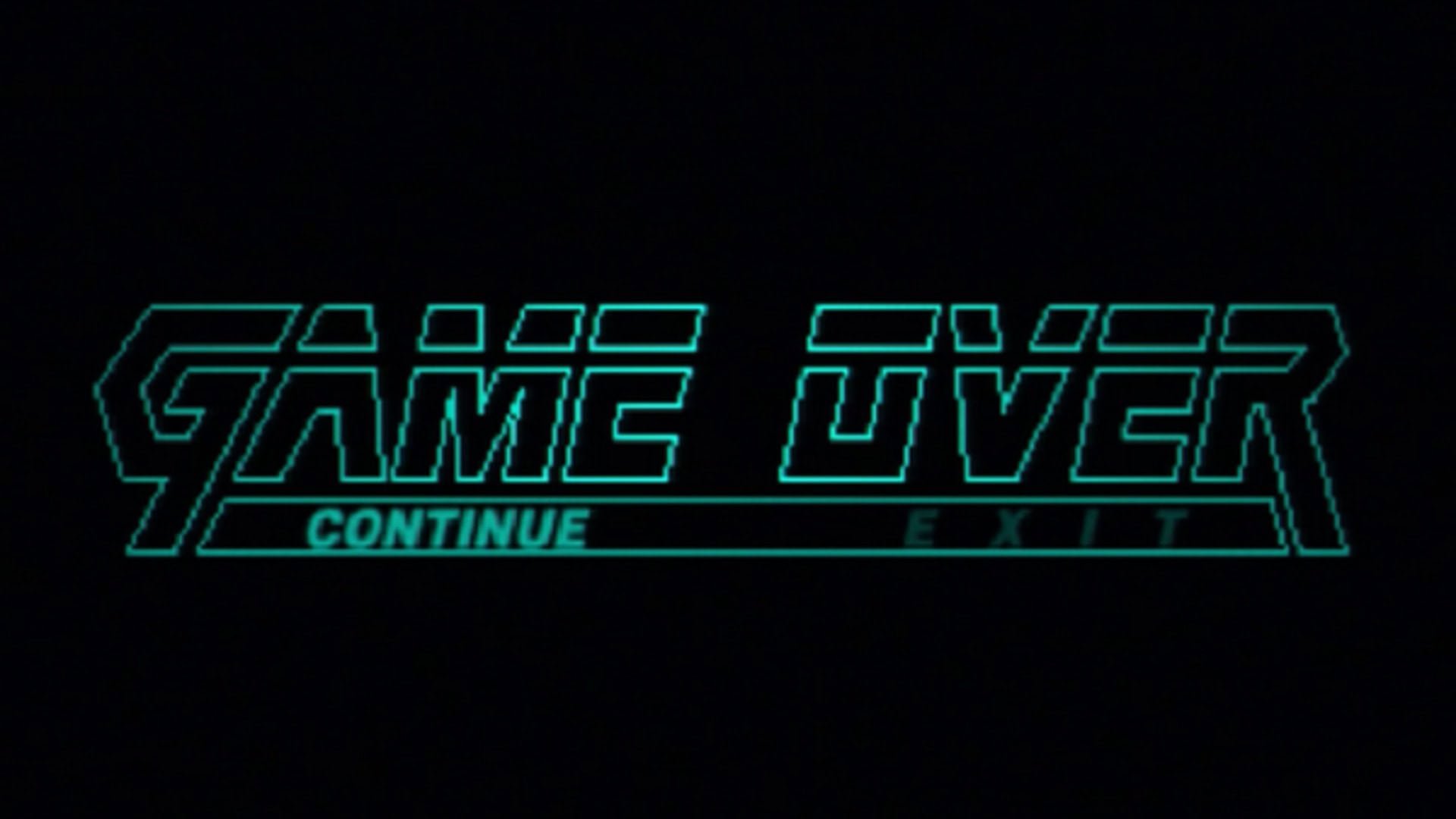
The Real Design Trick
Games make failure productive by doing three things consistently:
Failure is fast – minimal downtime
Failure is instructive – clear cause-and-effect
Failure is reversible – nothing essential is lost
When those three conditions exist, failure becomes motivating instead of discouraging.
Remove any one of them, and failure turns toxic.
Sound familiar?
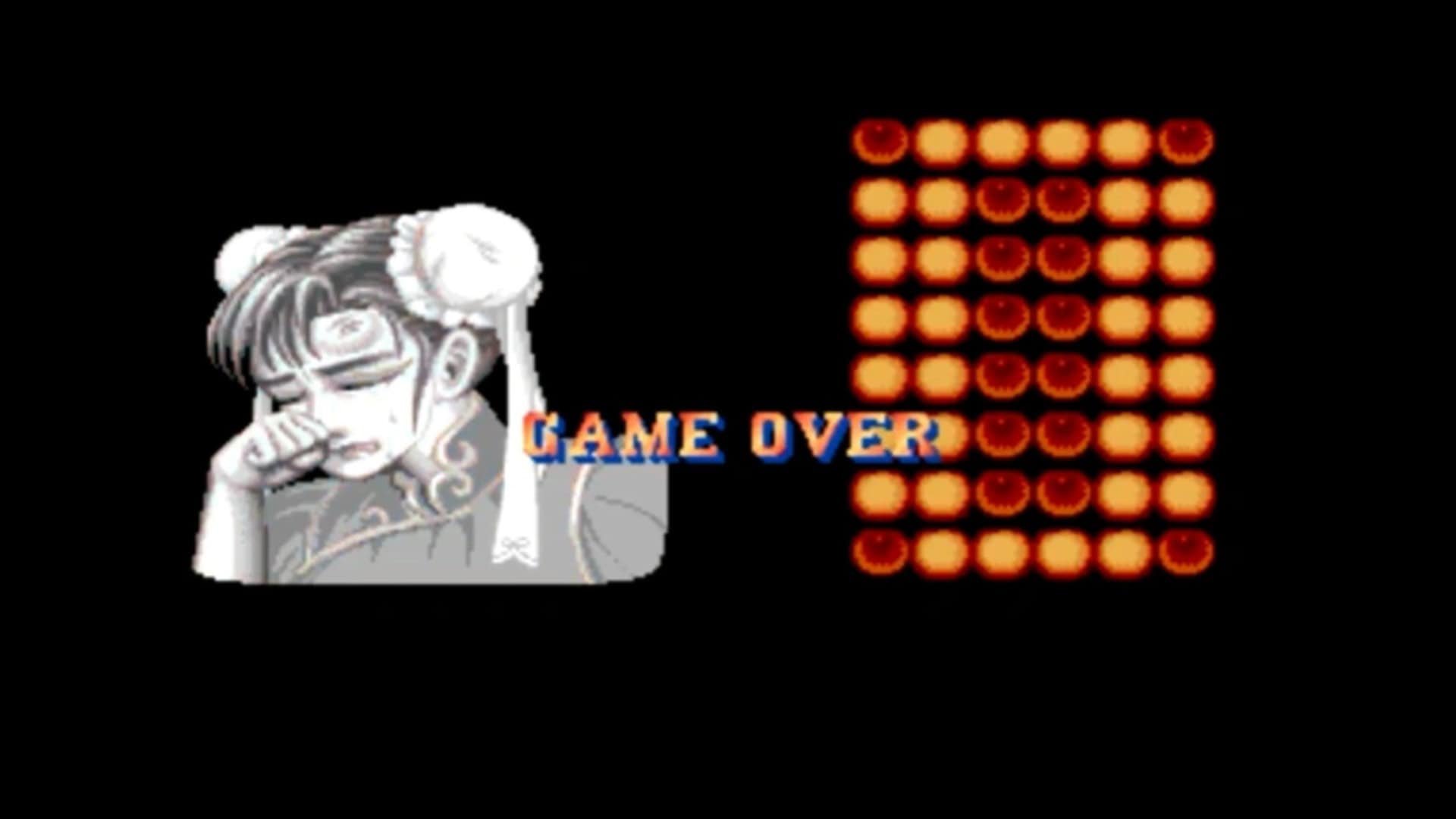
So Why Can’t Life Work This Way?
It can — sometimes.
But life rarely:
gives immediate feedback
isolates variables cleanly
protects your sense of competence
Games are optimized systems.
Life is a messy sandbox with bad tutorials.
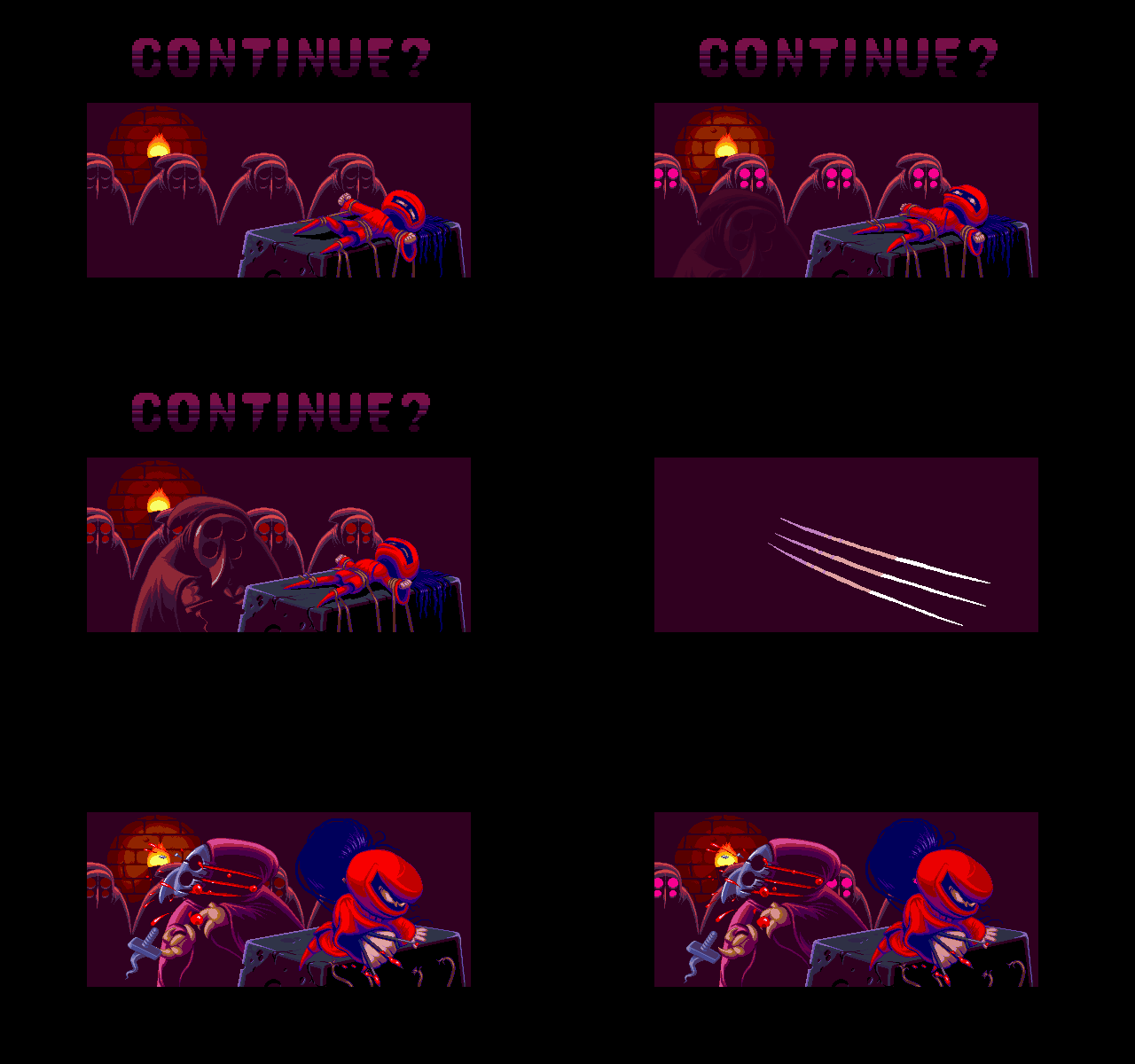
We ain’t done yet!
Final Thought
Games teach us that failure isn’t the opposite of success.
It’s the engine of it.
If failing in a game feels productive, it’s because the system respects your time, your effort, and your ability to improve.
If failing in life feels devastating, it’s often because the system doesn’t.
That’s not a personal flaw.
That’s life and it tends to be a bad design.
That’s today’s lesson. Save your progress.
References
Bandura, A. (1977). Self-Efficacy: Toward a Unifying Theory of Behavioral Change. Psychological Review.
Dweck, C. (2006). Mindset: The New Psychology of Success.
Weiner, B. (1985). An Attributional Theory of Achievement Motivation and Emotion. Psychological Review.
Juul, J. (2013). The Art of Failure: An Essay on the Pain of Playing Video Games.