

The Earworm Infection
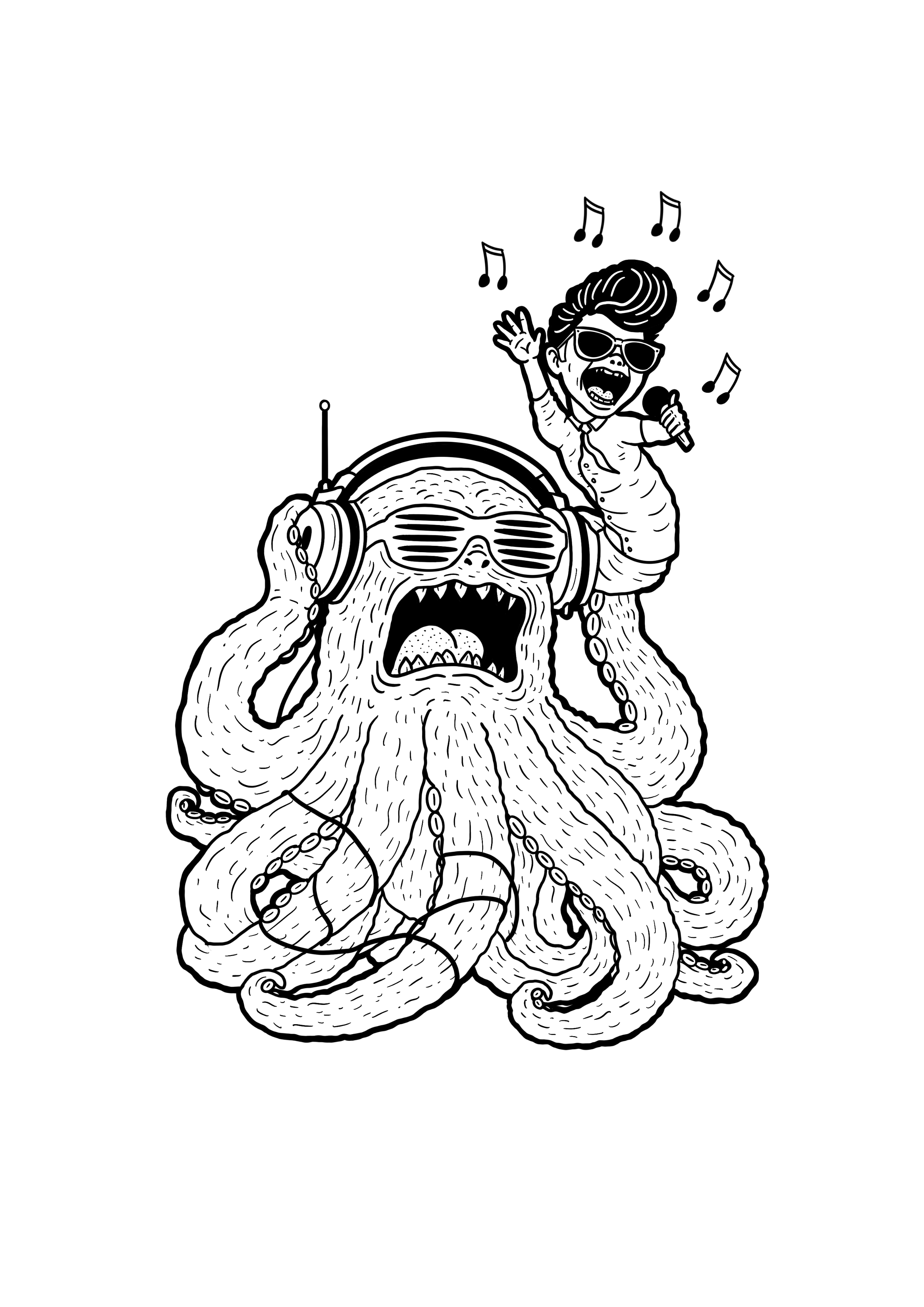
Why certain melodies hijack your brain and refuse to leave
Monster on the Mic
Yo!
Ever notice how your brain will ignore your taxes, your emails, and your responsibilities, but absolutely refuse to forget a melody you heard once in a grocery store?
That’s not weakness. That’s neuro-music warfare, baby.
Welcome to the earworm infection! When a tune sets up shop in your head and starts looping without a permit.
Radical? Yes.
Accidental? Not even close.
What an Earworm Really Is
An earworm is what psychologists call involuntary musical imagery which are short fragments of music that replay automatically, usually 15–30 seconds long, and almost always the most compressed, memorable part of a song.
Your brain isn’t replaying the whole track. It’s replaying the problem.
Think of it like a sentence that ends mid-thought. Your mind keeps looping because it wants resolution.
The First Trigger: Repetition Without Resolution
The fastest way to hijack a brain is to repeat a musical phrase without fully resolving it.
That’s why minimal, looping motifs work so well — your mind keeps trying to finish something that never quite ends.
A perfect example is the whisper-loop in Can’t Get You Out of My Head by Kylie Minogue, not because of the lyrics, but because the melody cycles endlessly without emotional closure.
Your auditory cortex stays active, waiting for a conclusion that never arrives.
The Second Trigger: Simplicity With One Weird Thing
Earworms thrive on simple structures, but not boring ones.
The melody has to be easy enough to remember, yet contain one unexpected twist:
a strange rhythm
a sudden leap
a tonal shift
That’s why even a children’s song like PINKFONG’s Baby Shark can become mentally radioactive. The melody is painfully simple, but the relentless repetition turns it into a cognitive trap.
Low effort + high exposure = permanent storage.
The Third Trigger: Idle Brains
Earworms don’t attack when you’re focused. They tend to strike when your mind goes into default mode.
Common infection zones:
Showering
Driving
Lying in bed
Zoning out at work pretending to listen
That’s why looping piano riffs, like the arpeggiated motion in Clocks by Coldplay, tend to surface when you’re mentally drifting.
The default mode network fills silence with pattern and memory.
The Dopamine Trap
Some earworms stick not because they’re unresolved, but because they feel good.
Songs with big emotional payoffs train your brain to replay them the way it replays:
jokes
memories
wins
That massive melodic leap in the chorus of Take On Me by A-Ha?
That’s dopamine doing a victory lap.
The brain replays pleasure to reinforce it.
Why Modern Pop Is Basically Earworm Engineering
This isn’t accidental.
Modern music is built for:
short attention spans
partial listening
interruption (ads, scrolling, skipping)
That means that Hooks arrive faster, Choruses repeat more and Melodies fit comfortably inside the average vocal range.
The Result?
Songs that survive being cut off mid-play and continue inside your skull.
That’s not art versus science. That’s art using science.
Can You Kill an Earworm?
Sometimes.
Monster-approved tactics:
Listen to the entire song (your brain wants closure)
Replace it with something emotionally neutral
Chew gum (seriously — it disrupts internal vocal rehearsal)
Yes, chewing gum fights earworms. The 90s DJ community calls that hard science.
Monster Sign-Off
So next time a melody loops in your head like a broken record, don’t fight it.
Your brain isn’t malfunctioning.
It’s doing what it evolved to do. To detect patterns, replay rewards, and chase resolution.
Some beats drop once. Some beats never leave.
Stay radical. Protect your brainwaves. And remember that the catchiest songs don’t end… they echo.
— Music Monster
Sources & Further Reading
Levitin, D. J. This Is Your Brain on Music
Huron, D. Sweet Anticipation
Williamson et al., Psychology of Music — Involuntary Musical Imagery
Zatorre & Salimpoor — Music, Reward, and Dopamine
Scientific American — Why Songs Get Stuck in Your Head