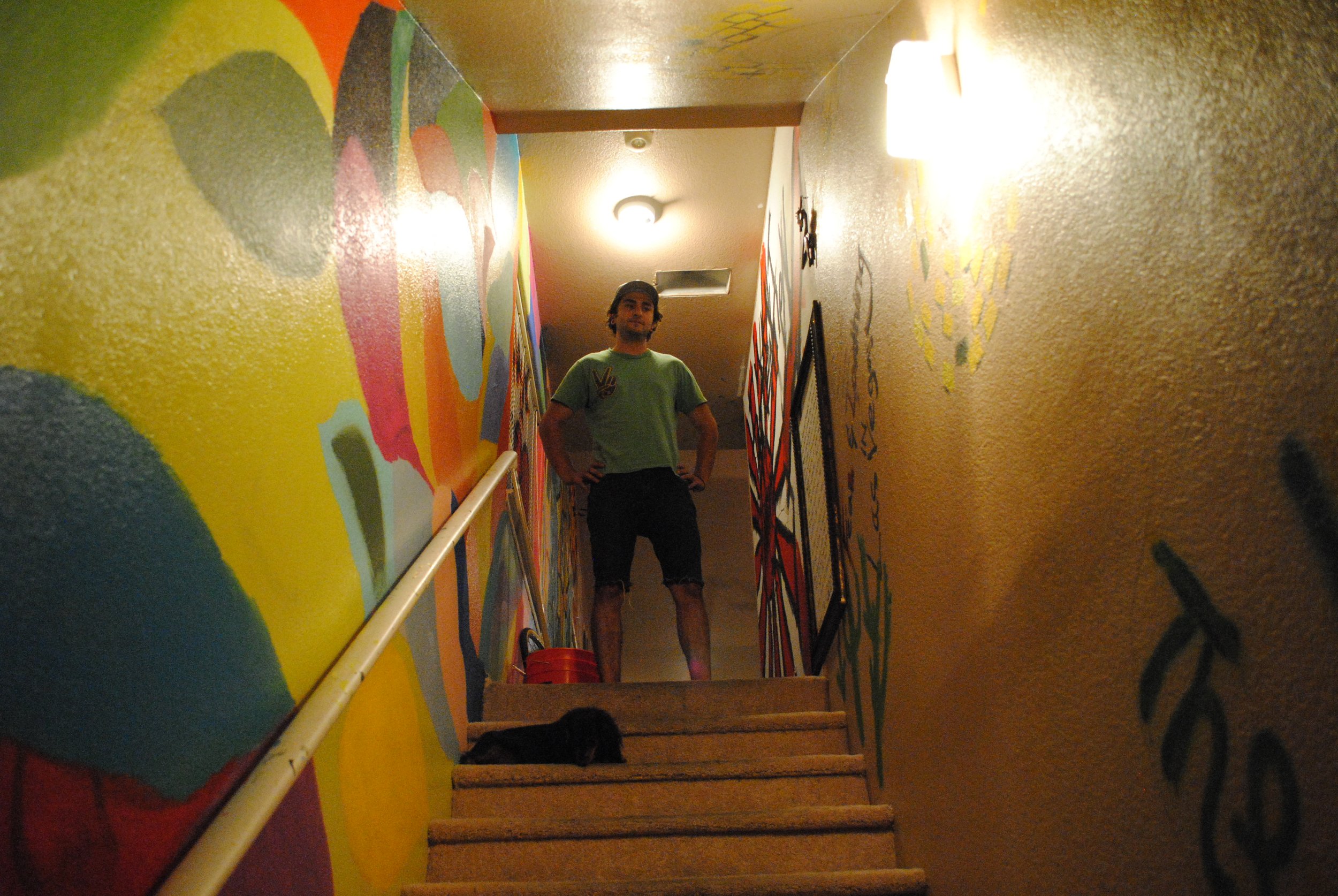
In the mid-2000s, a friend of mine was temporarily taking care of an apartment in Las Vegas. The owner was gone, the timeline was unclear on when they would return, and the space sat in that strange in-between state where responsibility loosens just enough for ideas to happen, so naturally, he invited people over.
Not a party in the usual sense, but an open invitation to artists around the city for illustrators, painters, friends of friends, and anyone who wanted to leave something behind. The walls became surfaces. Pieces overlapped. Styles collided. There was no curation, no hierarchy, no plan for preservation. It was understood, quietly, that this wouldn’t last.
The apartment filled up fast.
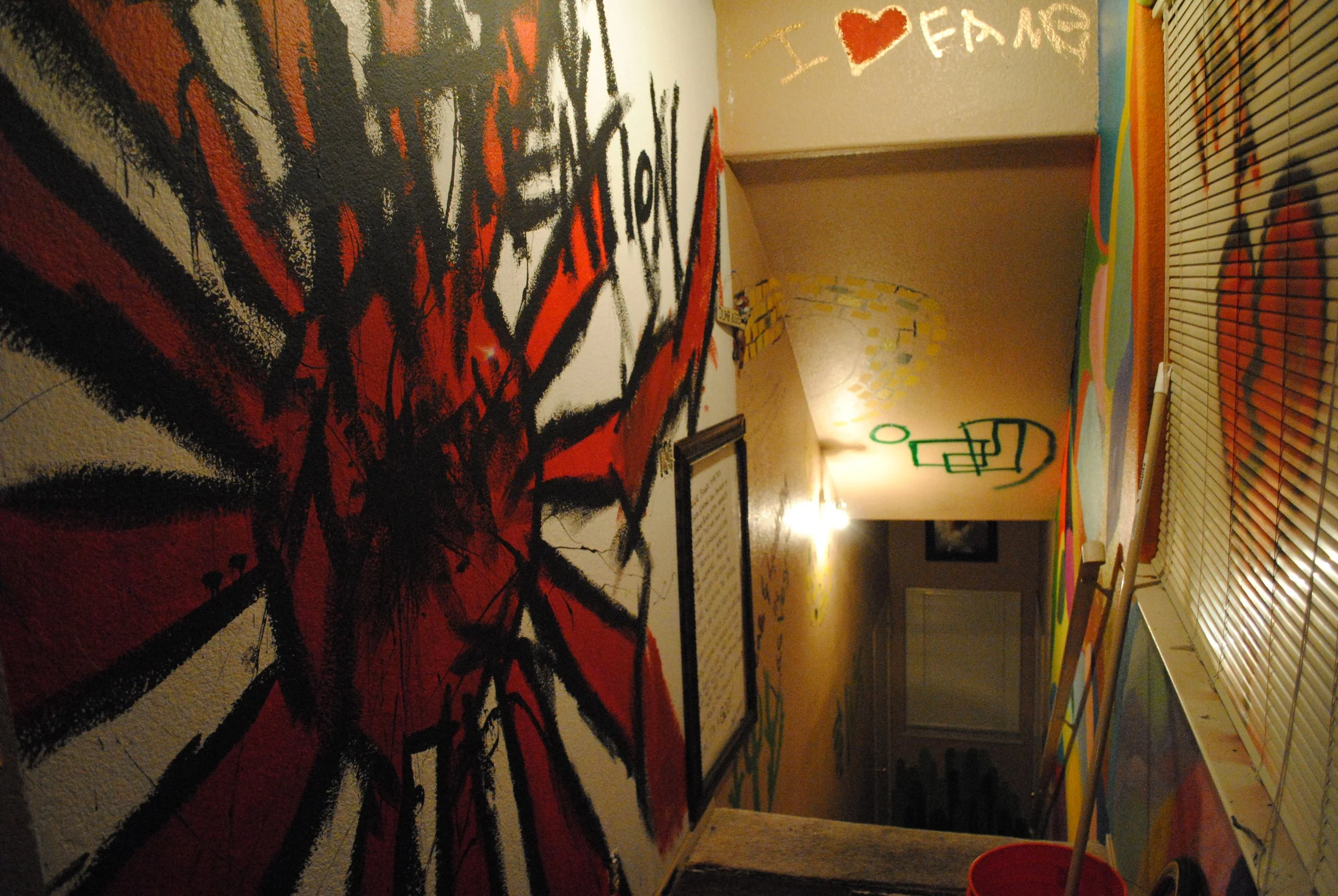
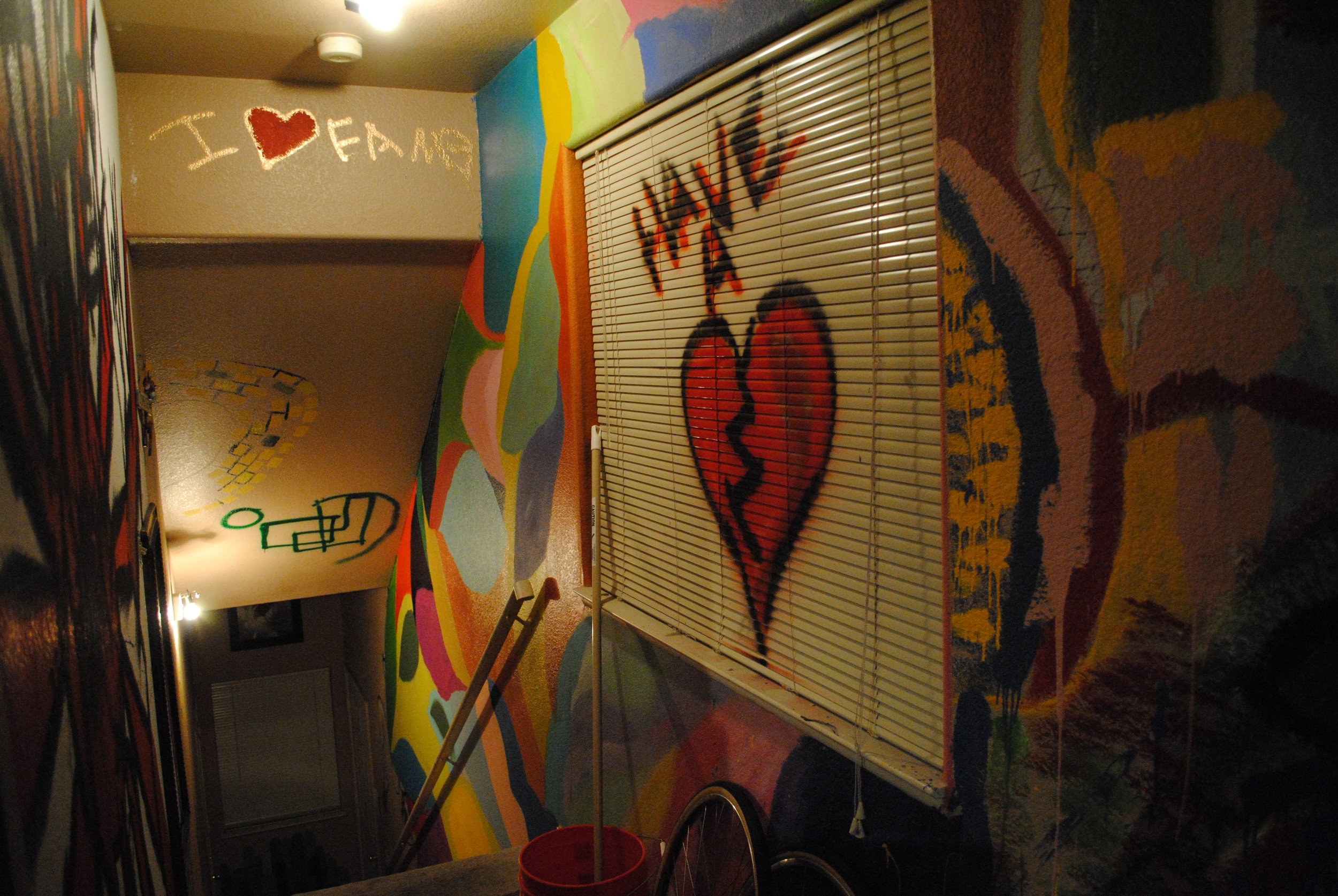
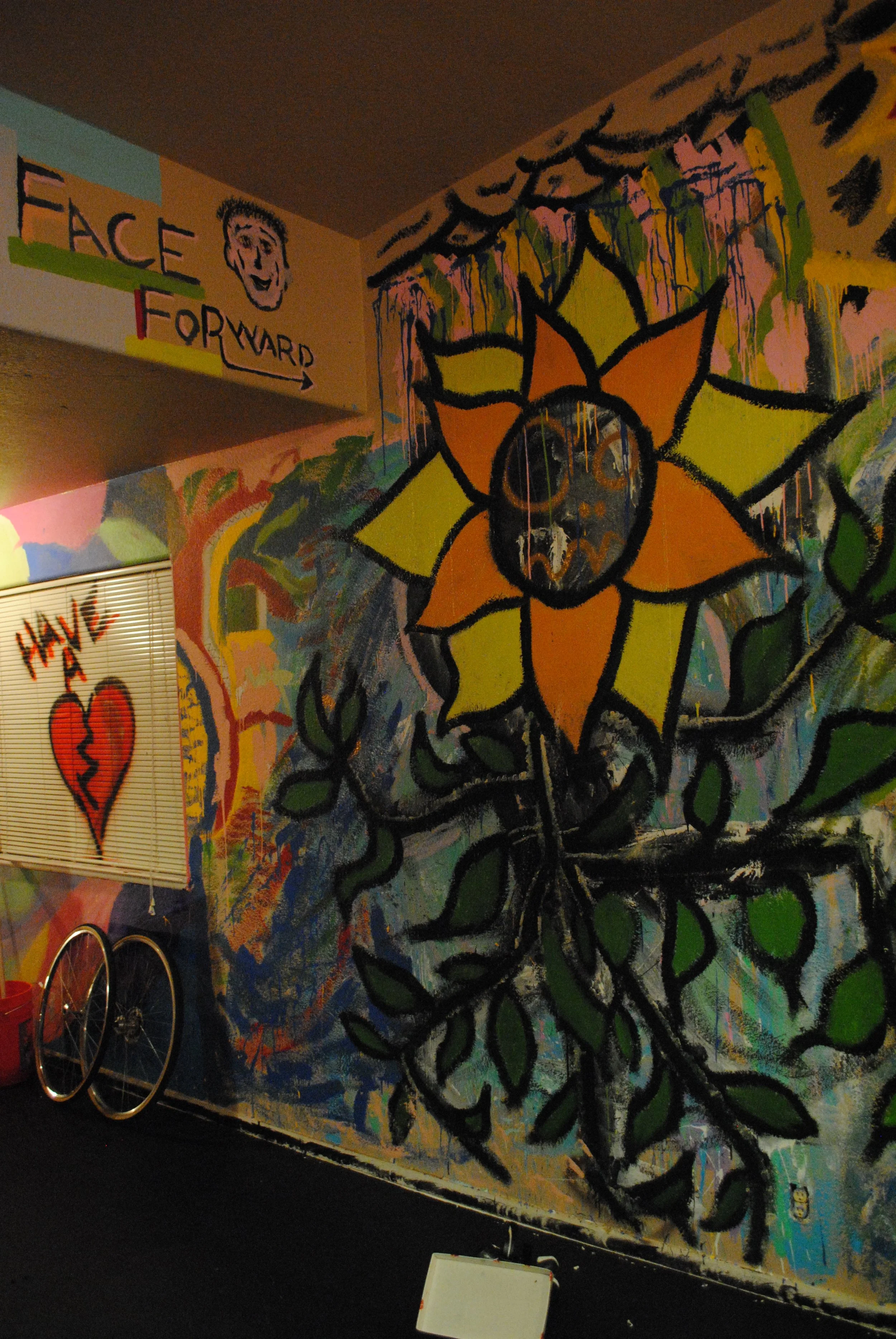
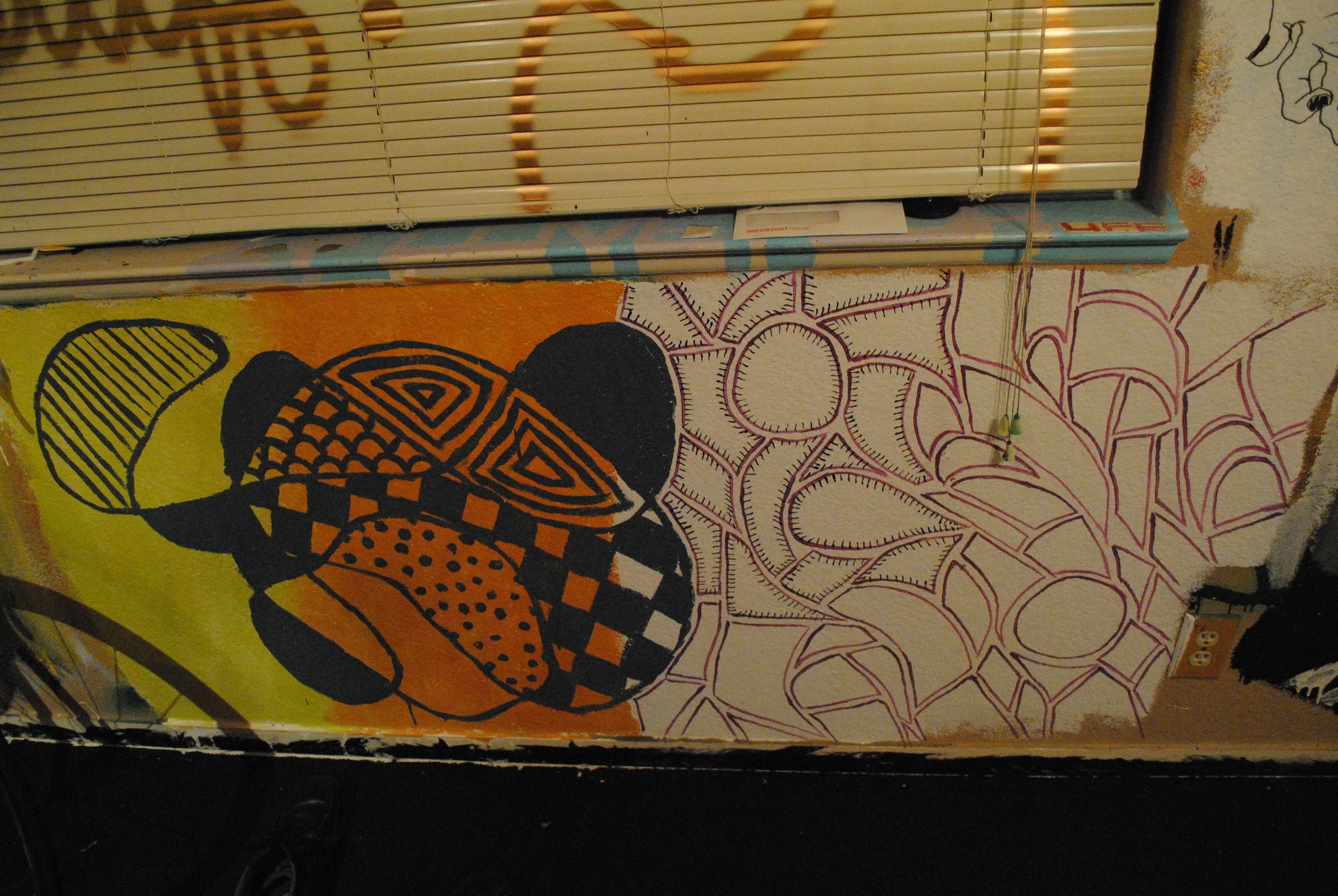
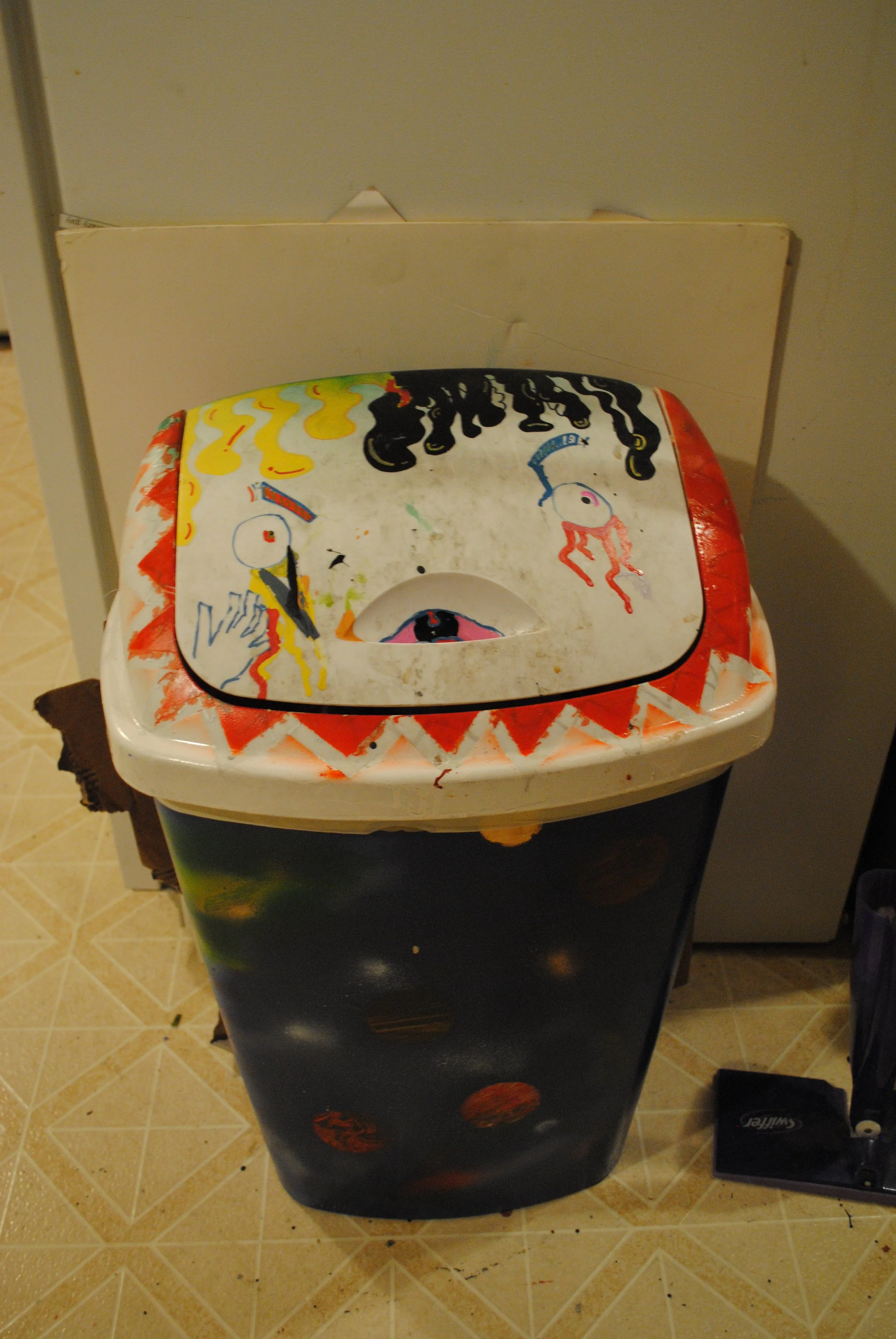
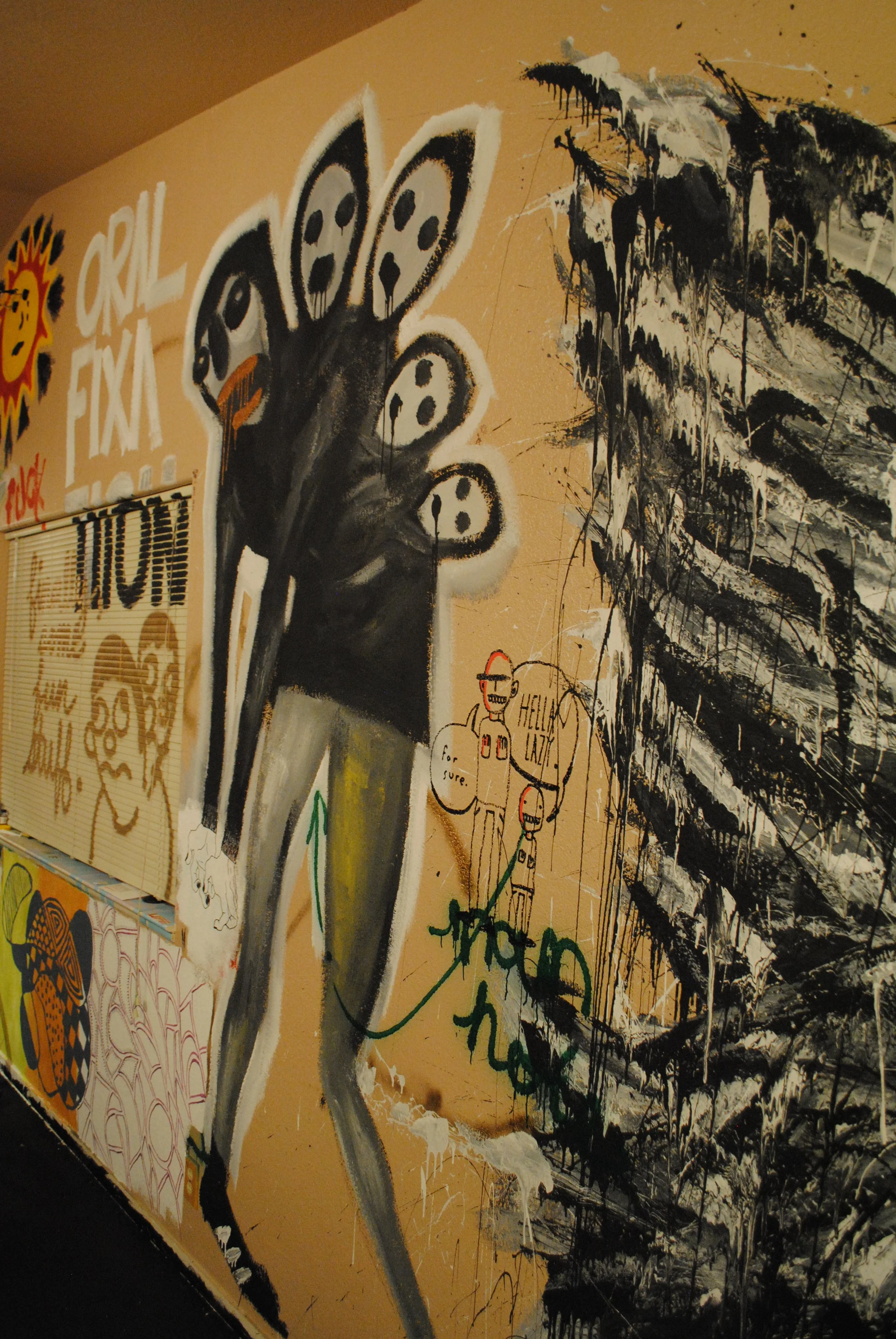
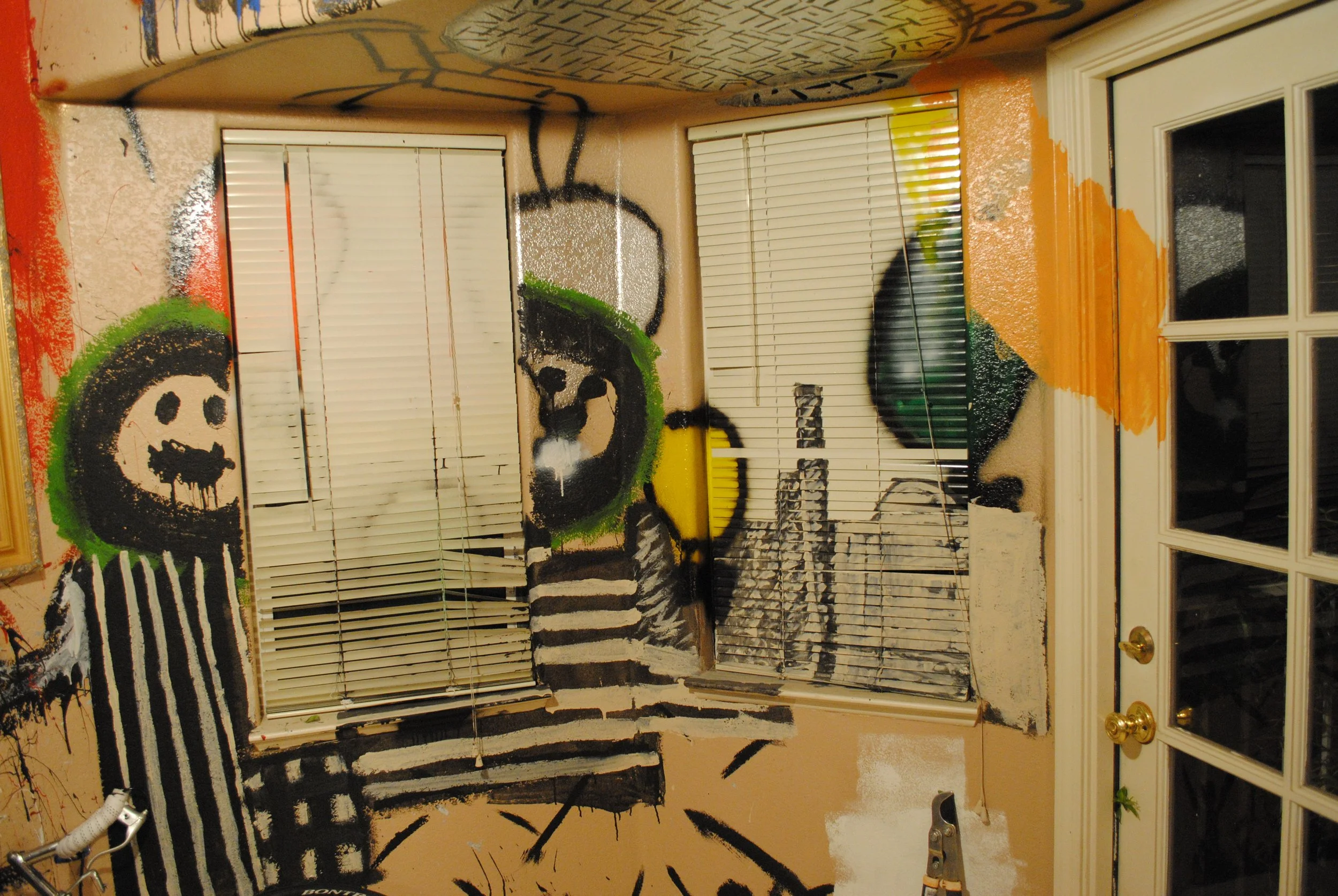
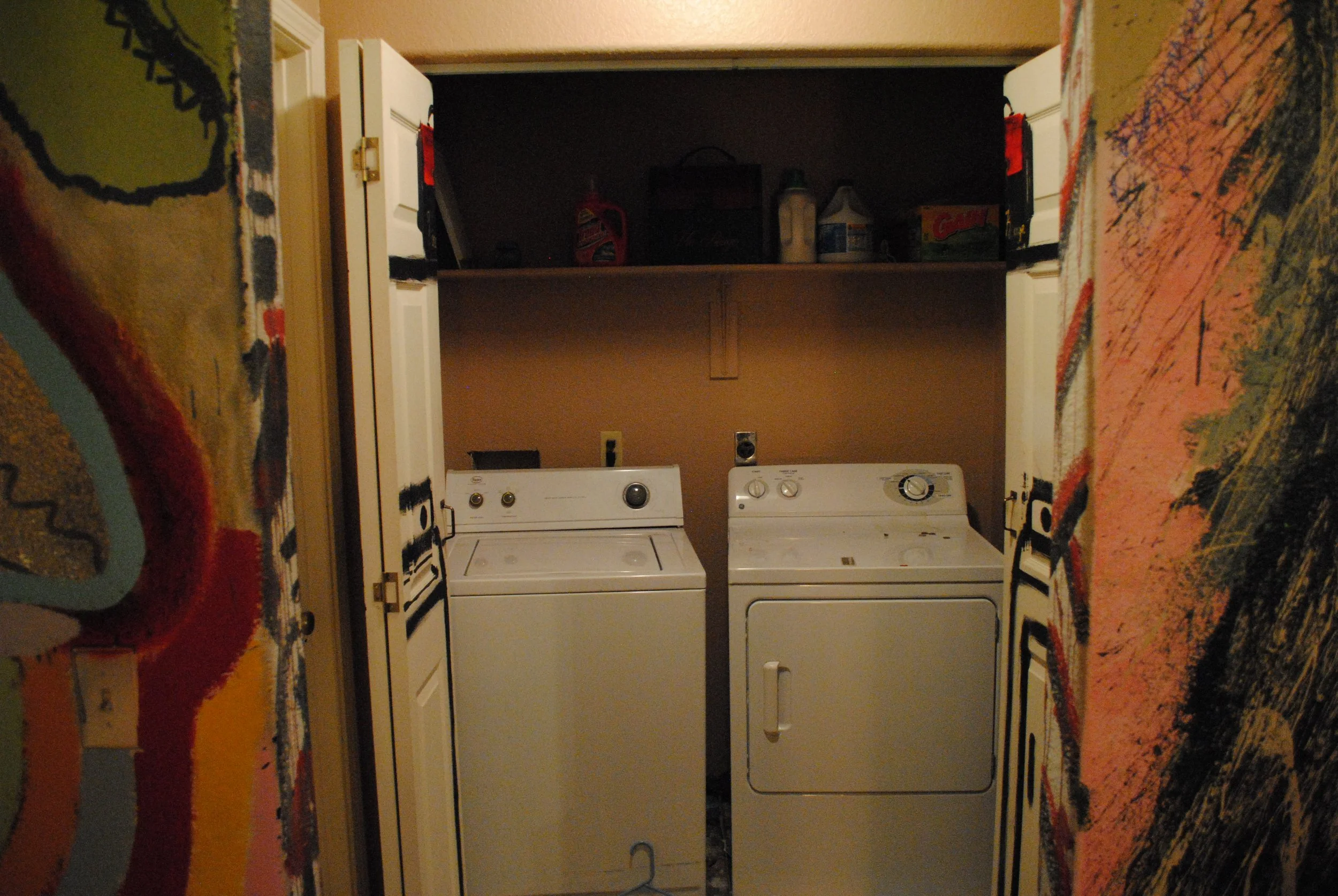
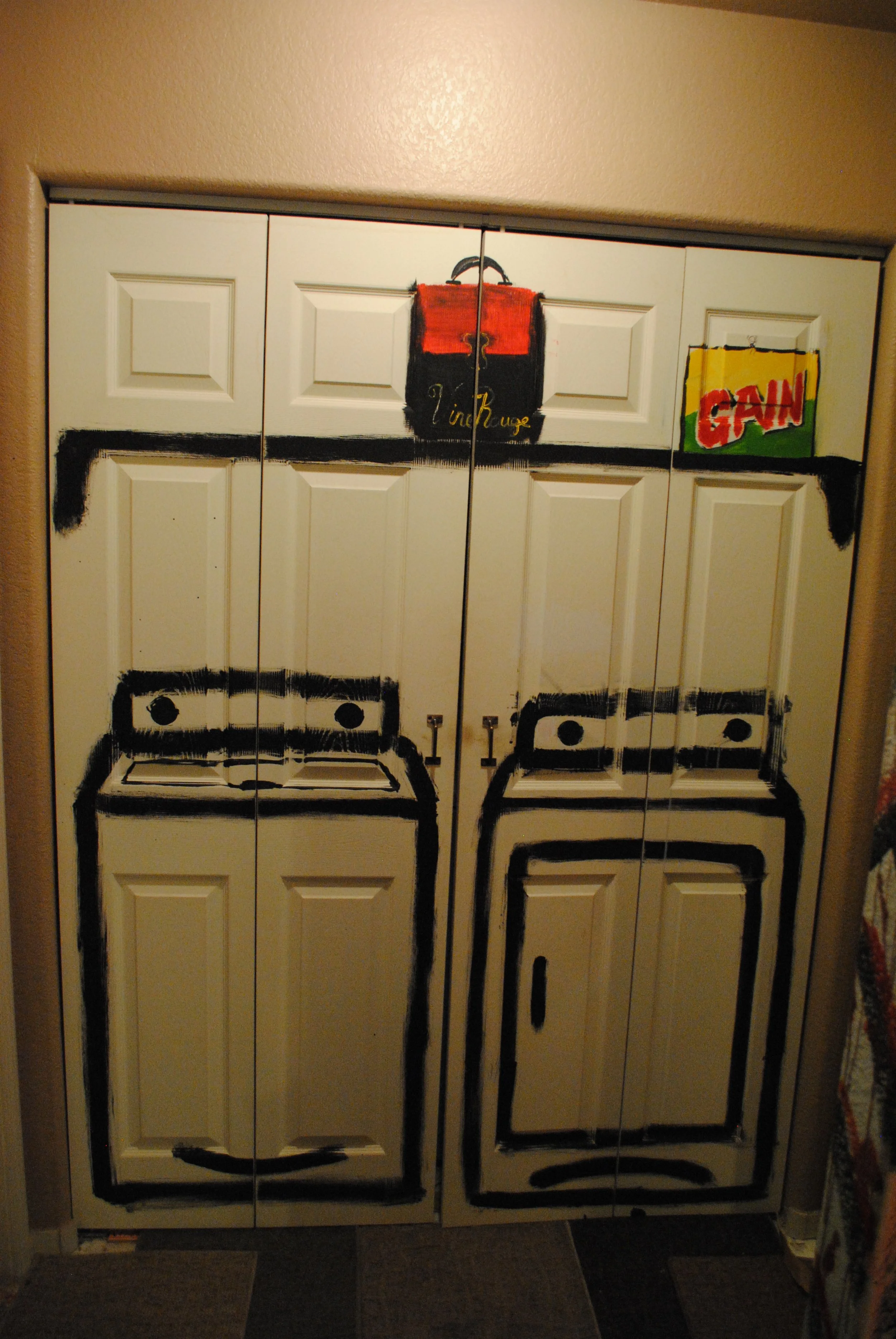
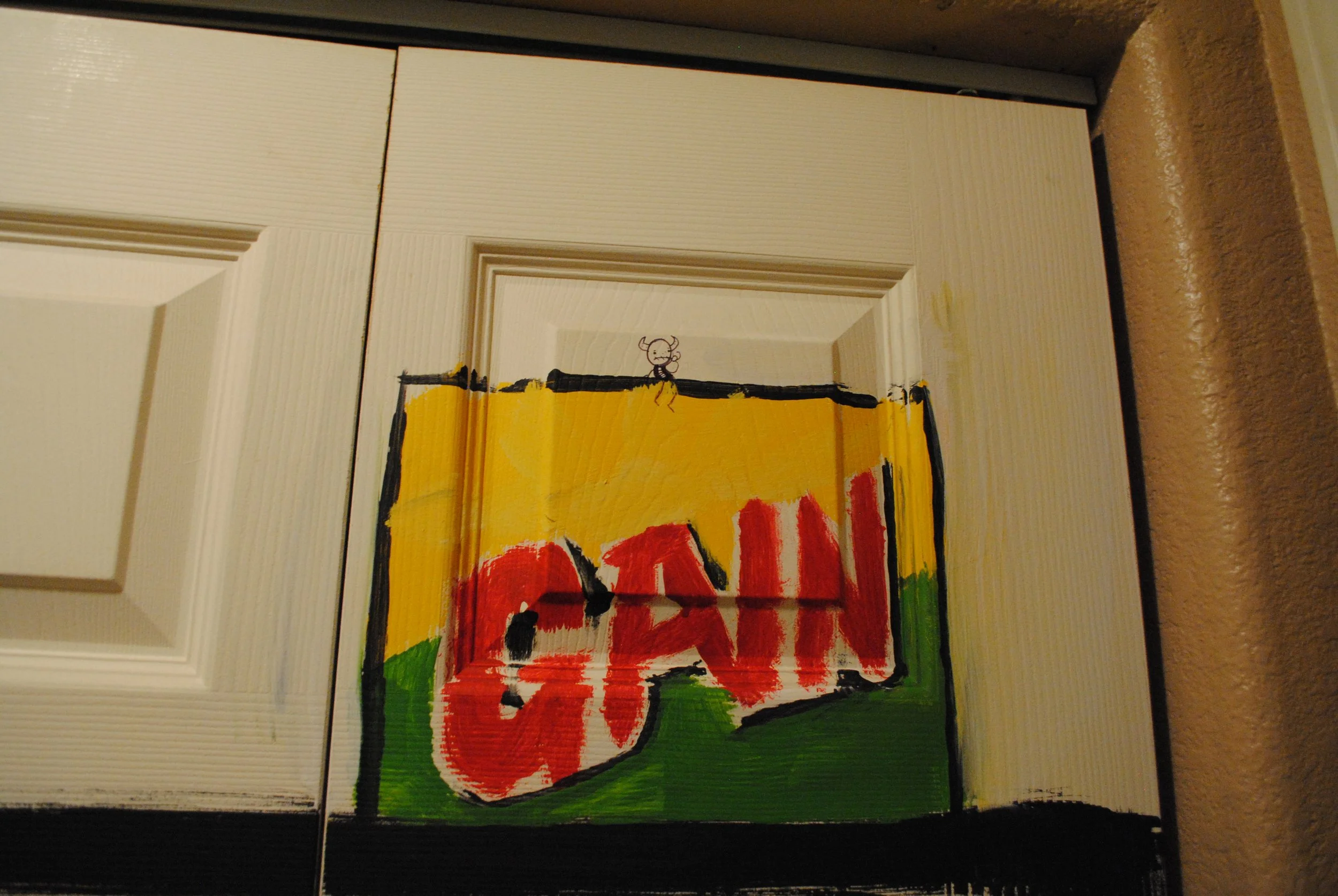
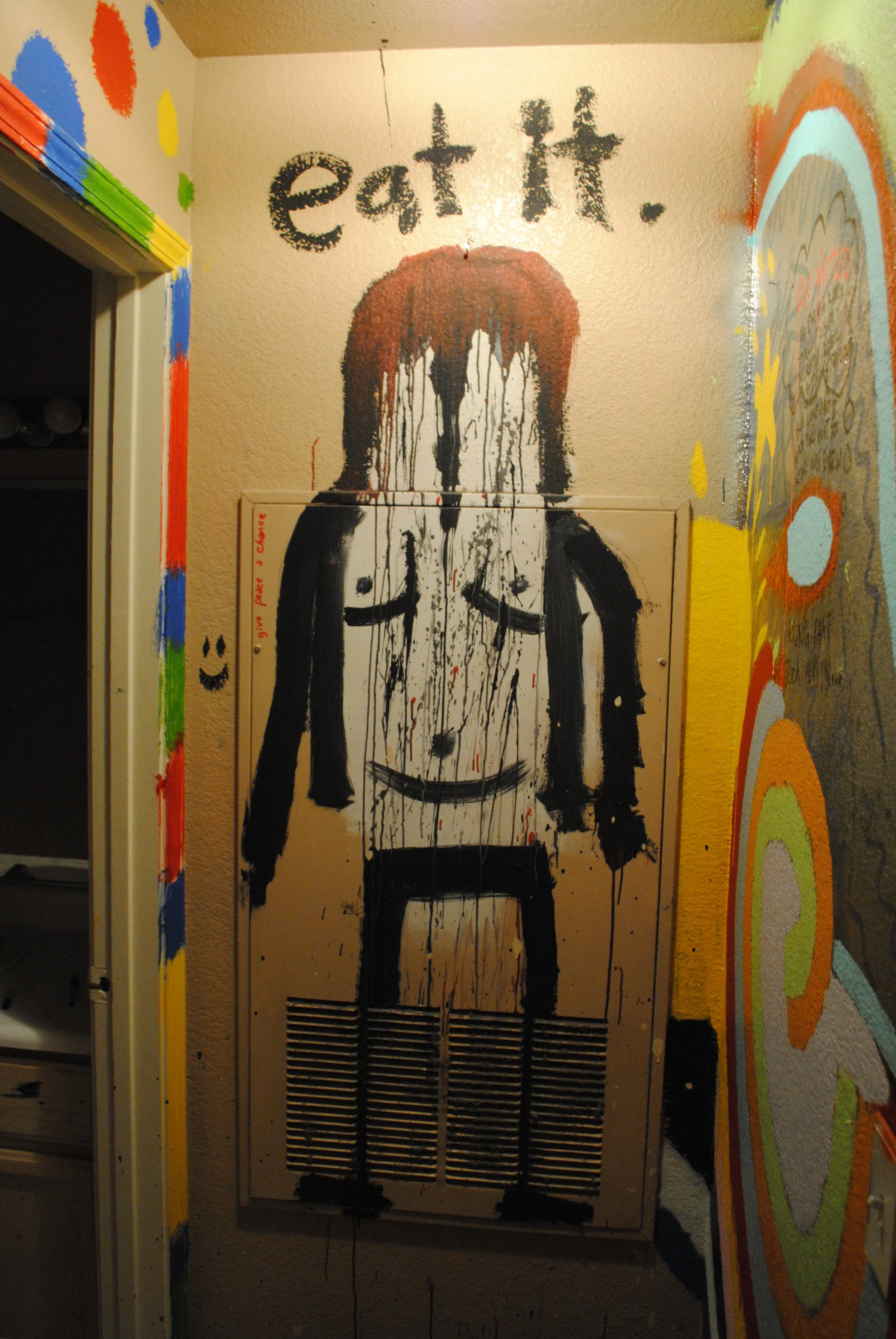
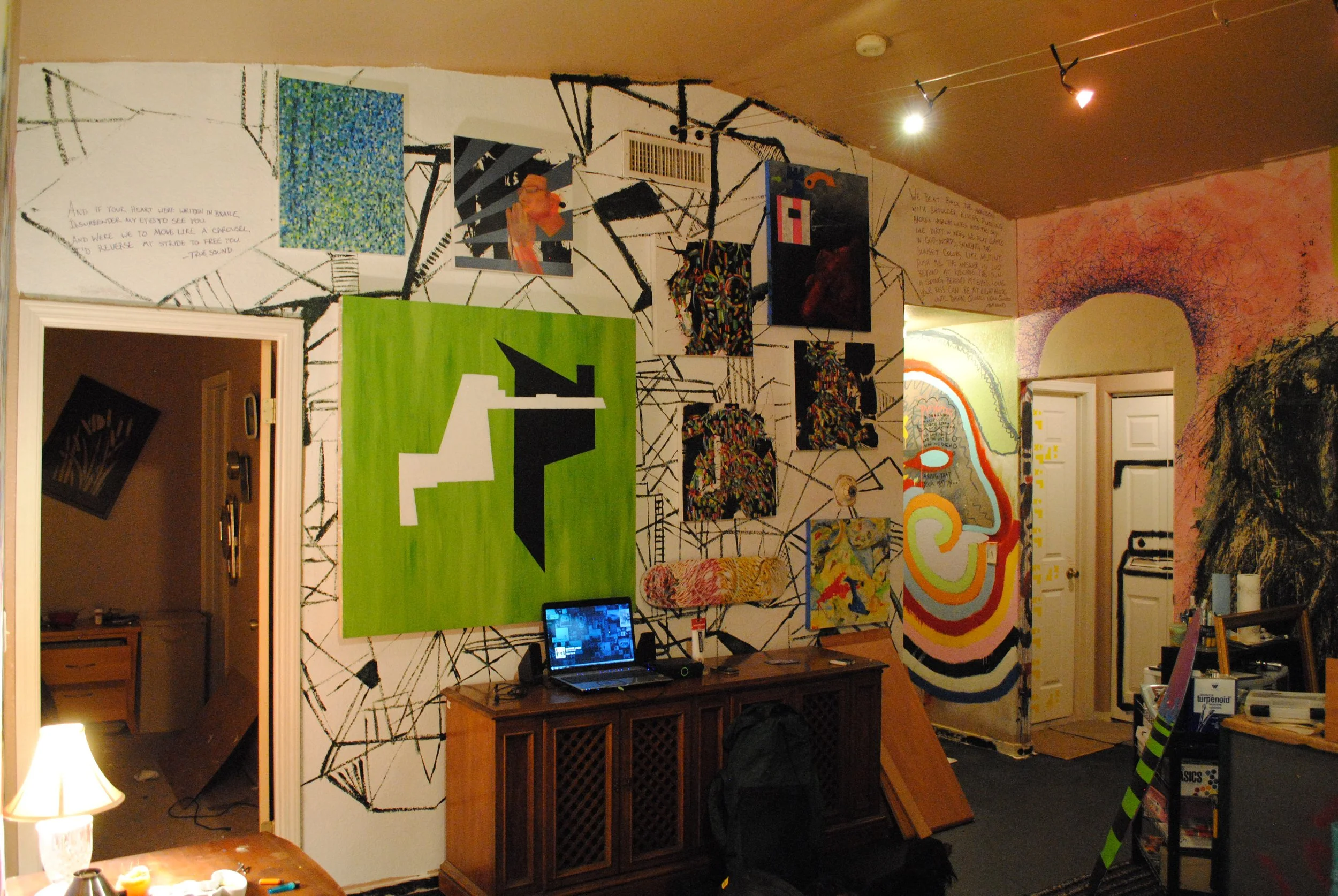
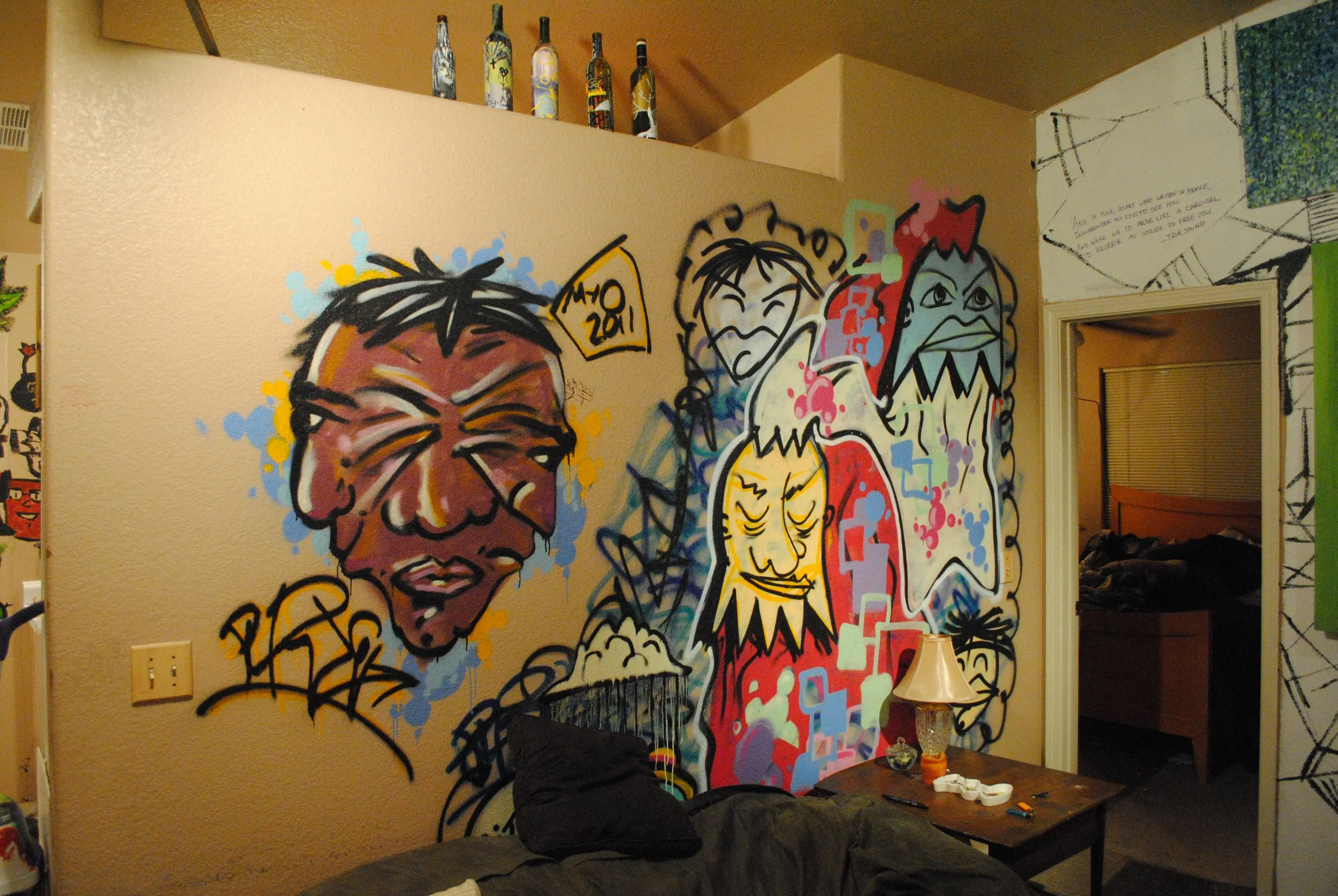
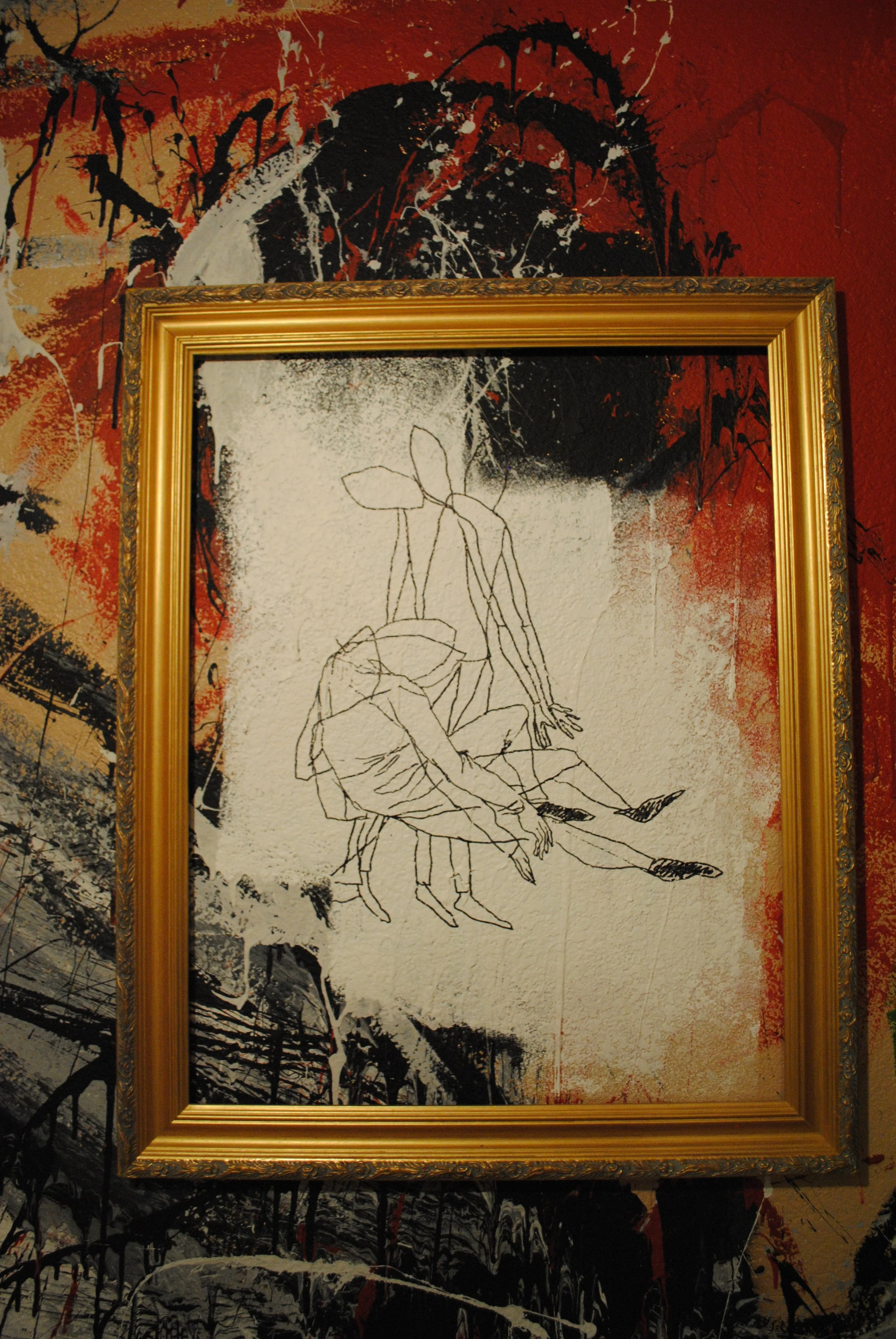
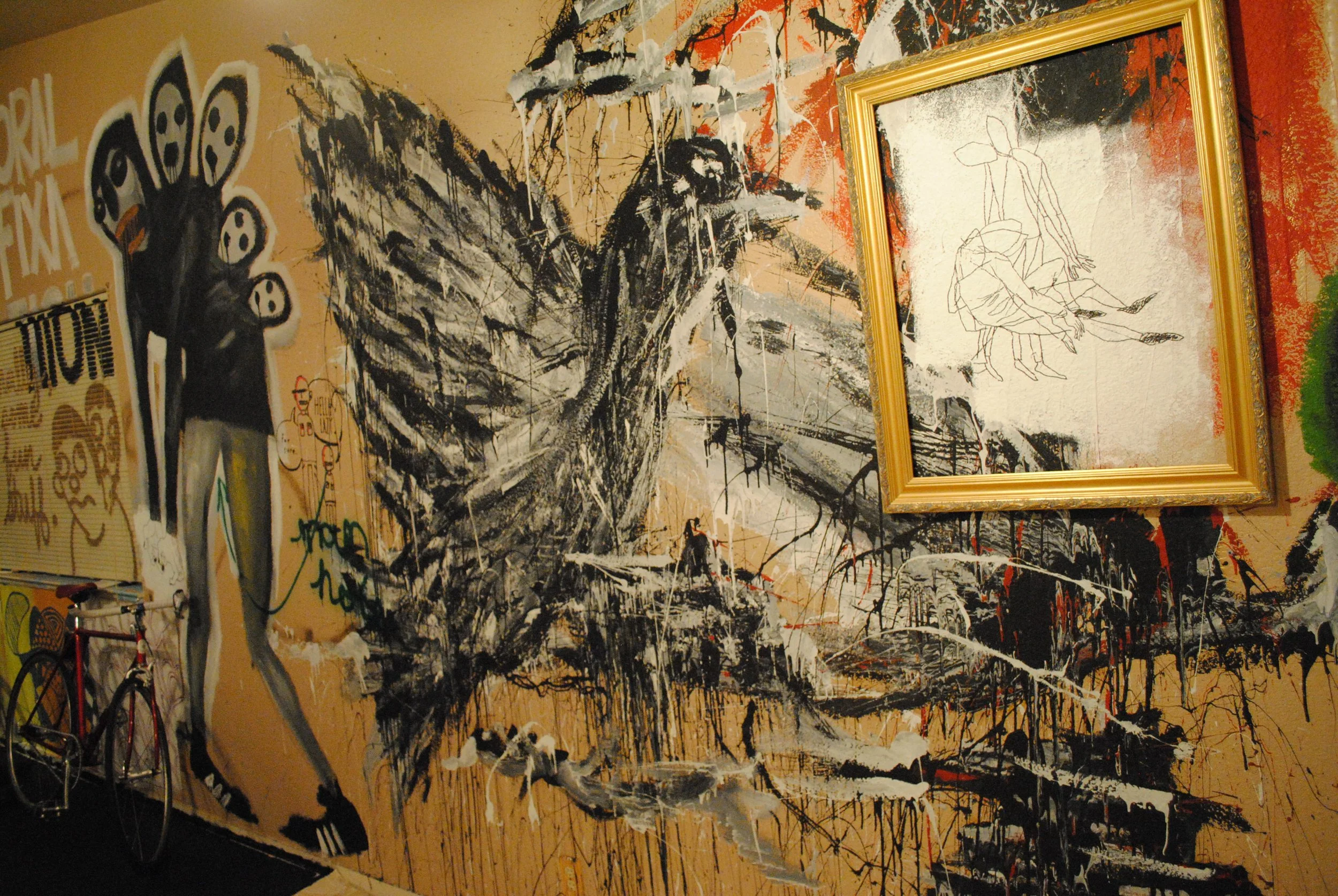
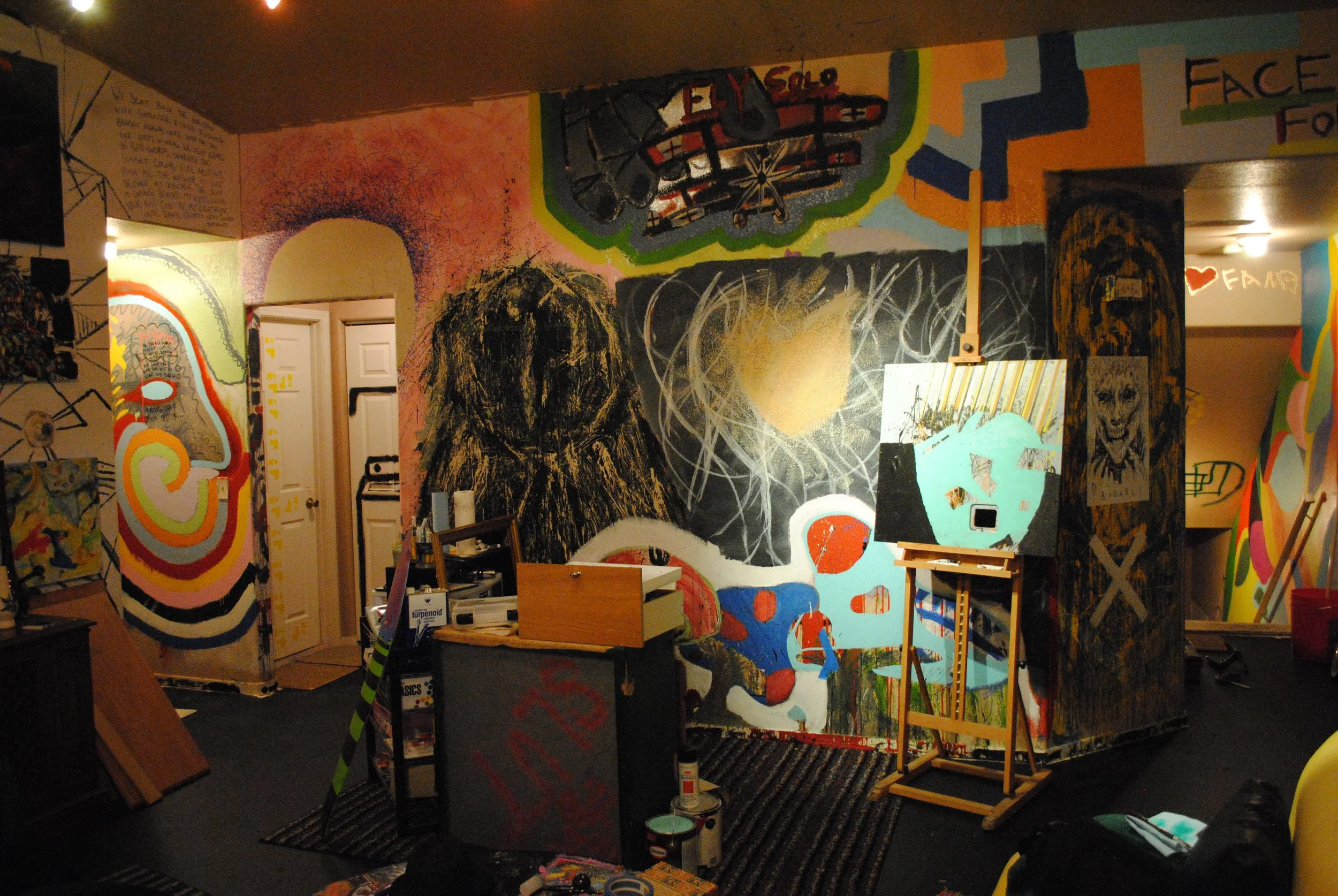
Every wall carried something. Corners, closets, odd vertical seams where nobody usually bothers to draw on all got claimed. After a while, the only untouched surface left was the bathroom door.
So I took that.
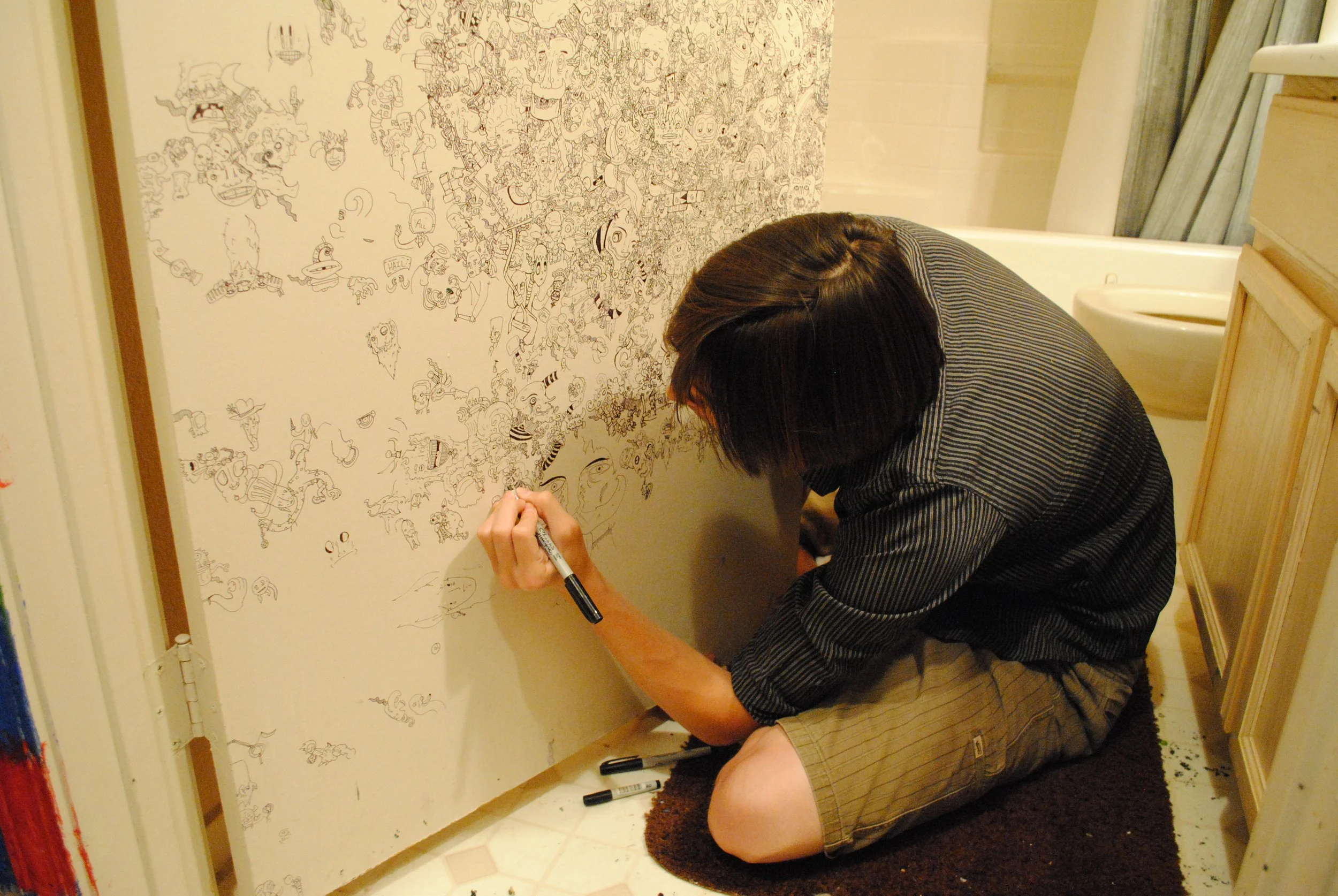
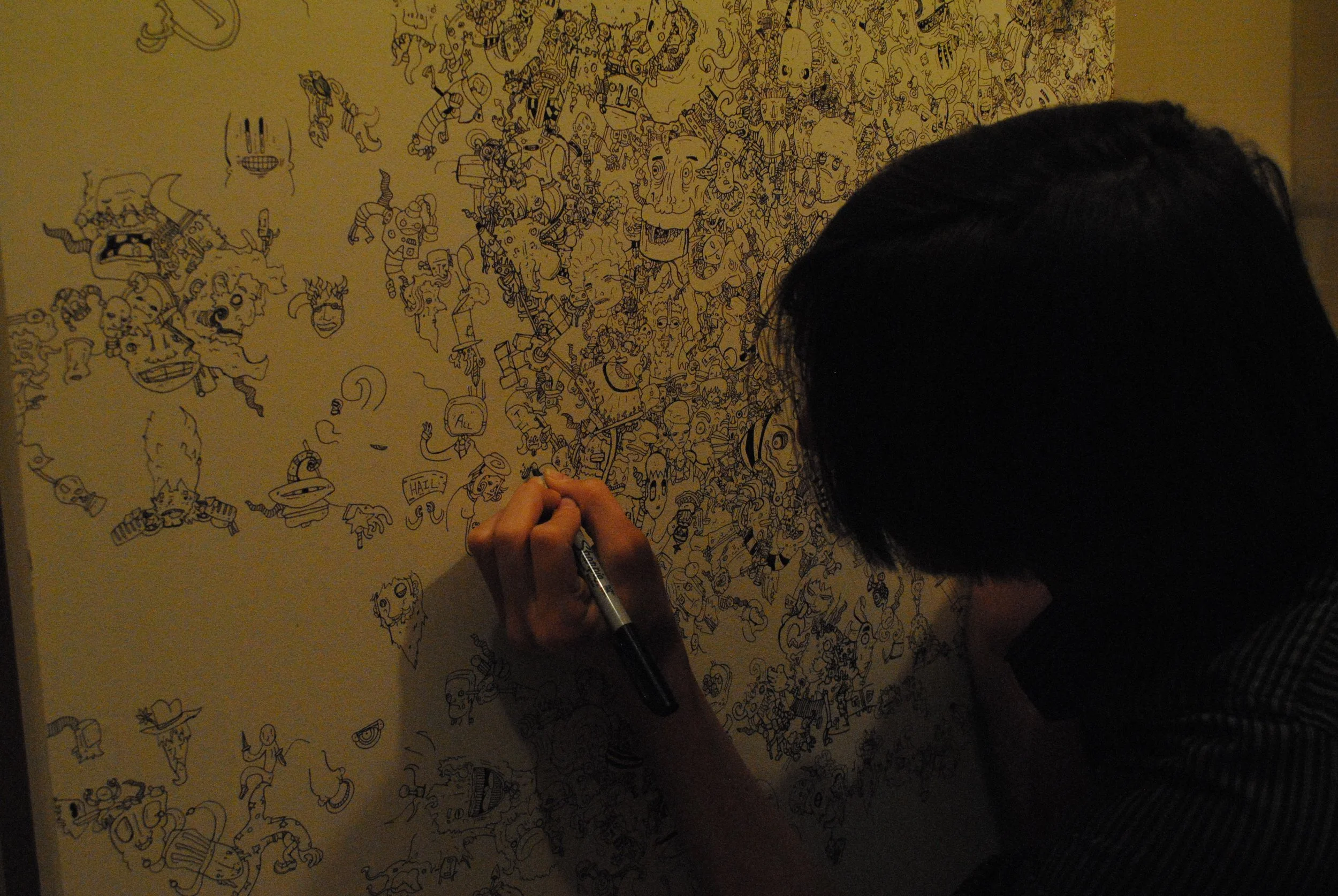
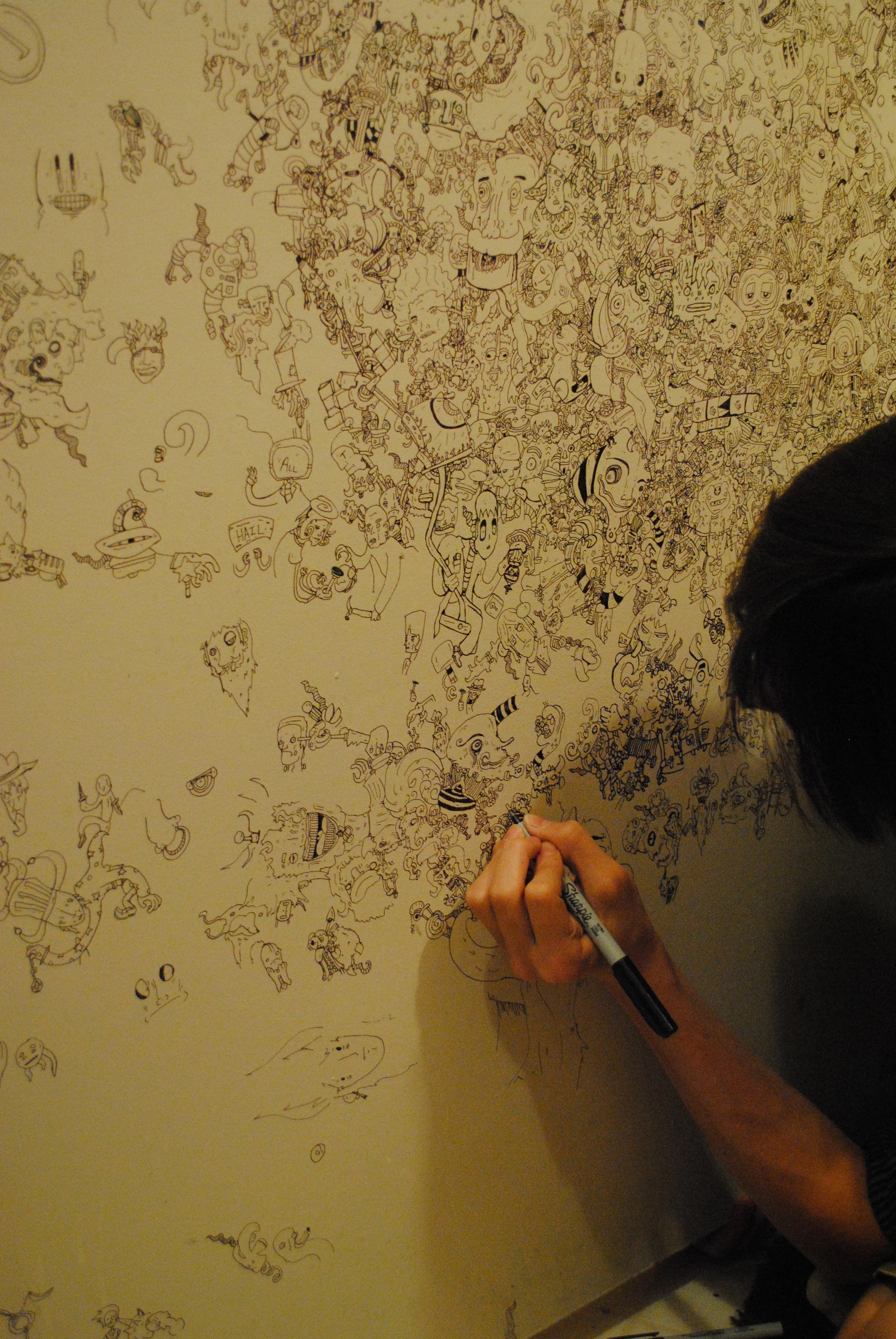
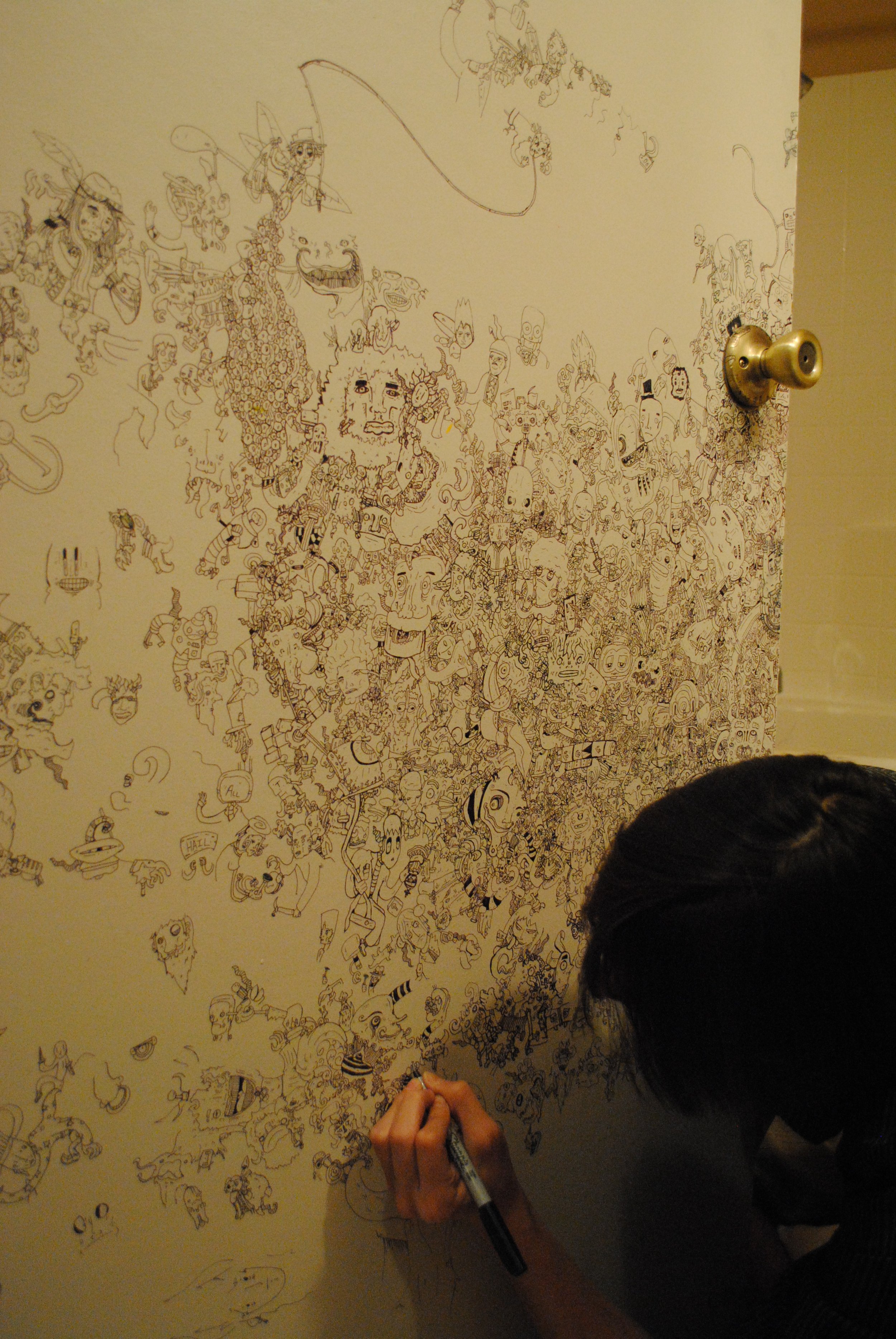
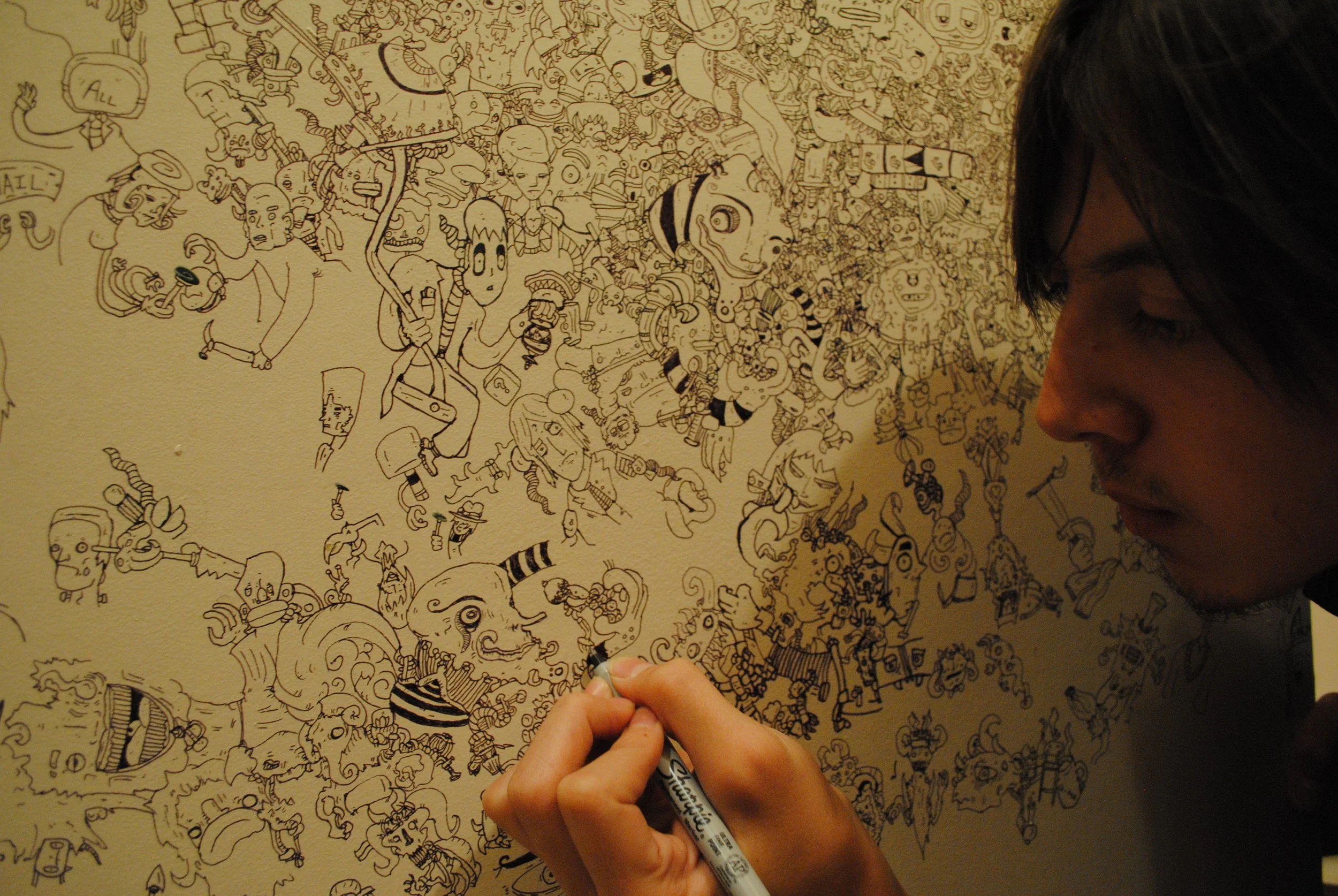
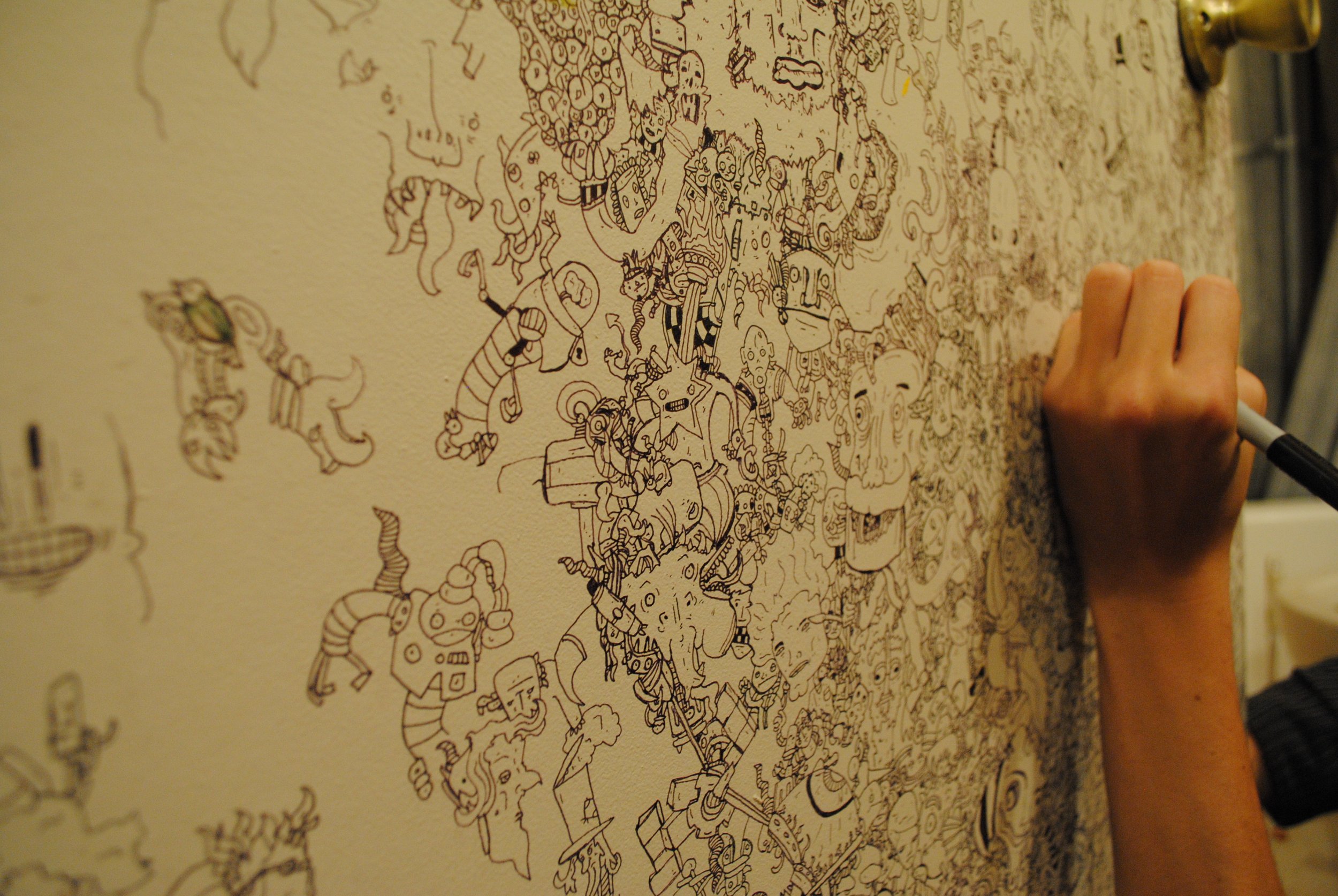
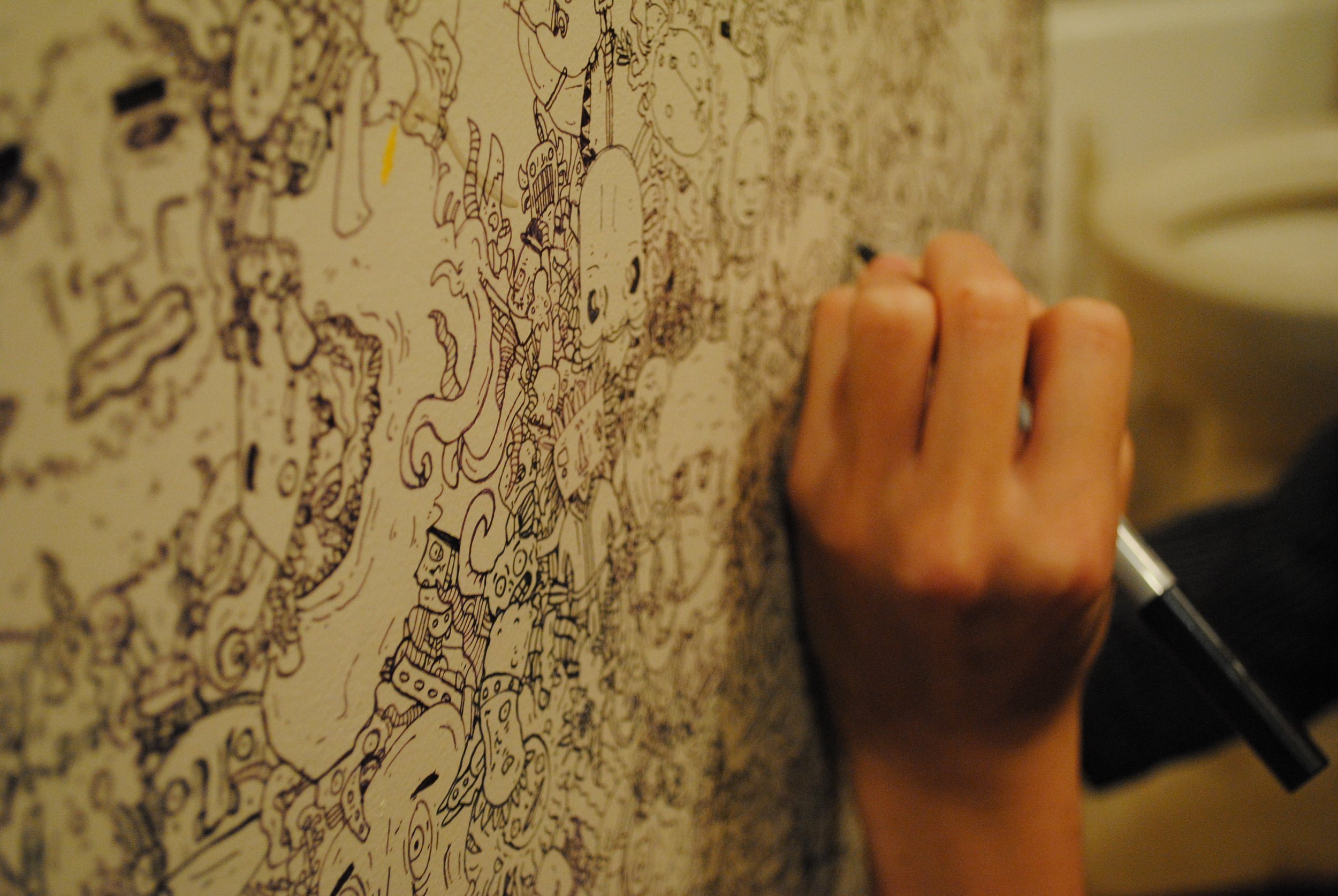
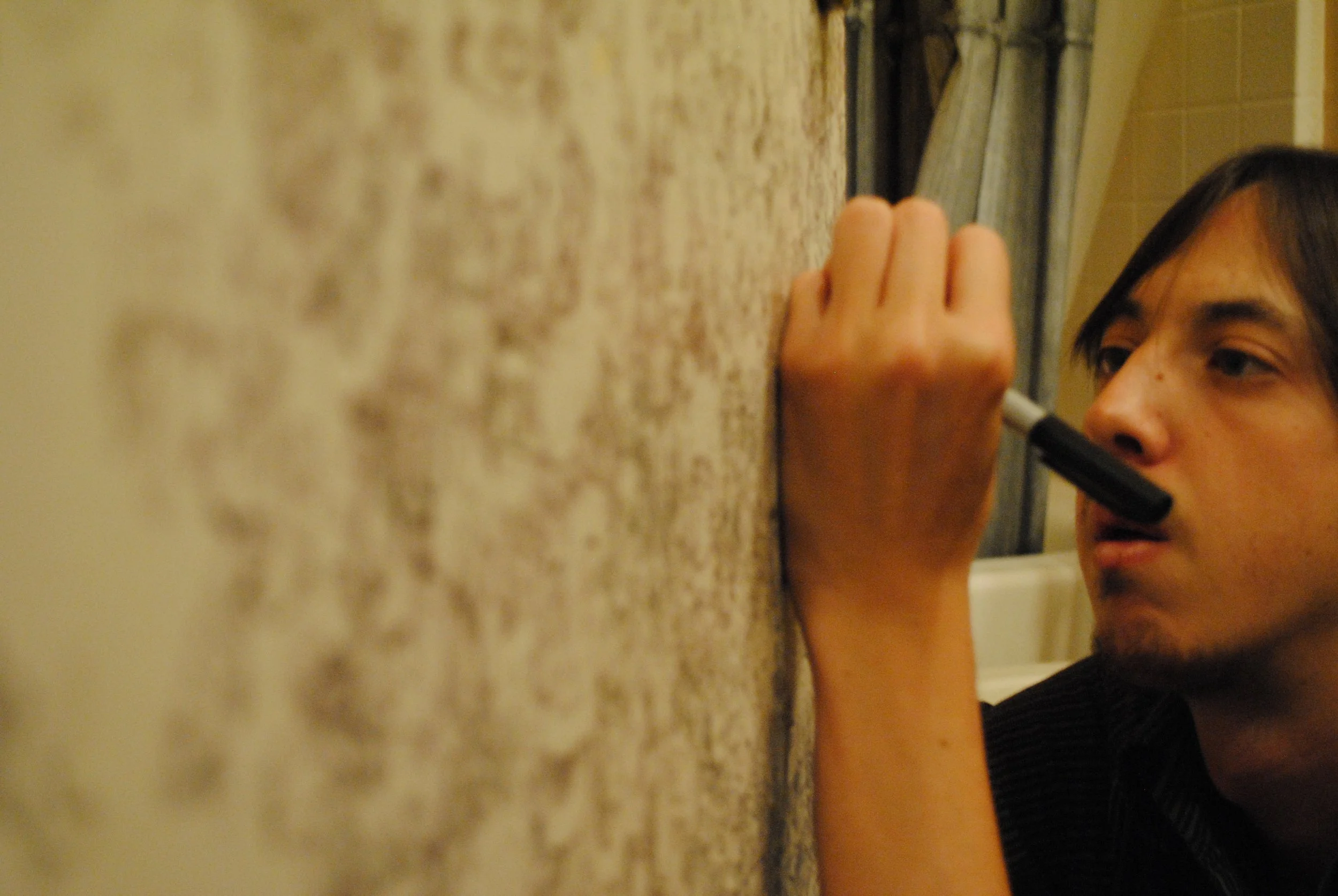
At first, it was just a place to draw. A boundary object. Something self-contained inside a space that was otherwise becoming increasingly saturated. But once I started, it became clear that the door wasn’t going to be a single image or a finished piece. It was going to be a pile.
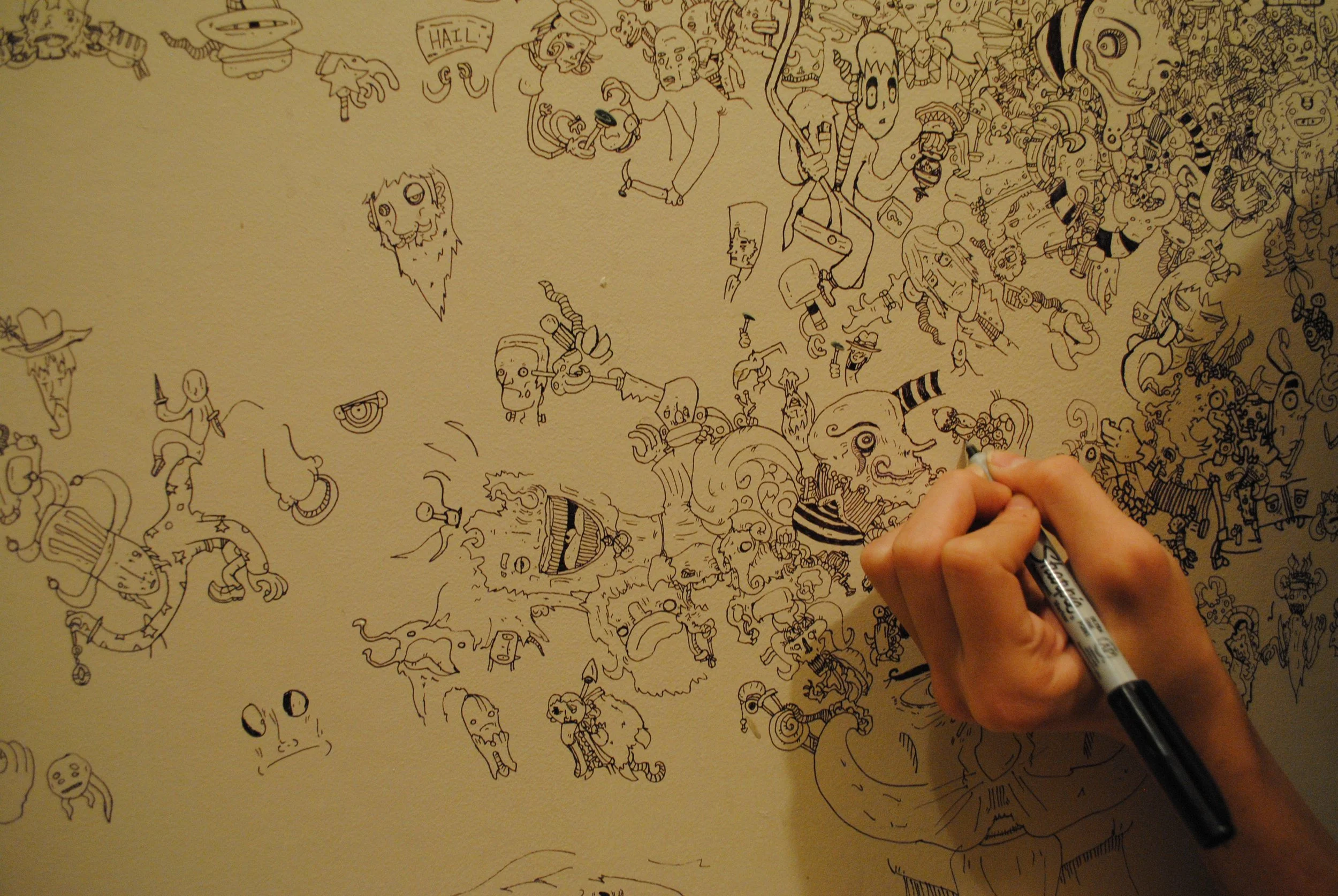
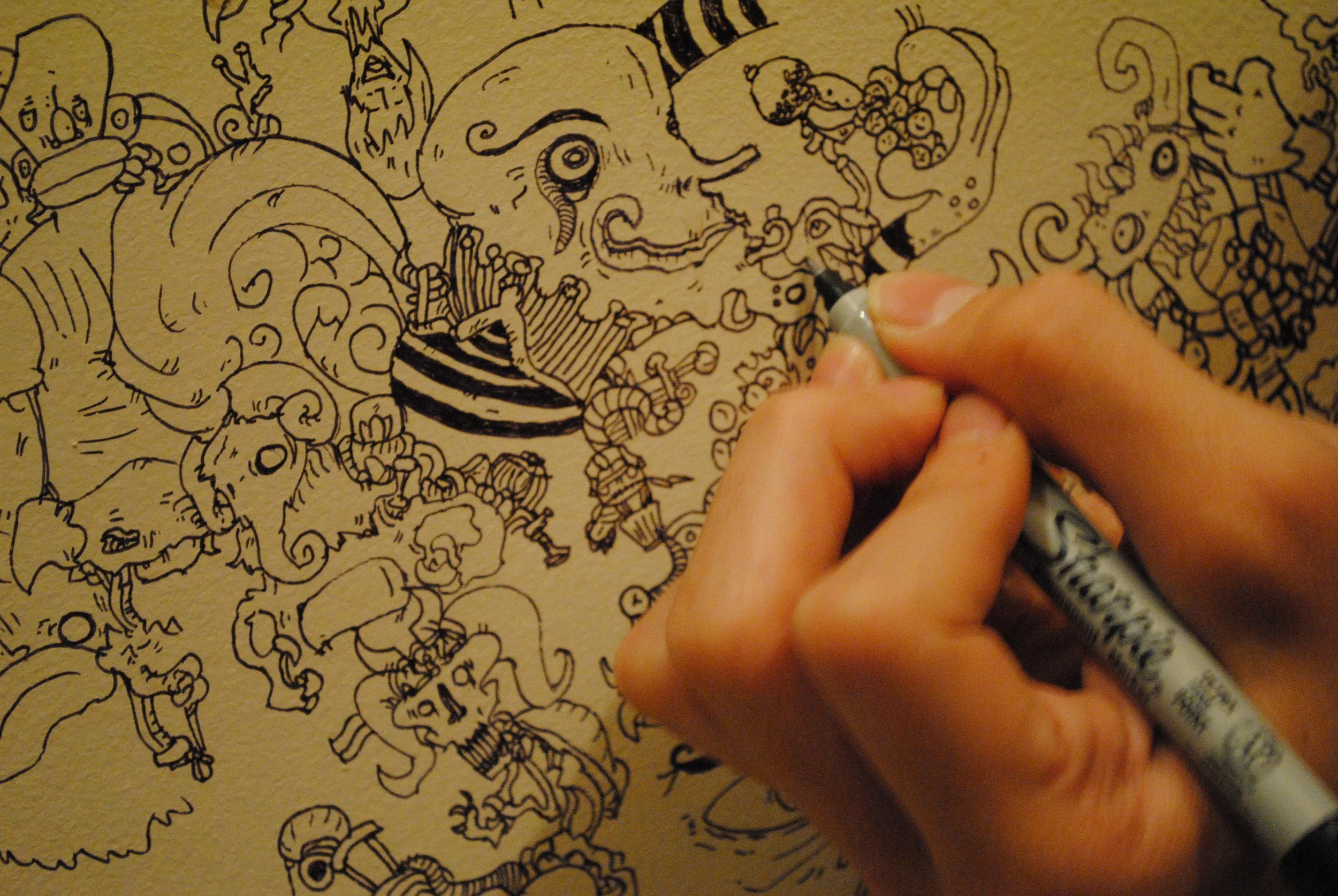
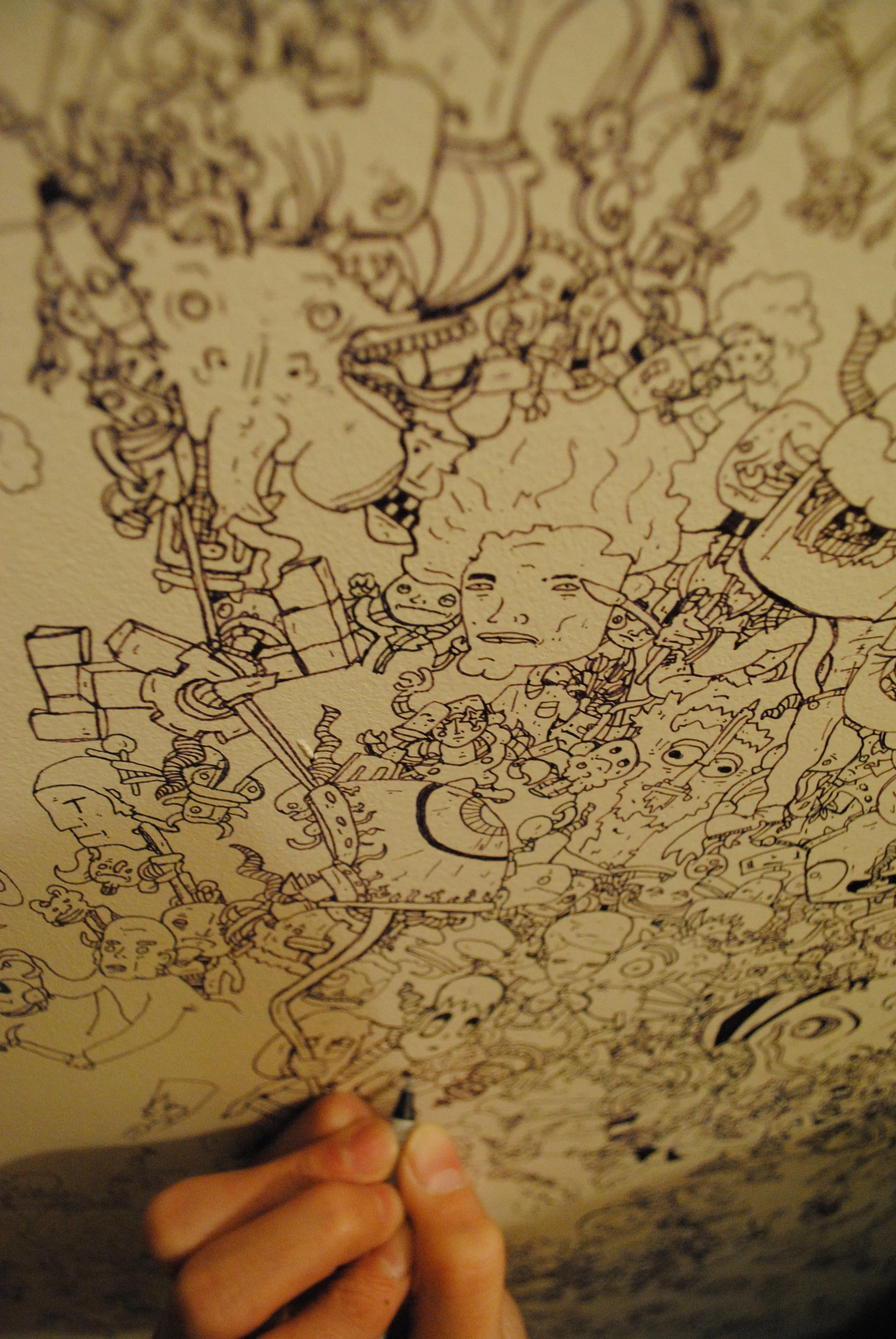
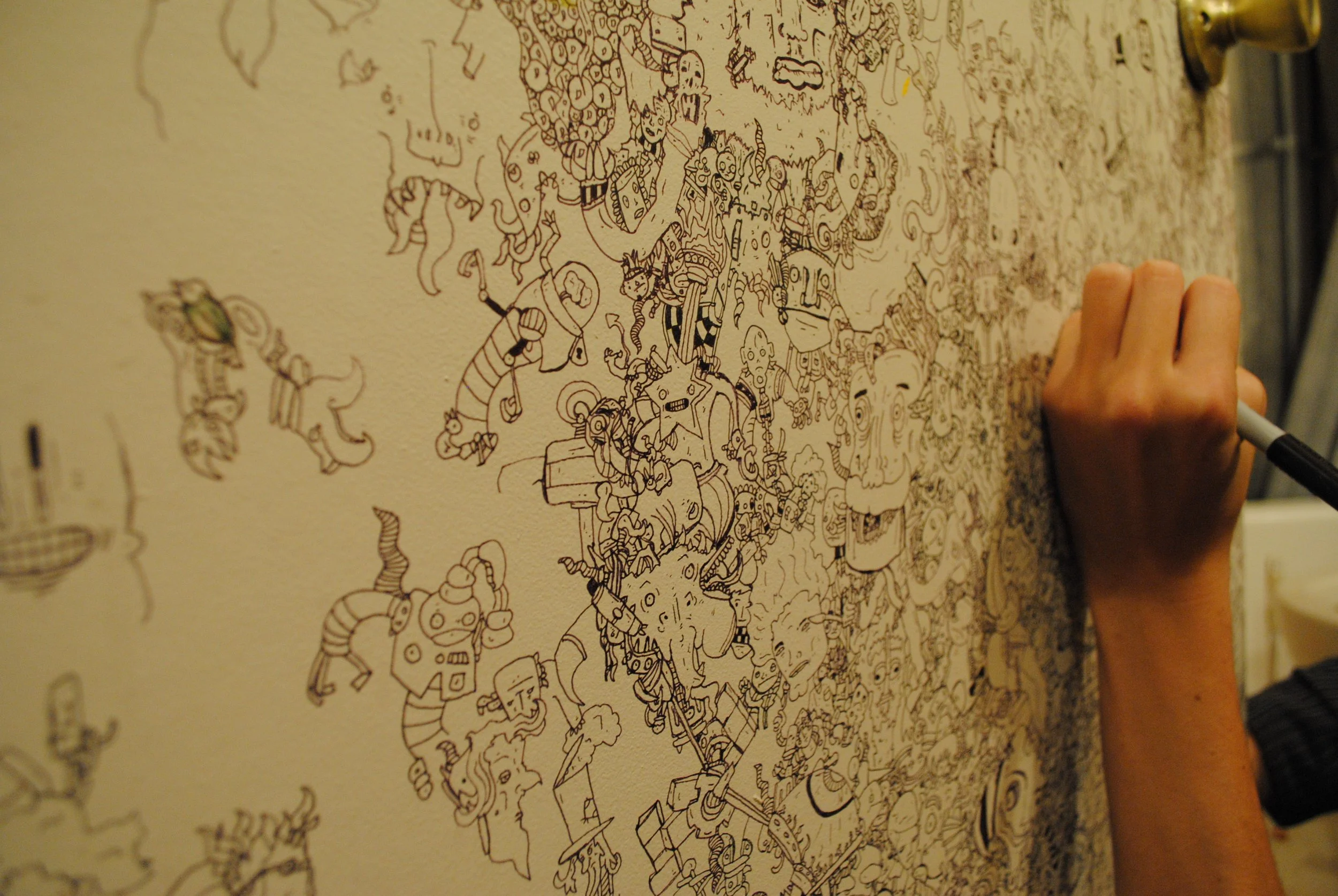
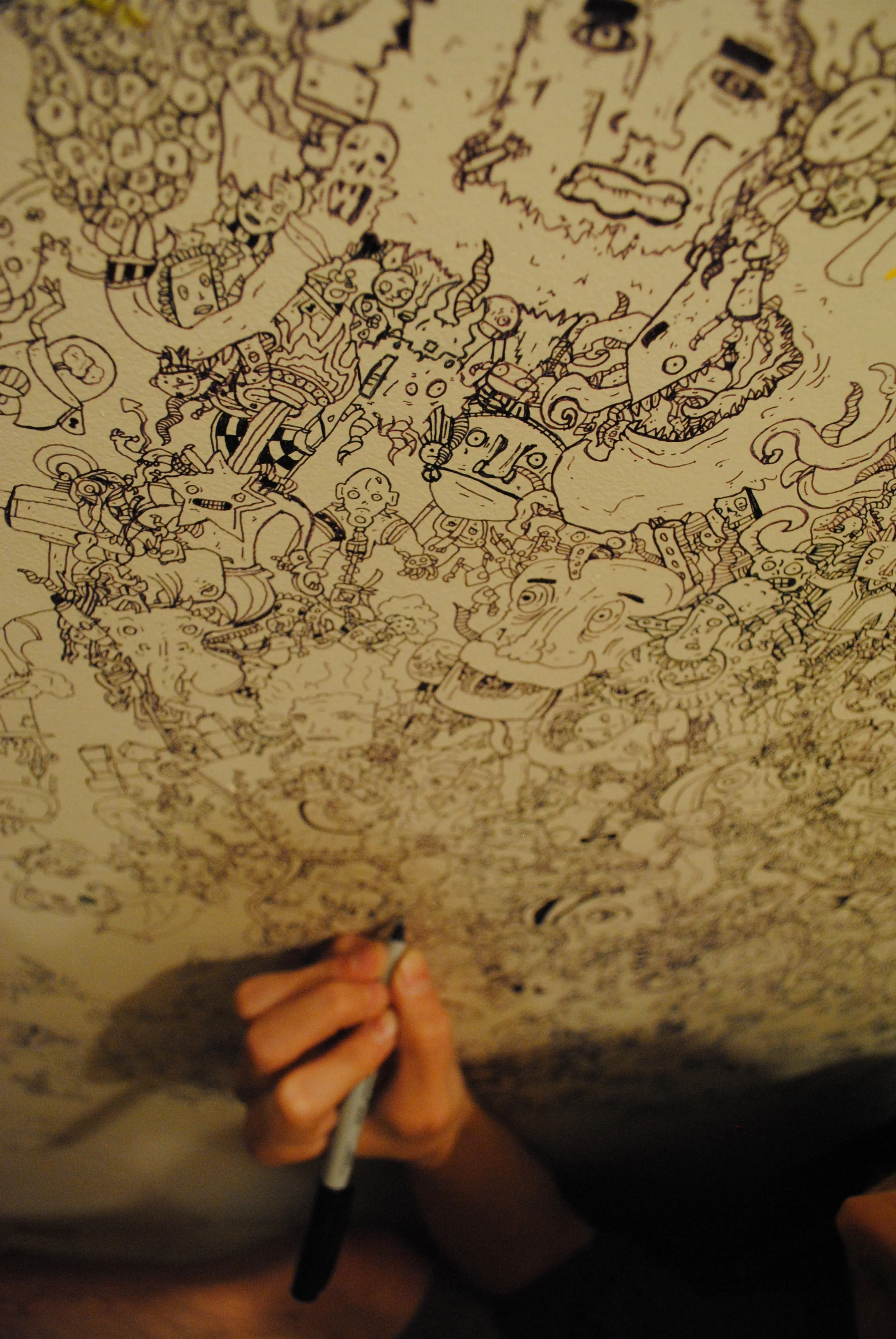
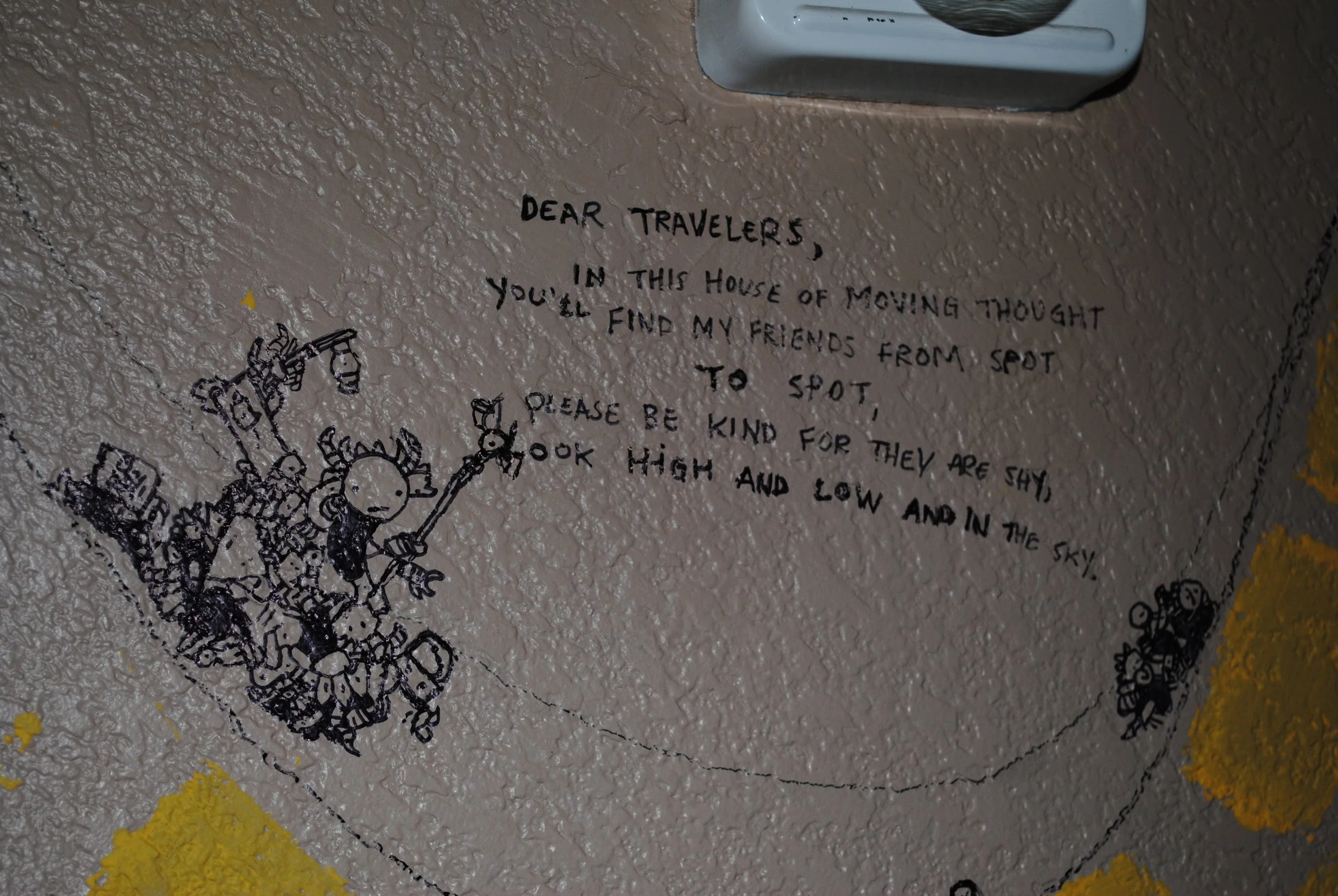
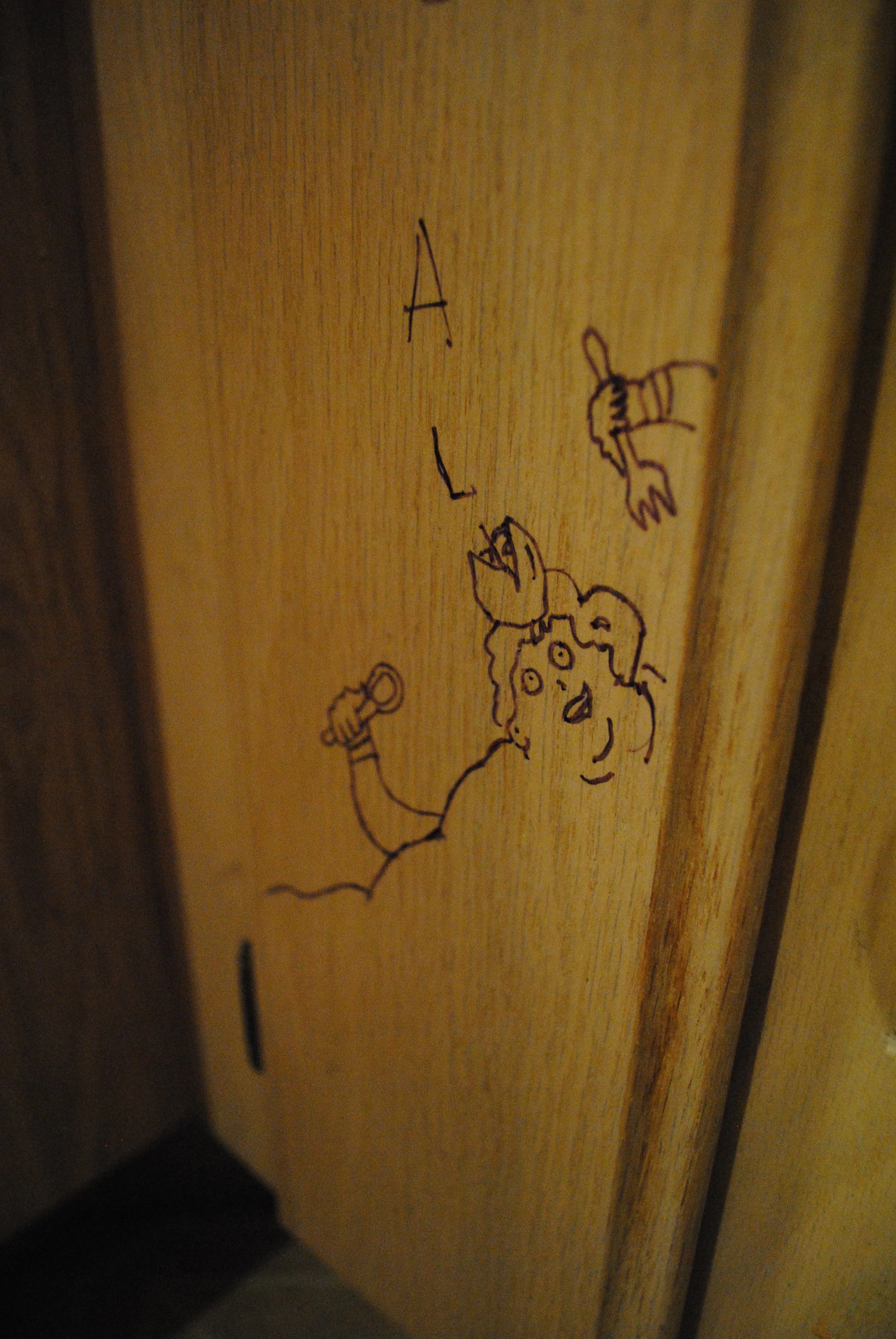
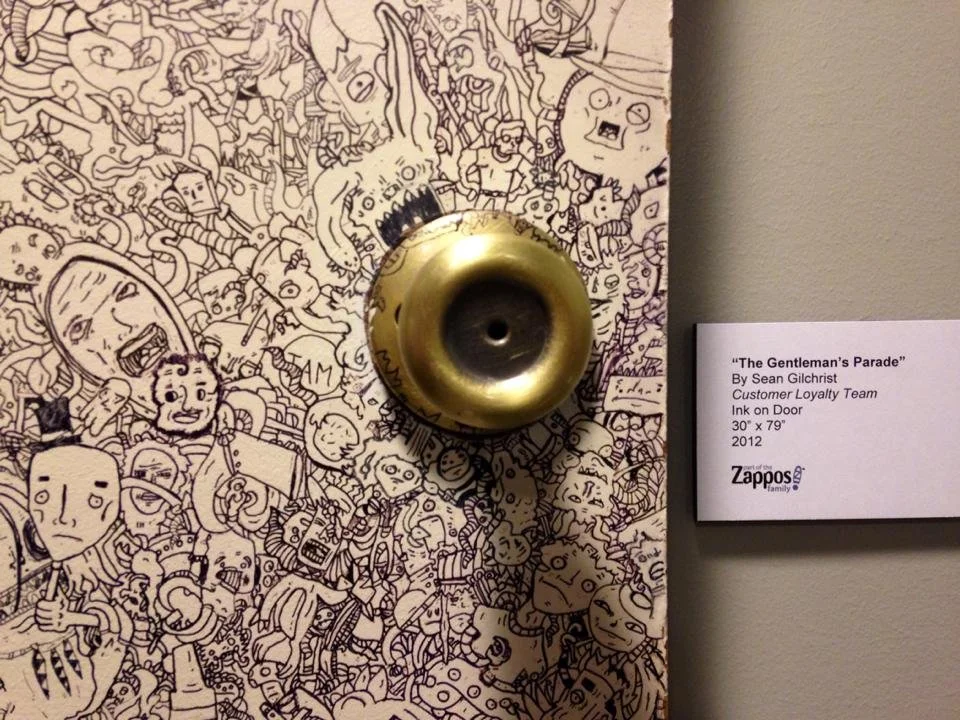
I worked on it slowly. Months, not days. Filling it inch by inch with my clutter art. Figures, symbols, instructions and fragments that didn’t resolve into a single narrative but clearly belonged together. It wasn’t planned in advance. It accumulated the way these things always do for me: layer by layer, clutter by clutter.
While that was happening, I started doing something else.
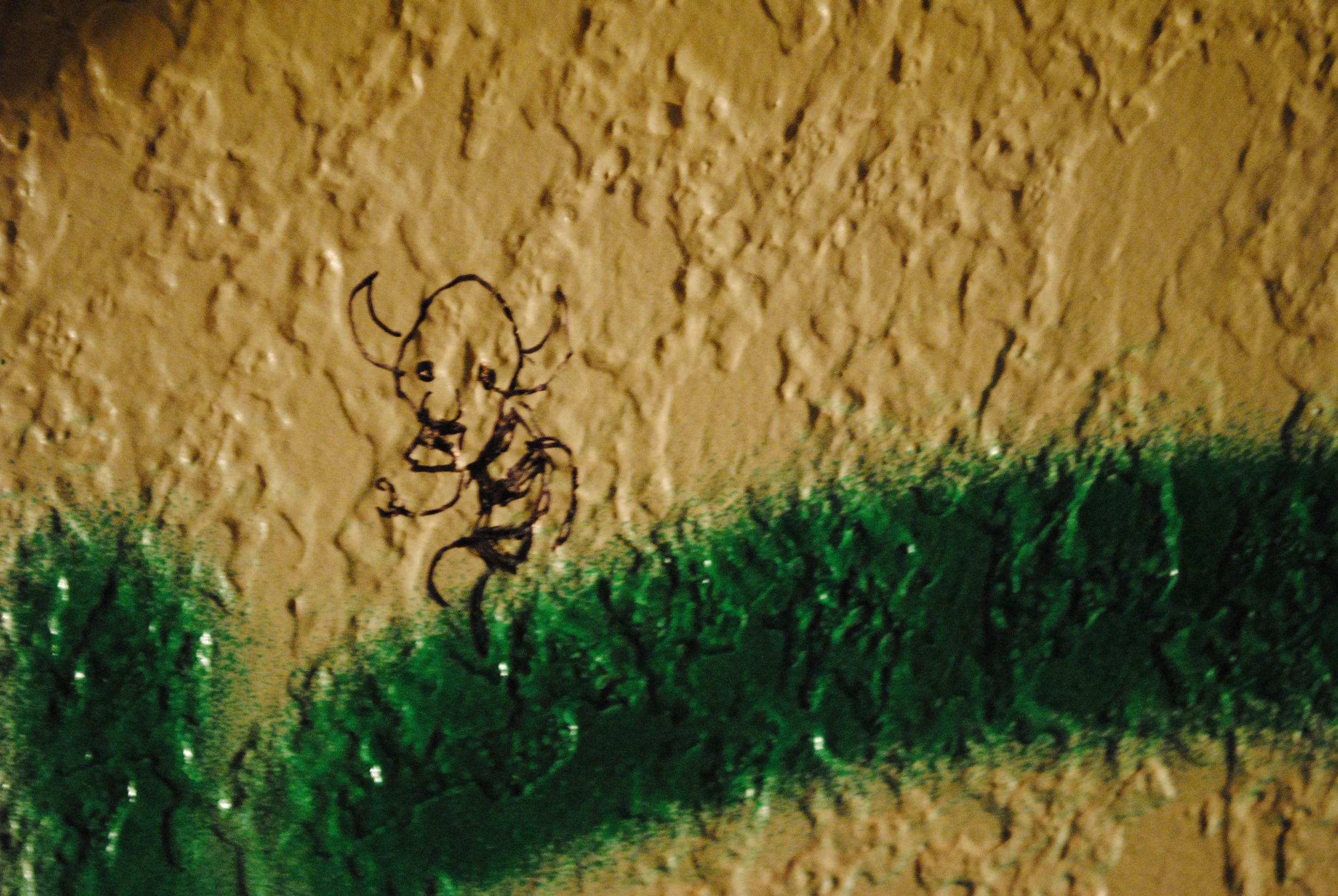
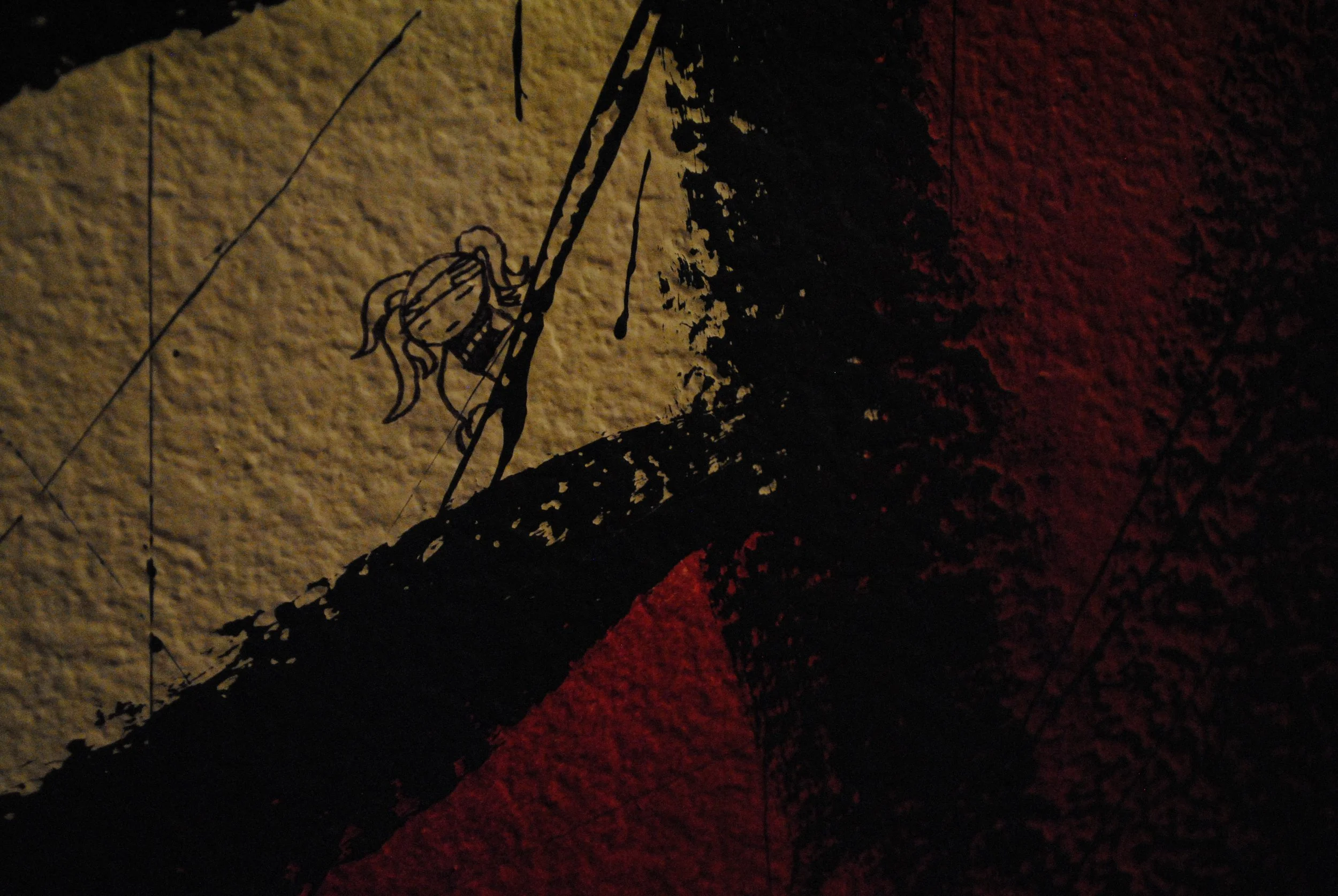
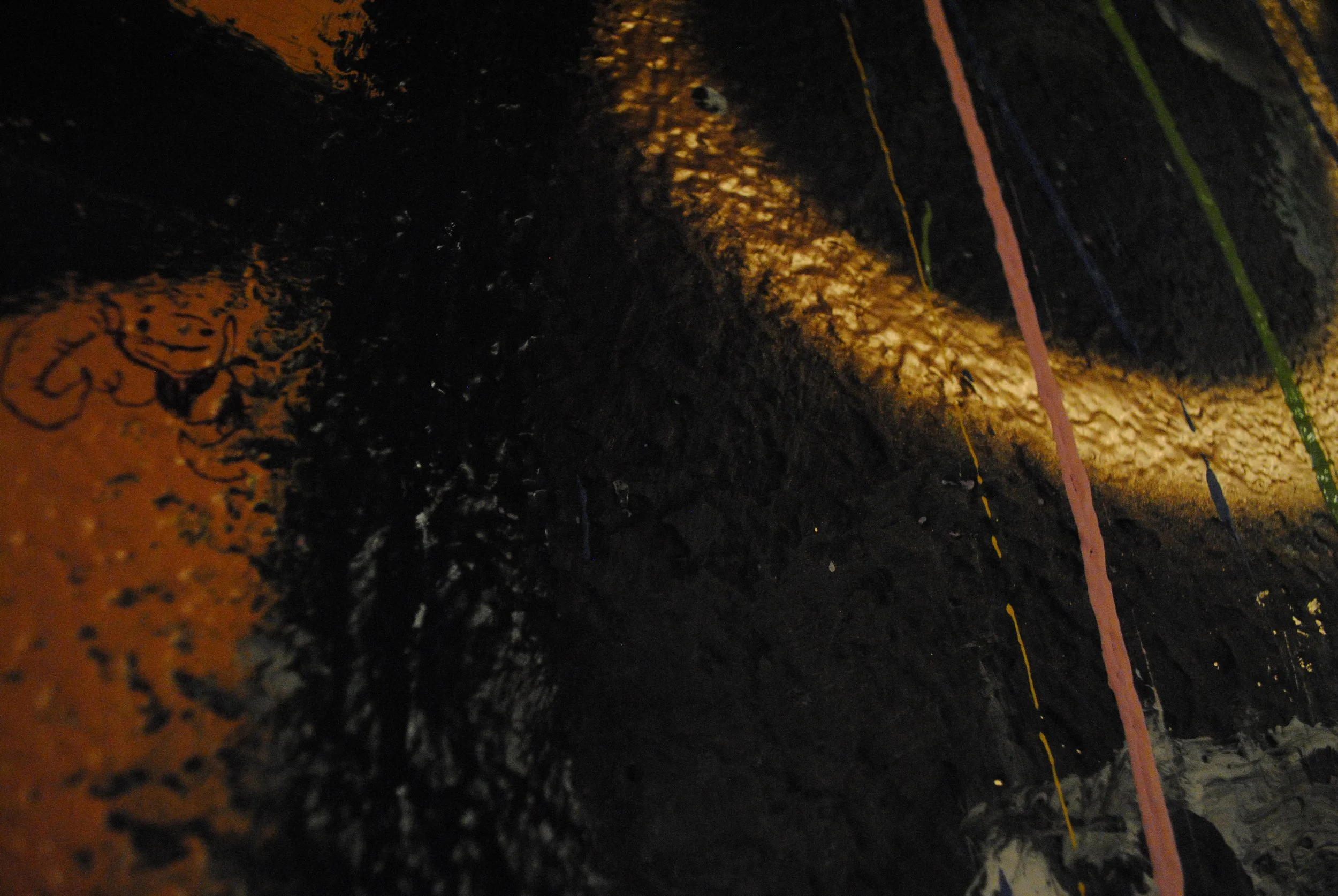
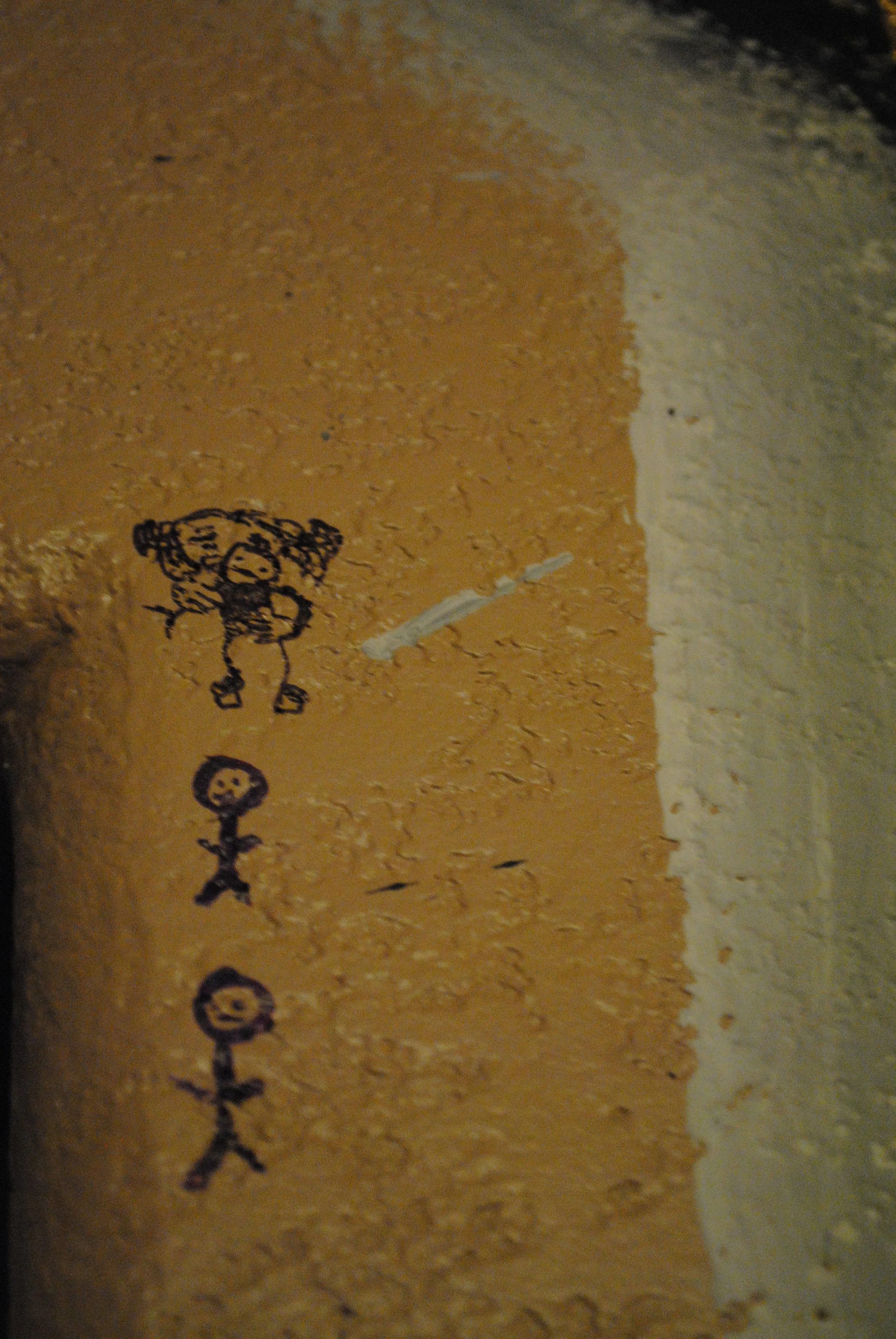
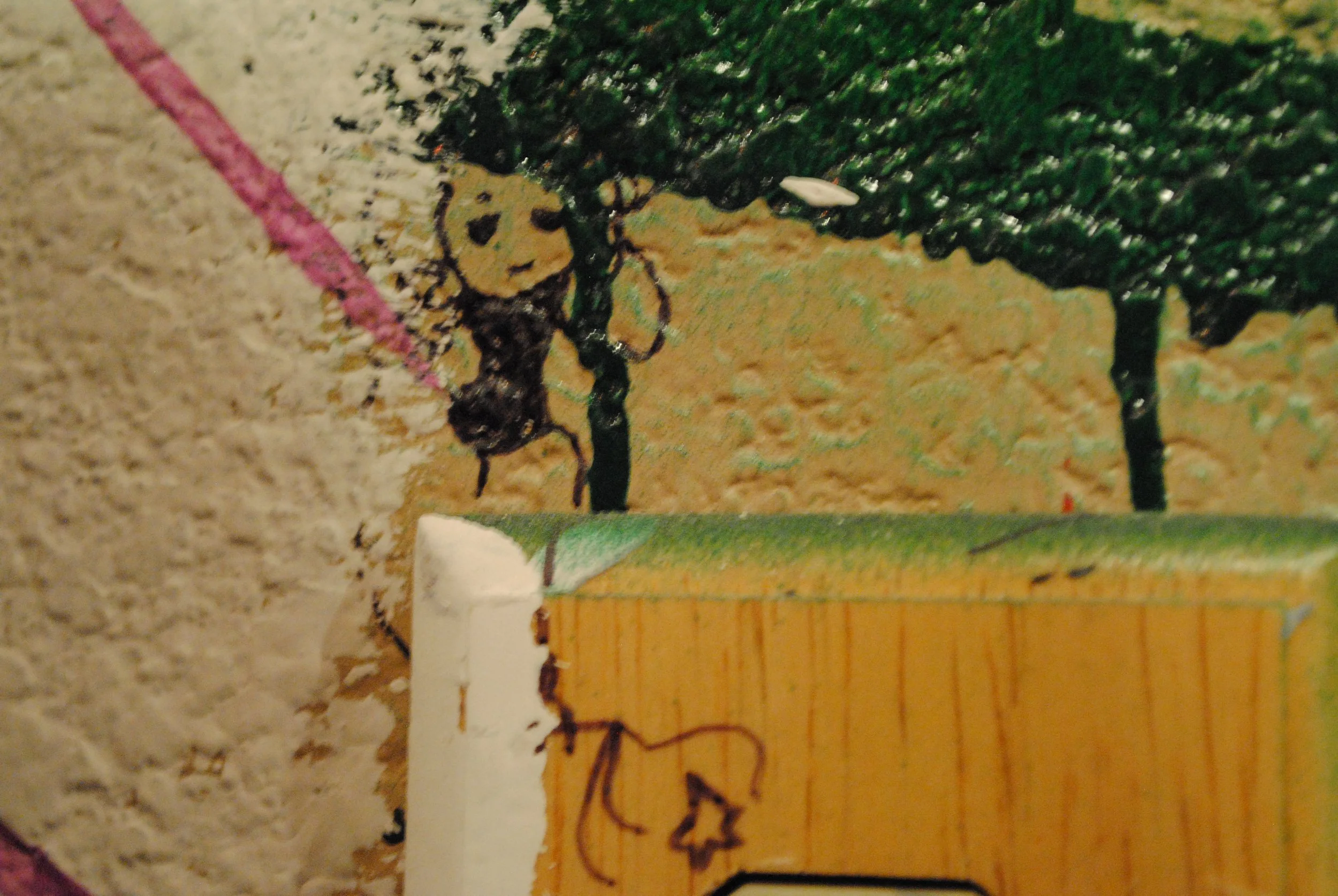
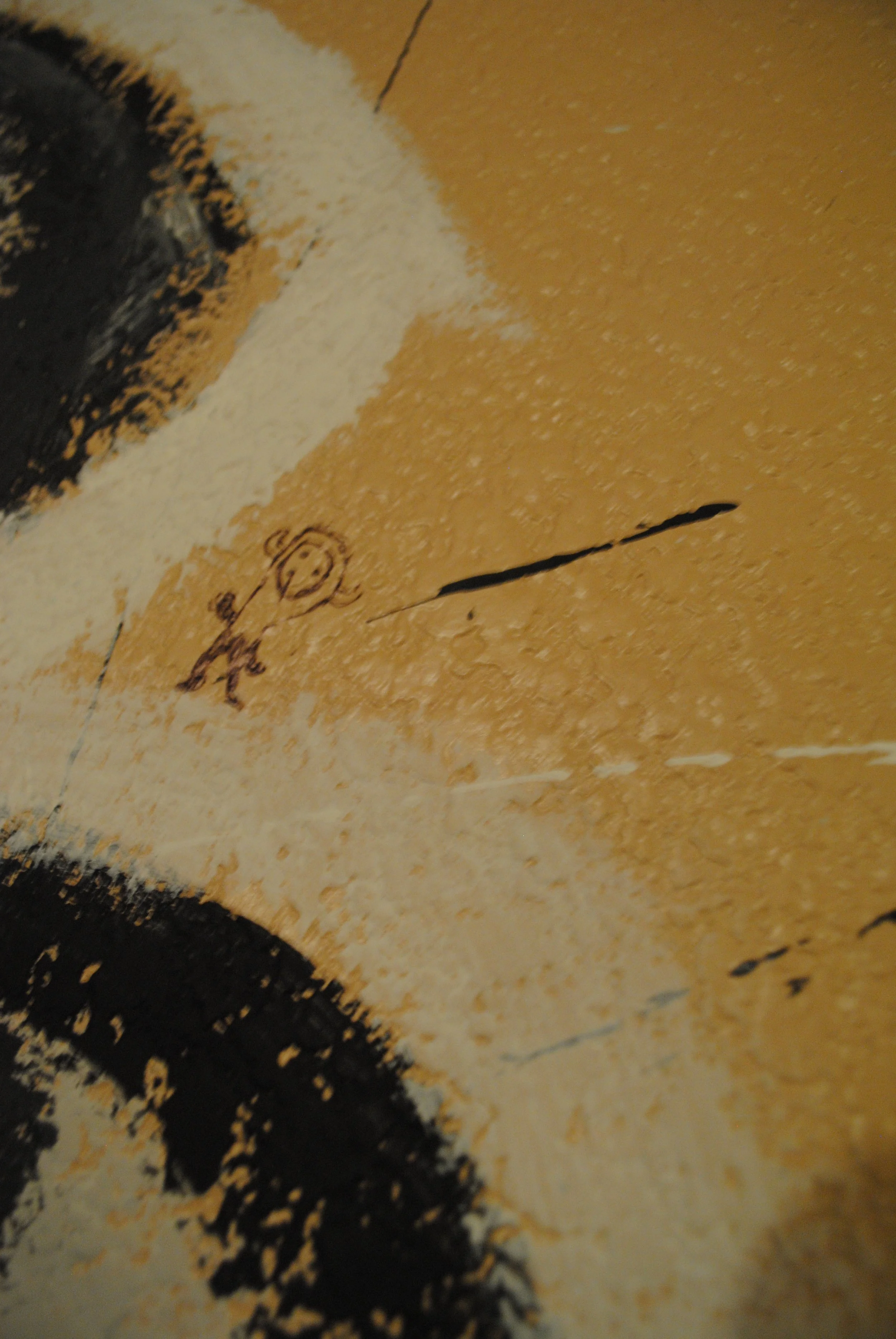
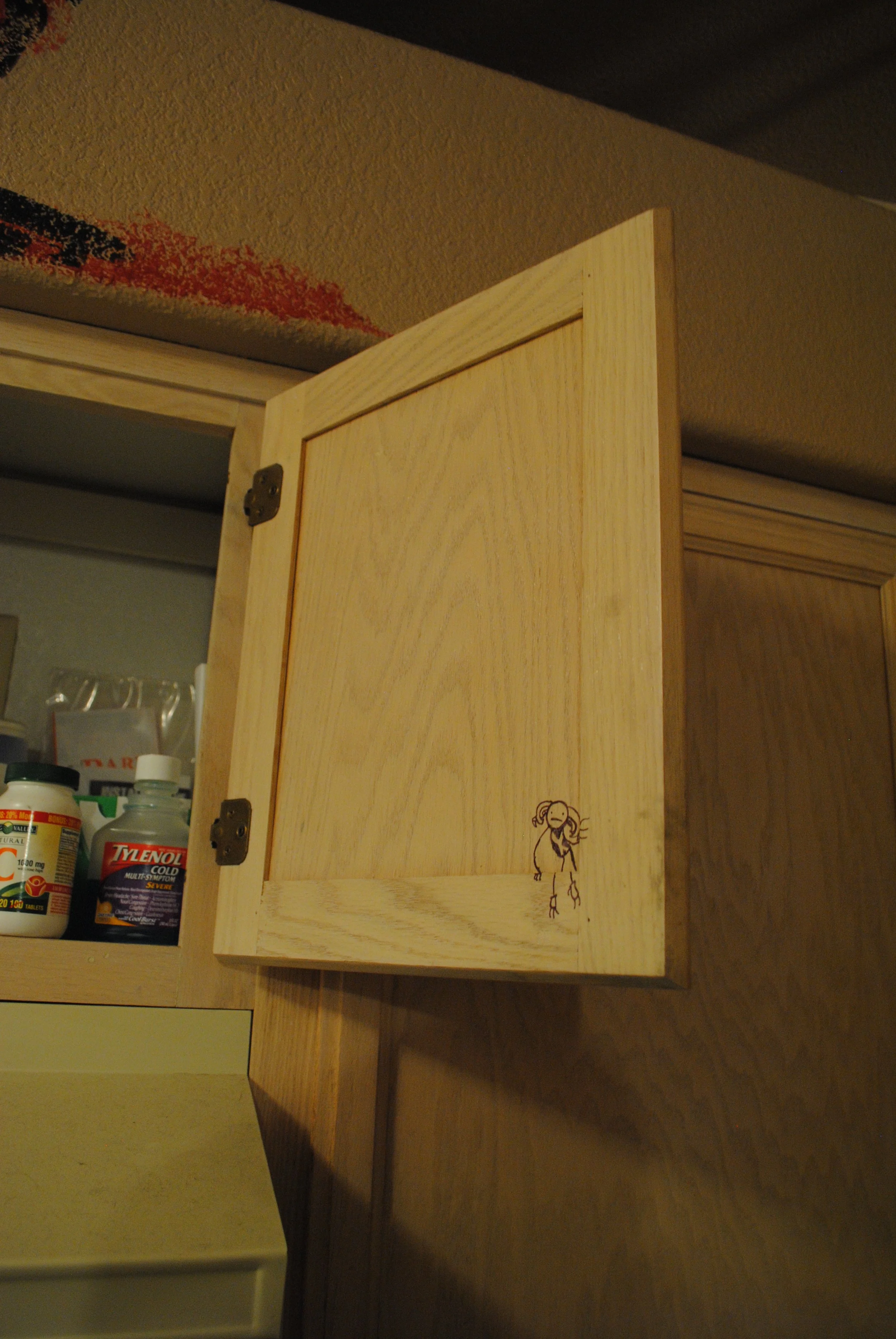
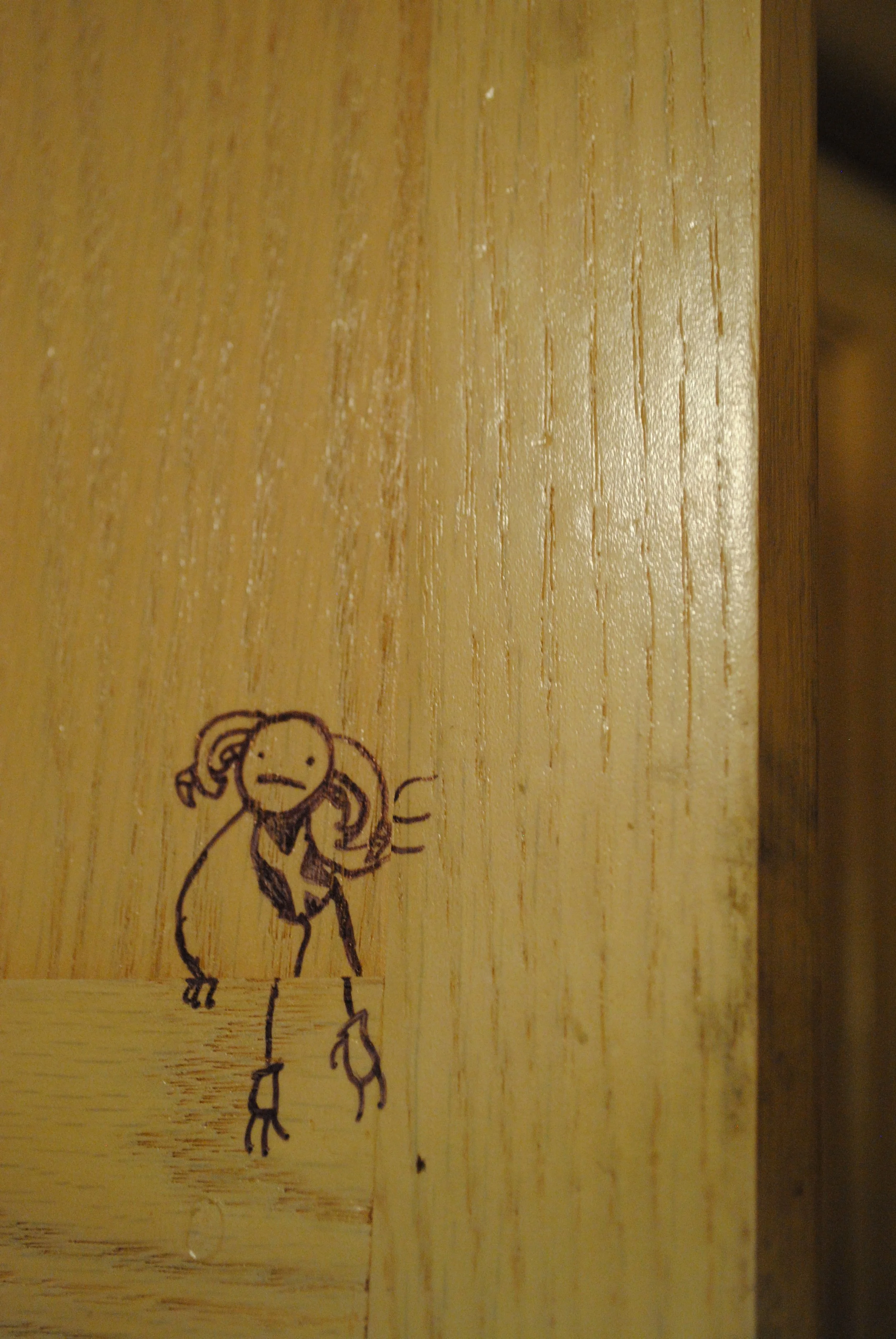
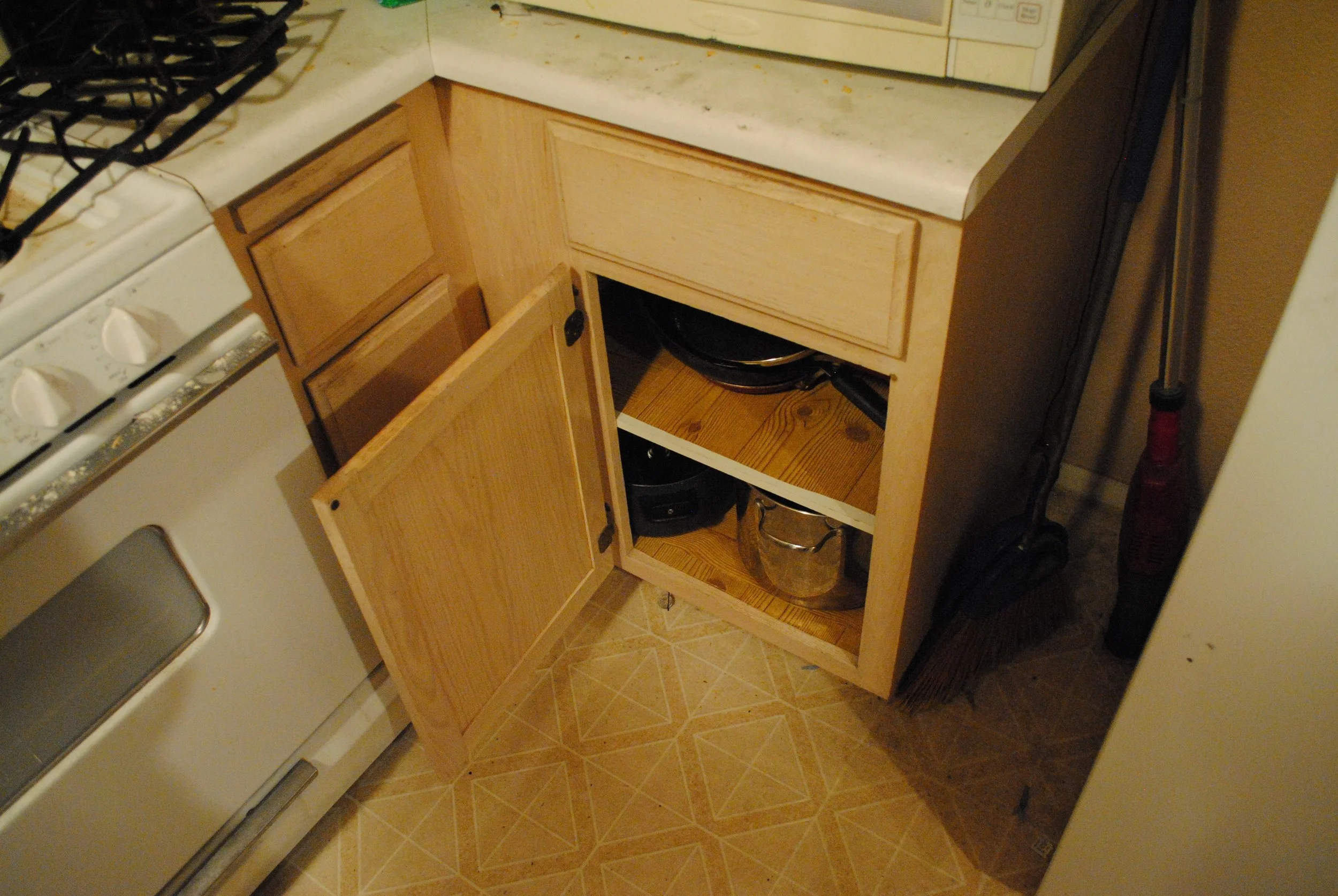
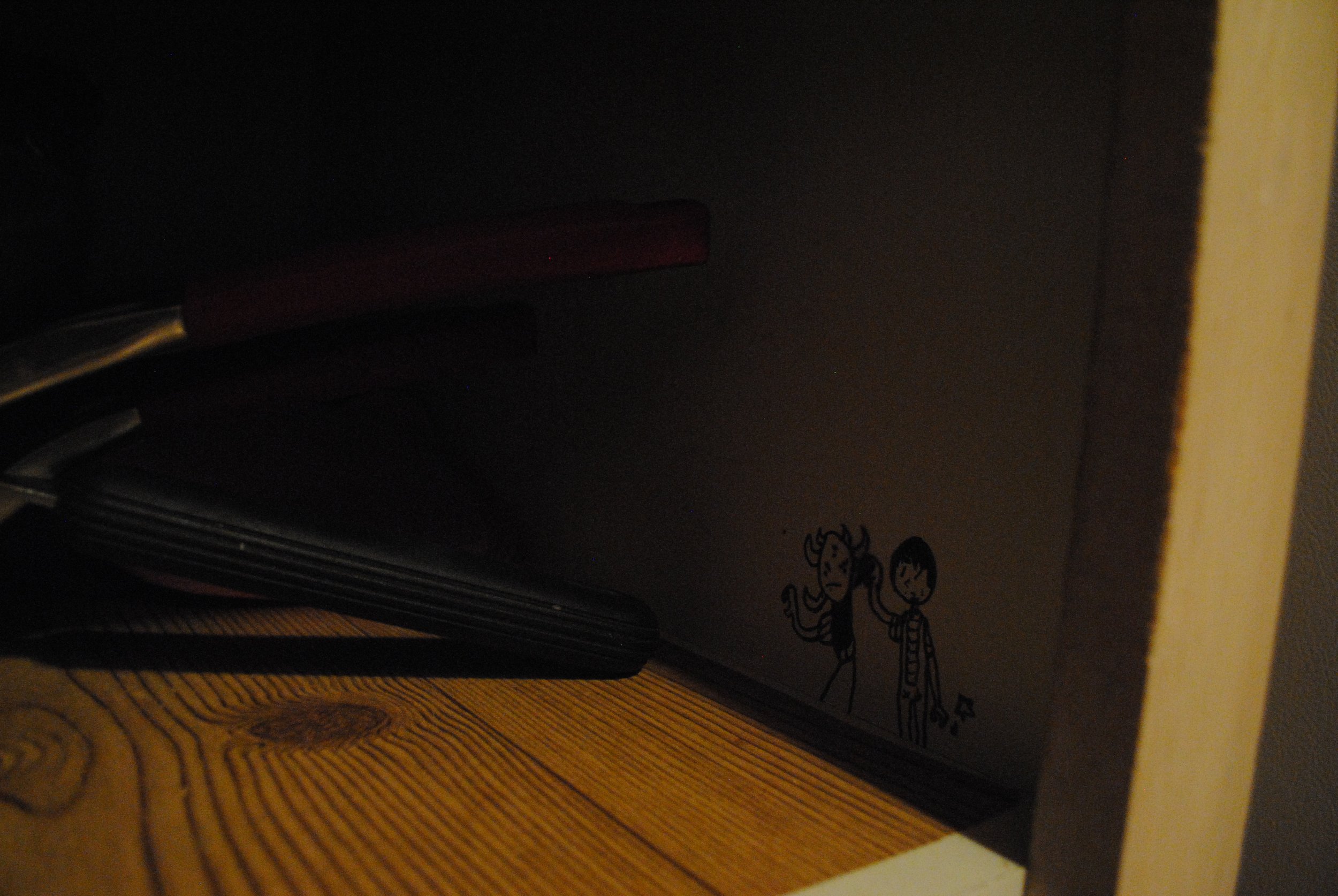
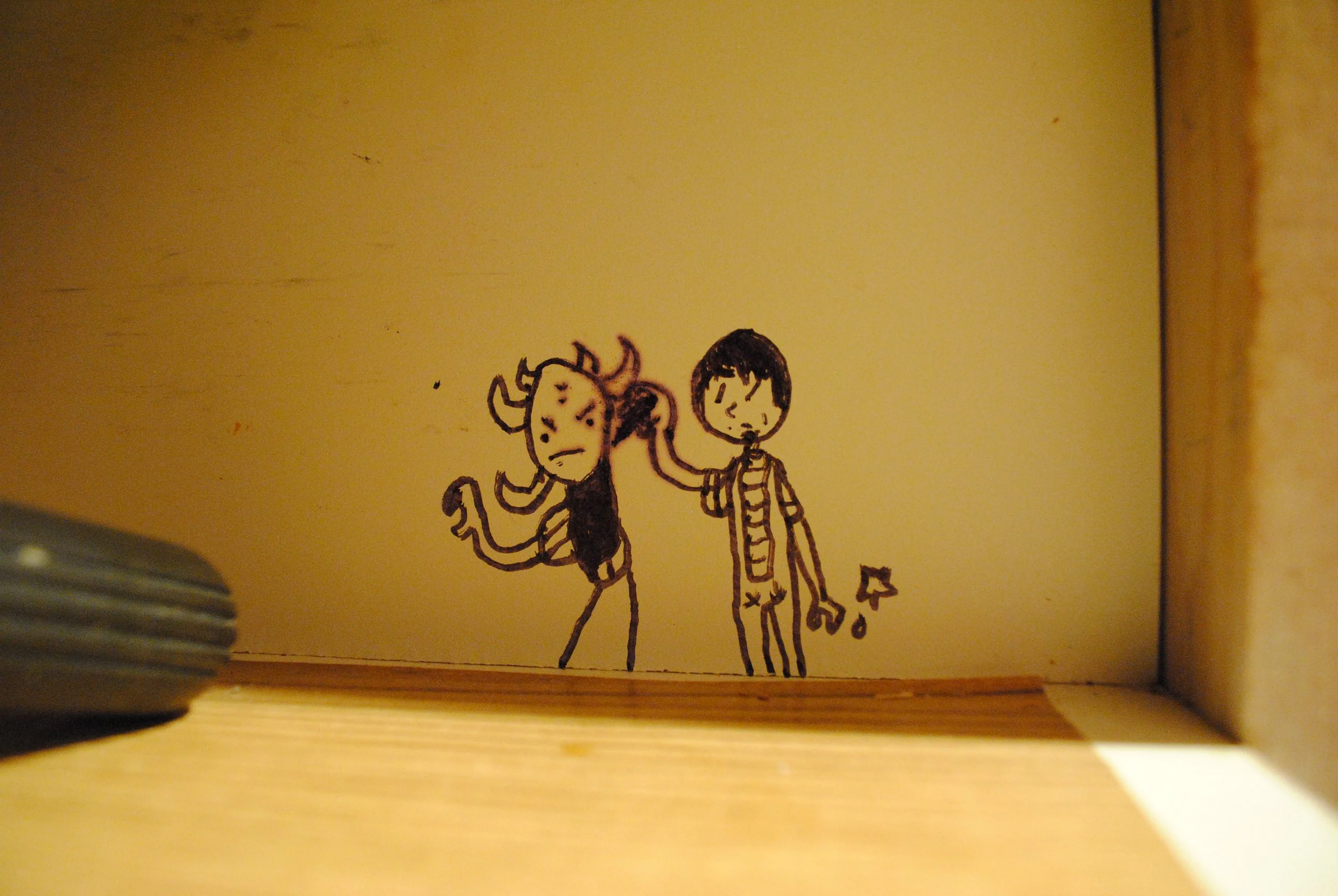
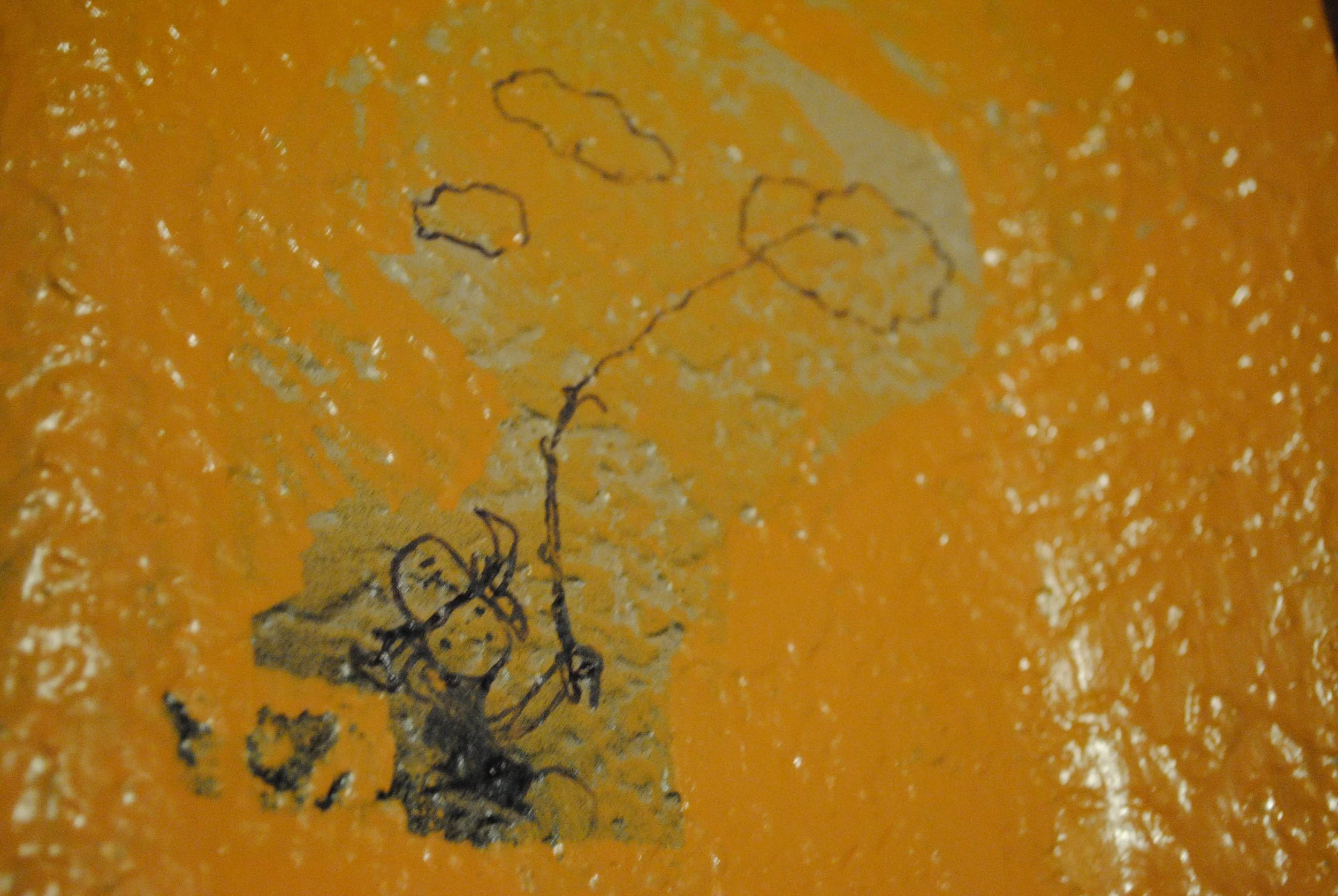
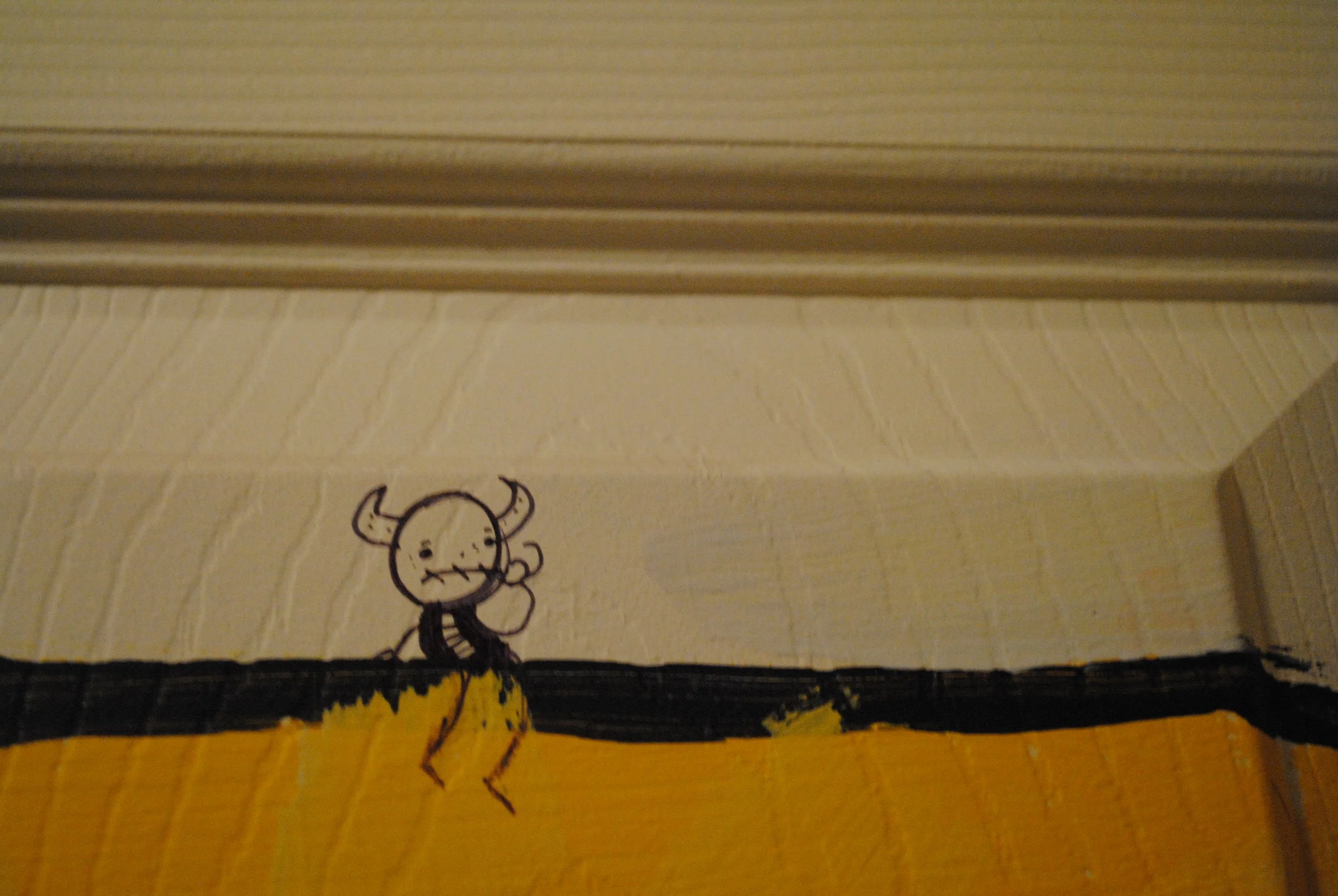
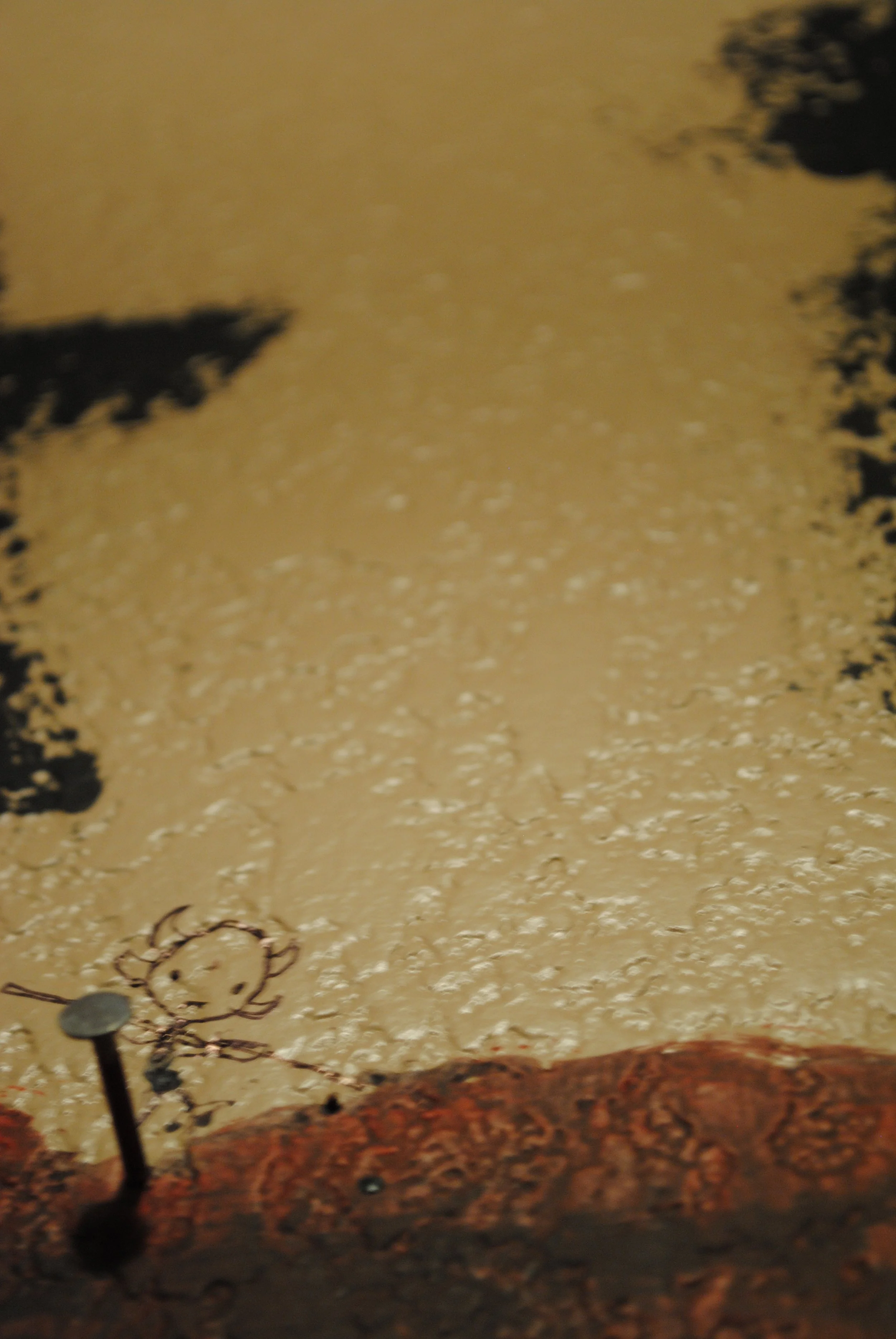
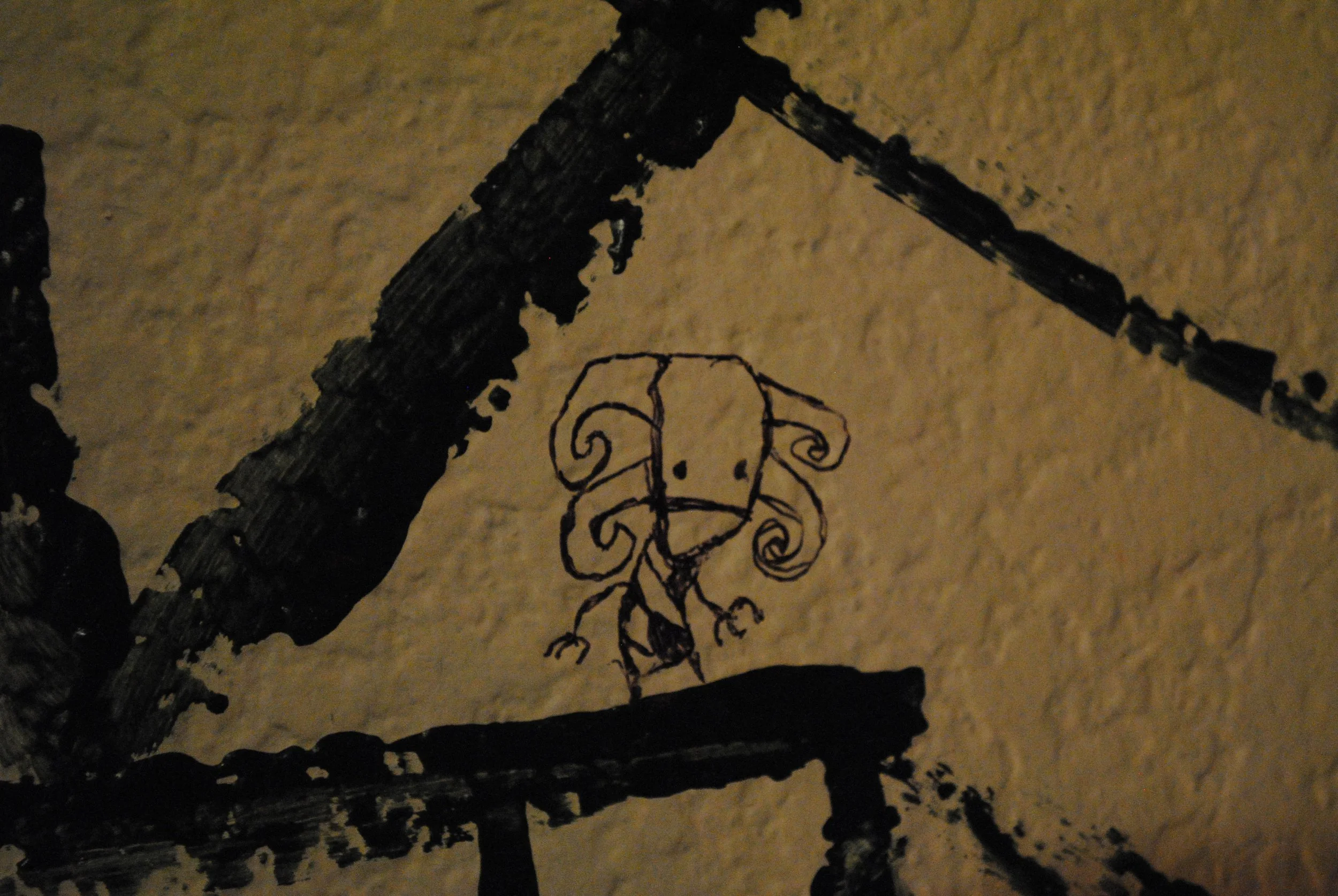
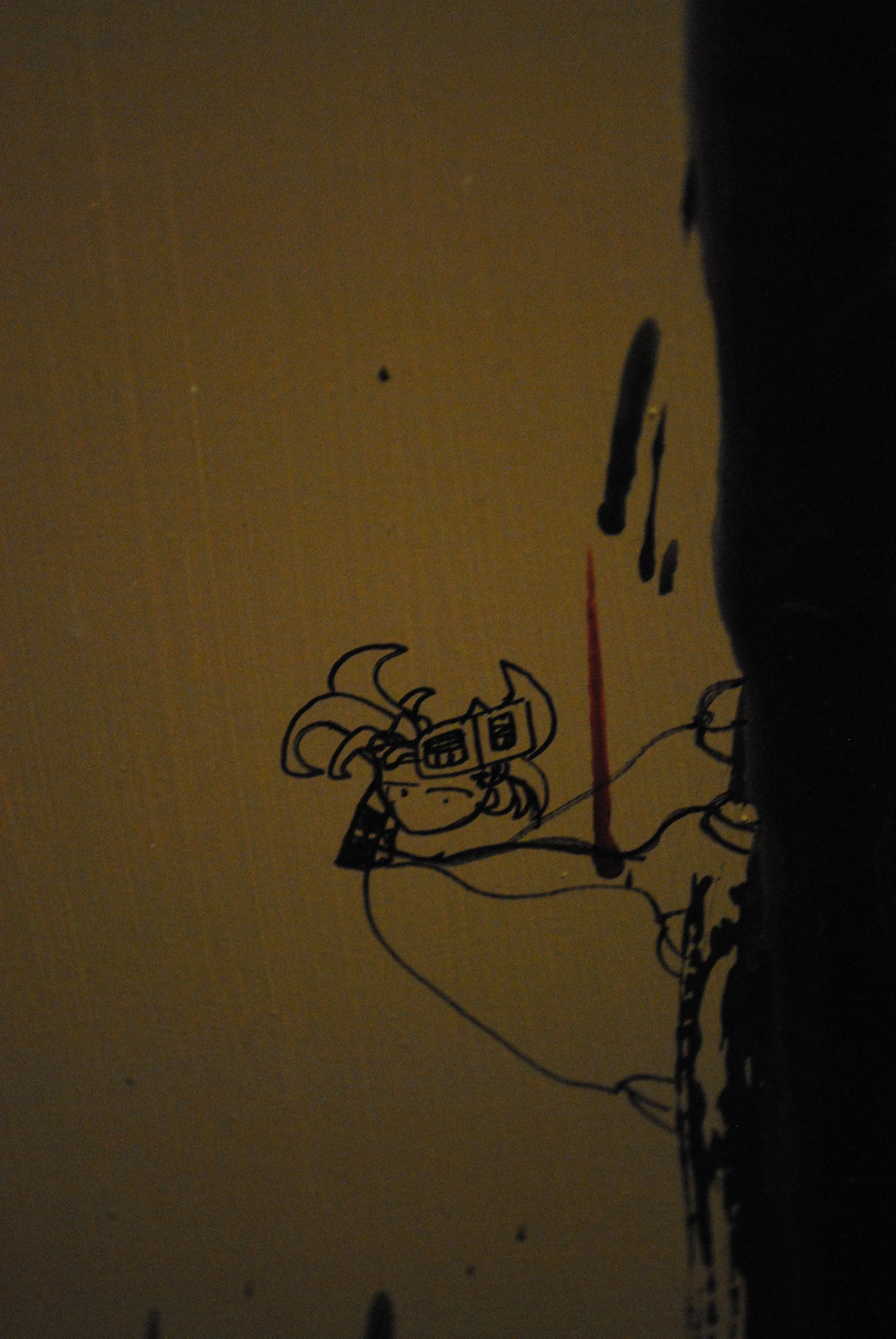
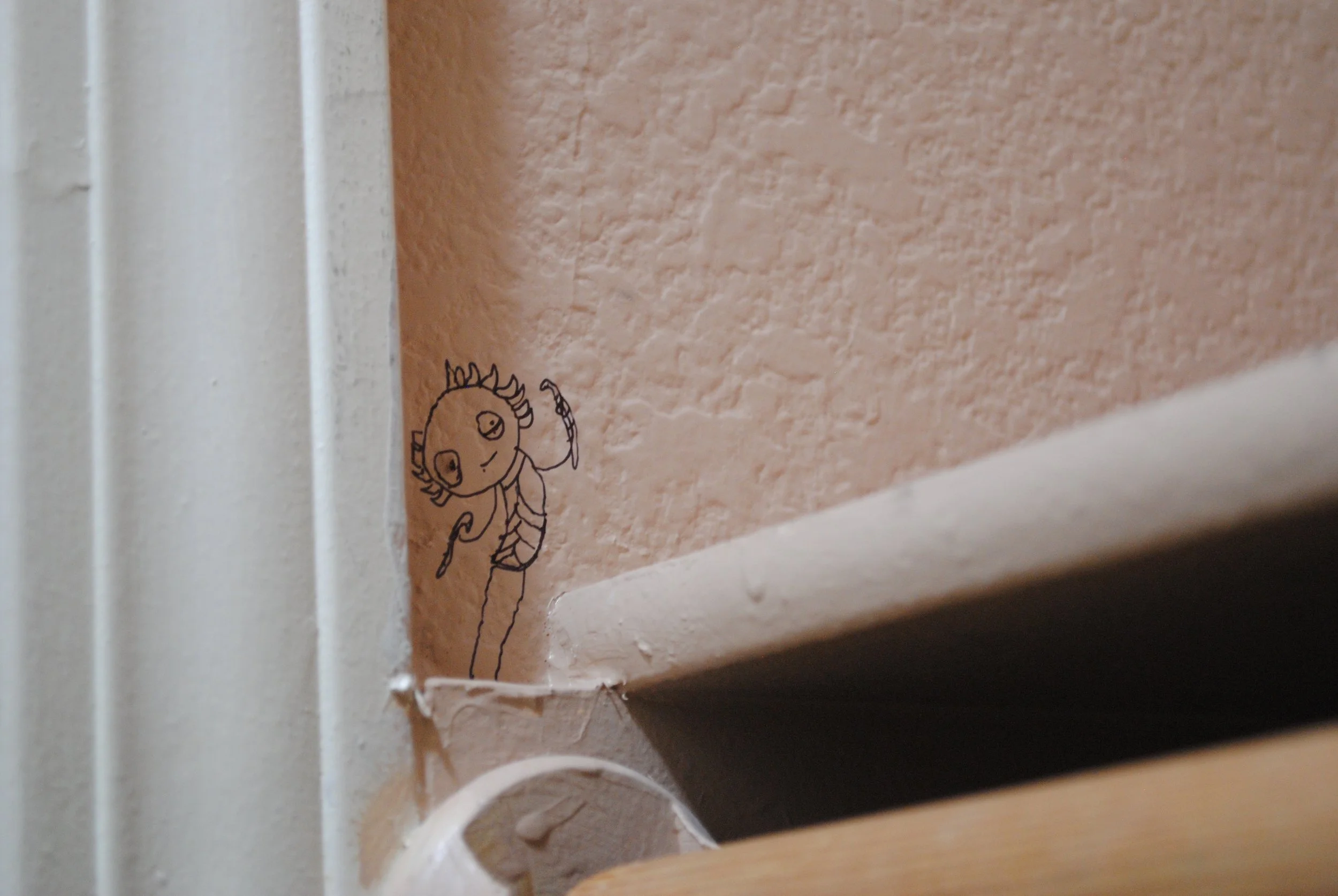
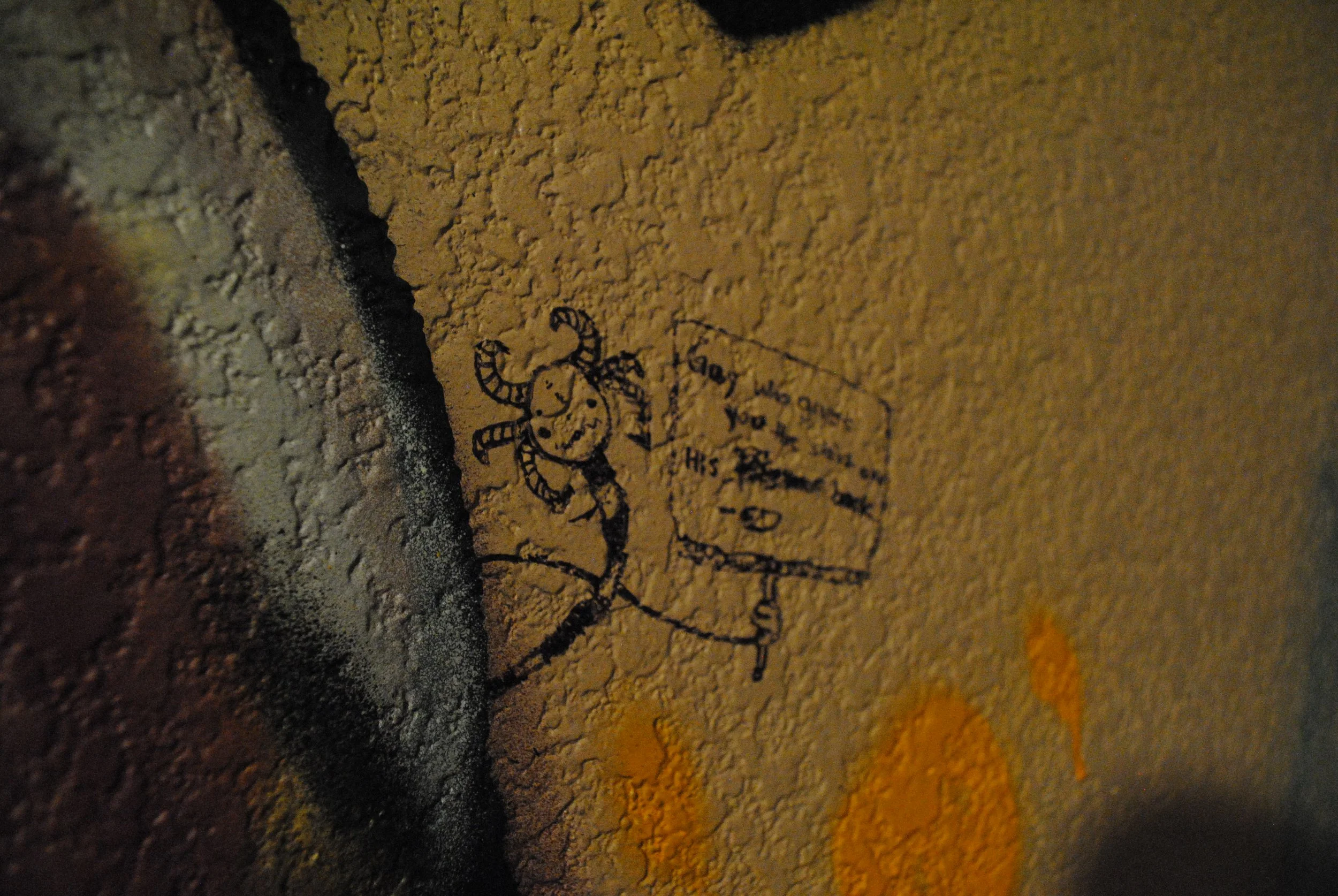
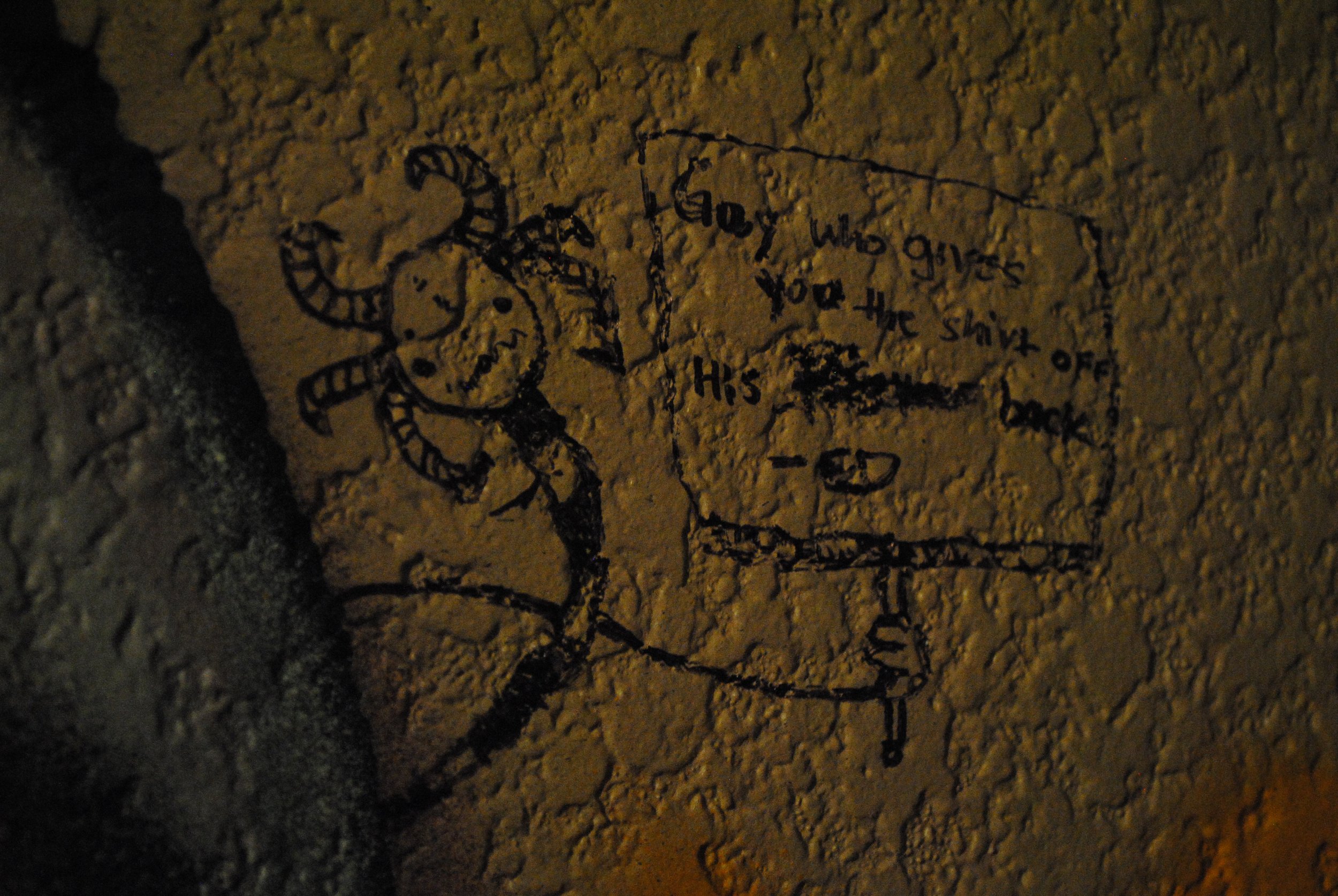
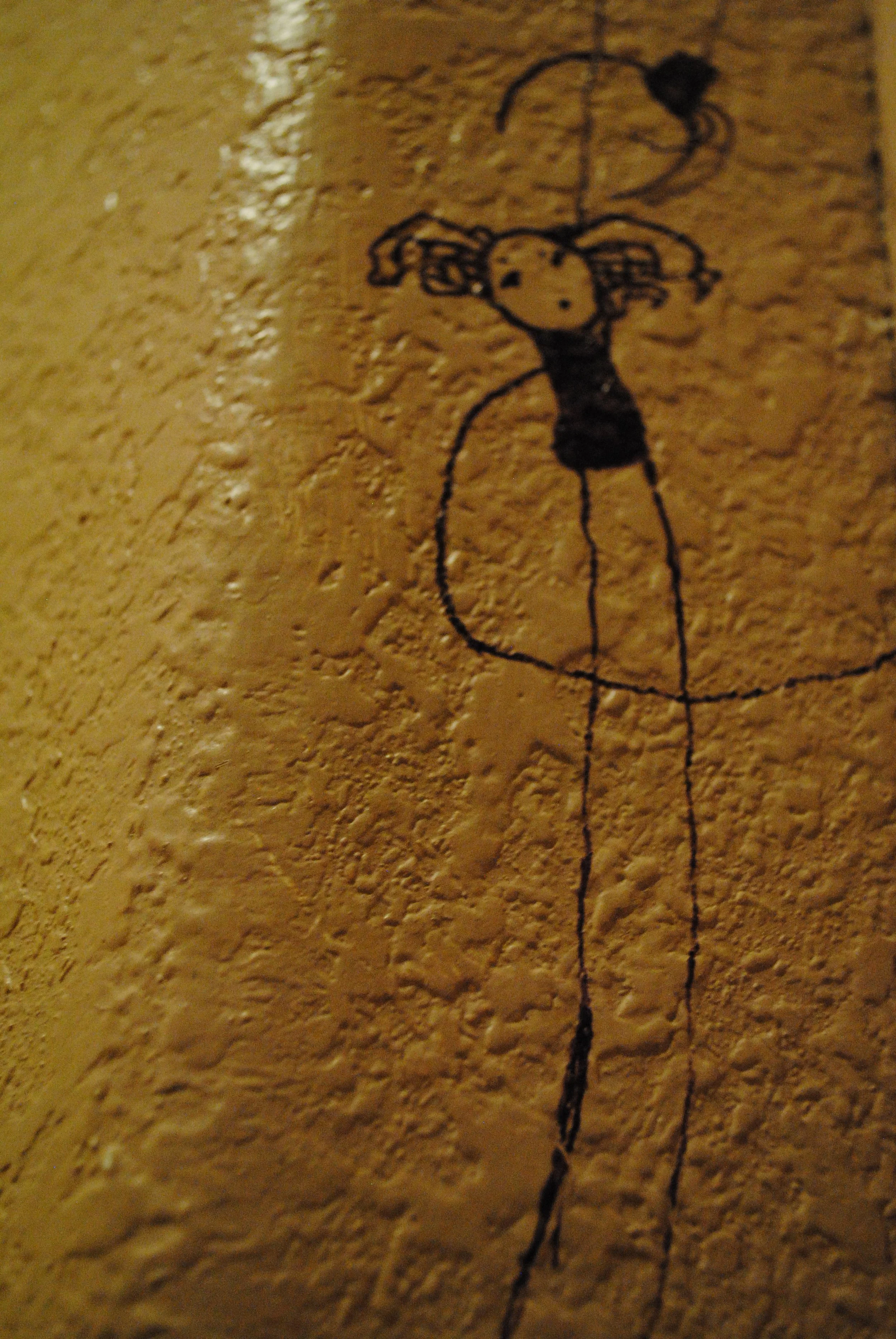
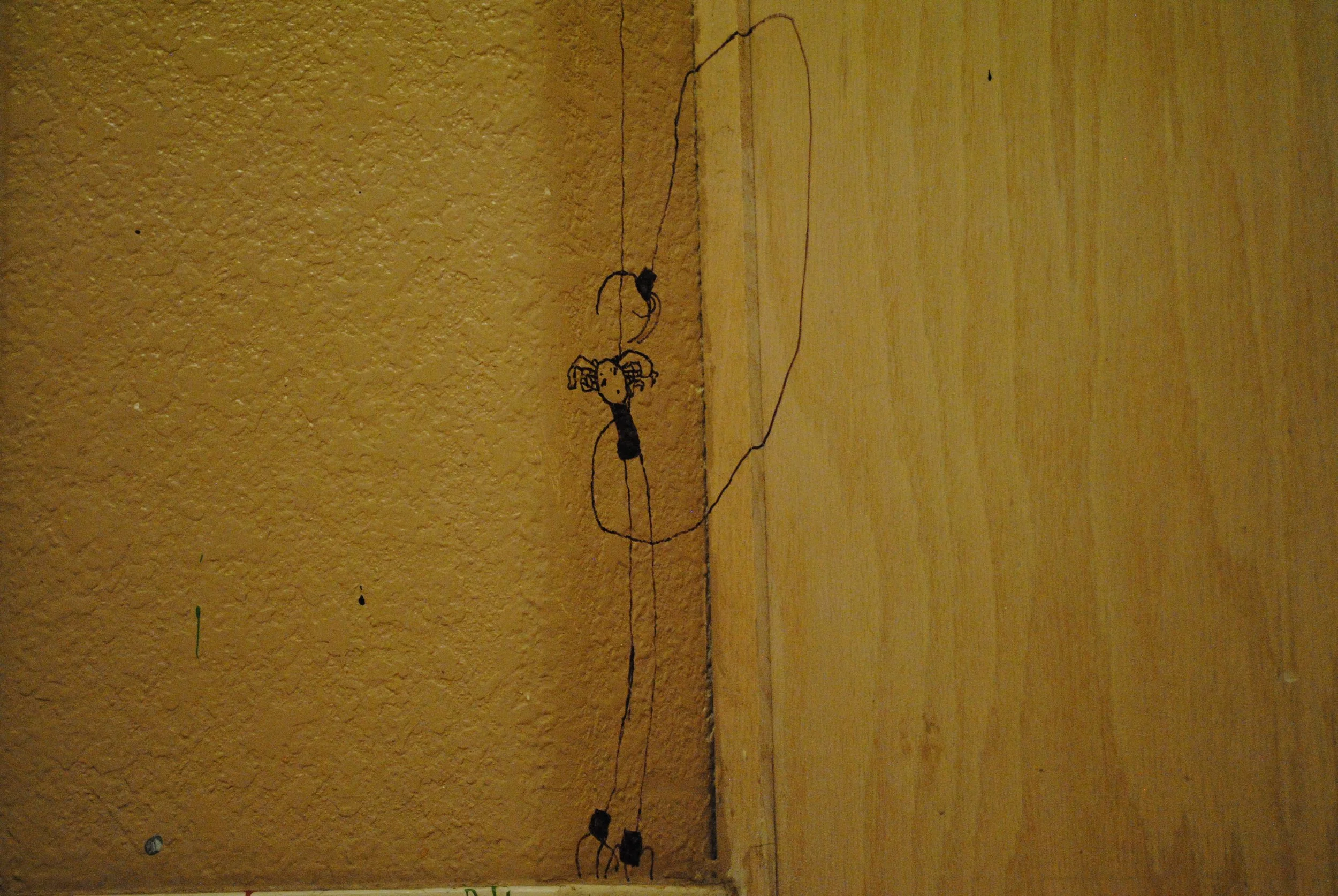
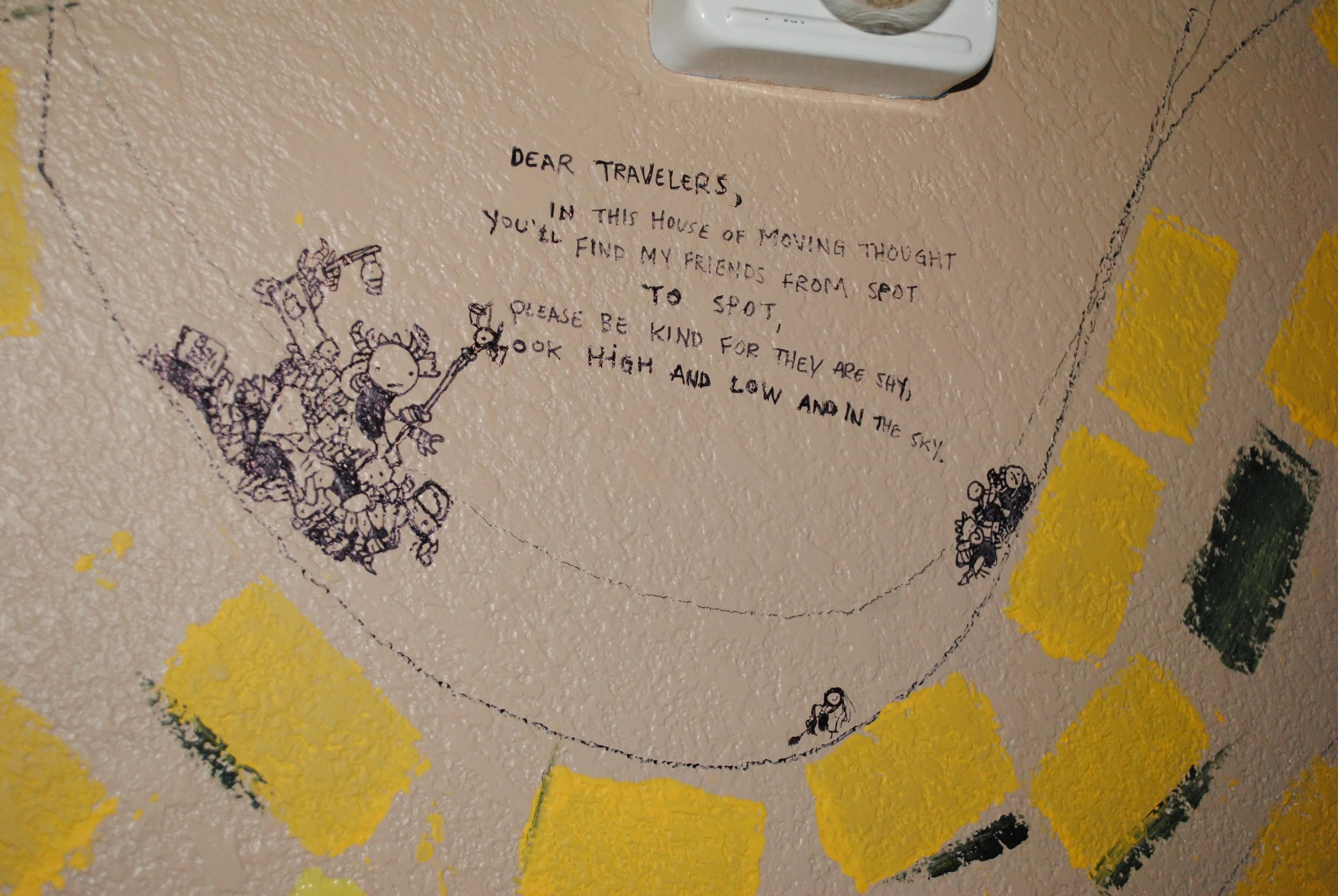
In spare moments, when nobody was around or when I didn’t feel like adding to the door directly, I began hiding small demons throughout the apartment. Tiny figures tucked into other people’s work. Faces peeking from corners. Shapes embedded quietly into murals that weren’t mine.
They weren’t meant to disrupt anything. They were meant to exist unnoticed. A parallel layer. Something you’d only see if you were looking too closely or had been there long enough.
One day, much later, and late into the night, something inevitable happened. The call came.
My friend called and said the owner was coming back very soon and that everything was going to stop. The walls would be painted over. The work would disappear. The apartment would revert back to being an apartment.
We both knew that the door couldn’t stay.
So we planned what can only reasonably be described as a door heist.
Under the cover of darkness, we took my truck and some flashlights, unhinged the bathroom door, and removed it quietly from the apartment. Then we high-tailed it out of there. Just the careful extraction of a painted object that had outgrown the space it was created in.
The rest of the art in that place was lost almost immediately. Painted over. Erased.
I still play around with the idea in my head that the demons probably lasted a few more days, if even maybe a few hours. I’ve always liked that part.
So, I kept working on the door.
Outside the apartment, freed from its original function, it became something else entirely. I finished it. Tightened connections. Let things settle where they needed to settle. The piece eventually became known as The Gentleman’s Parade.
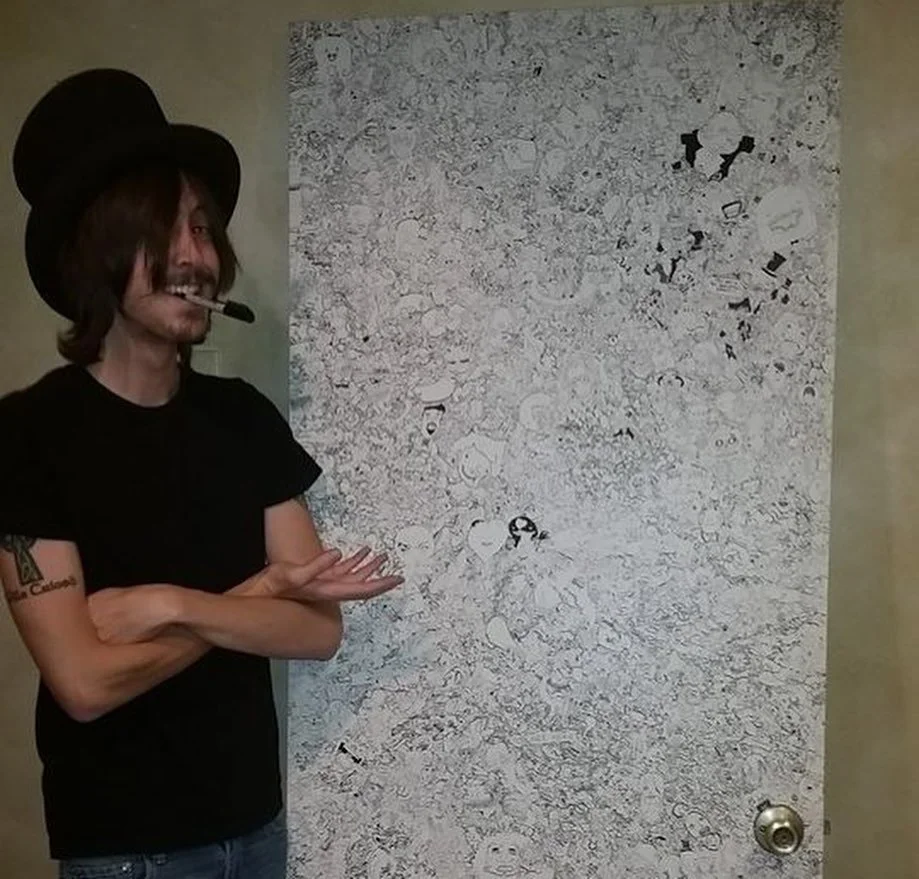
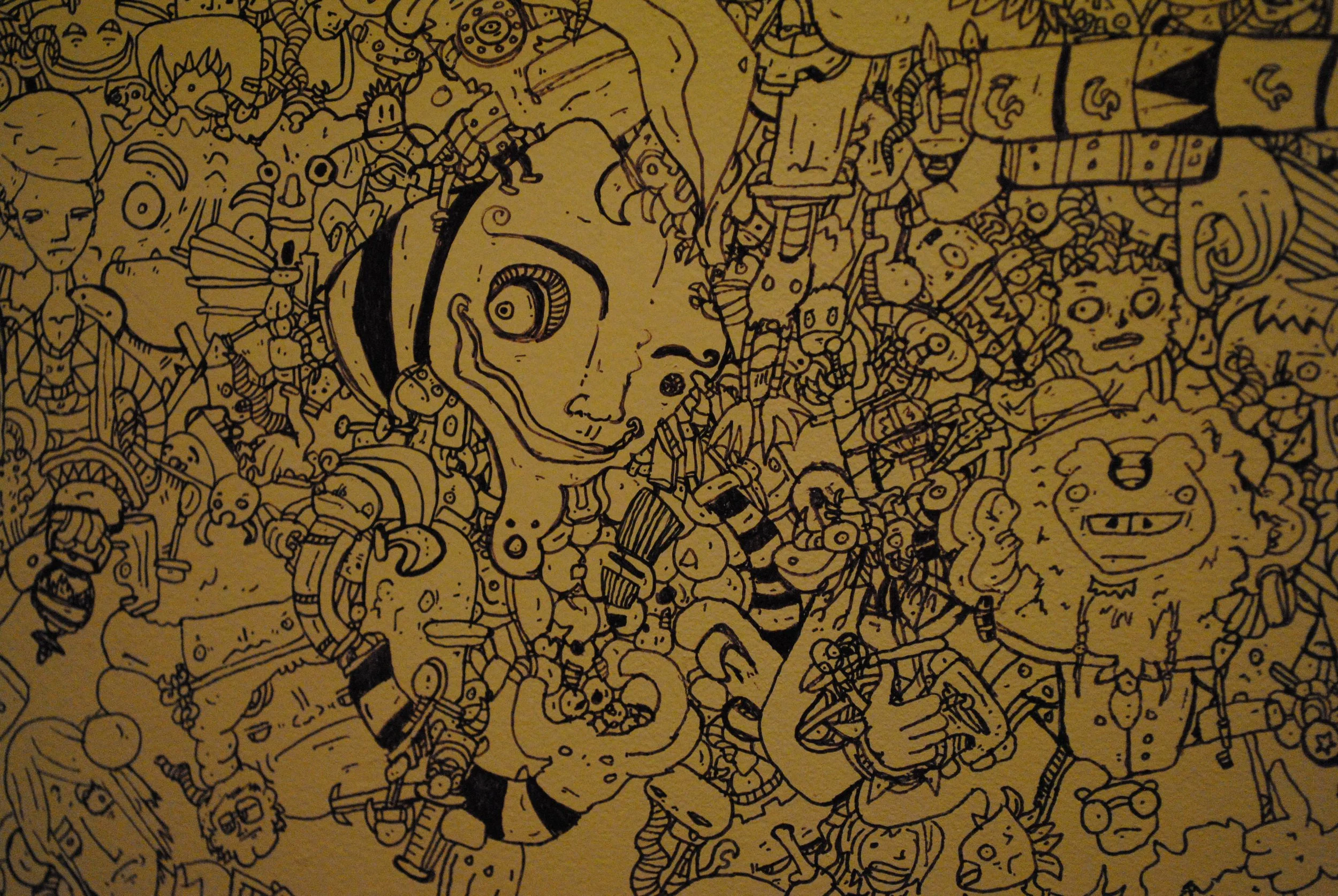
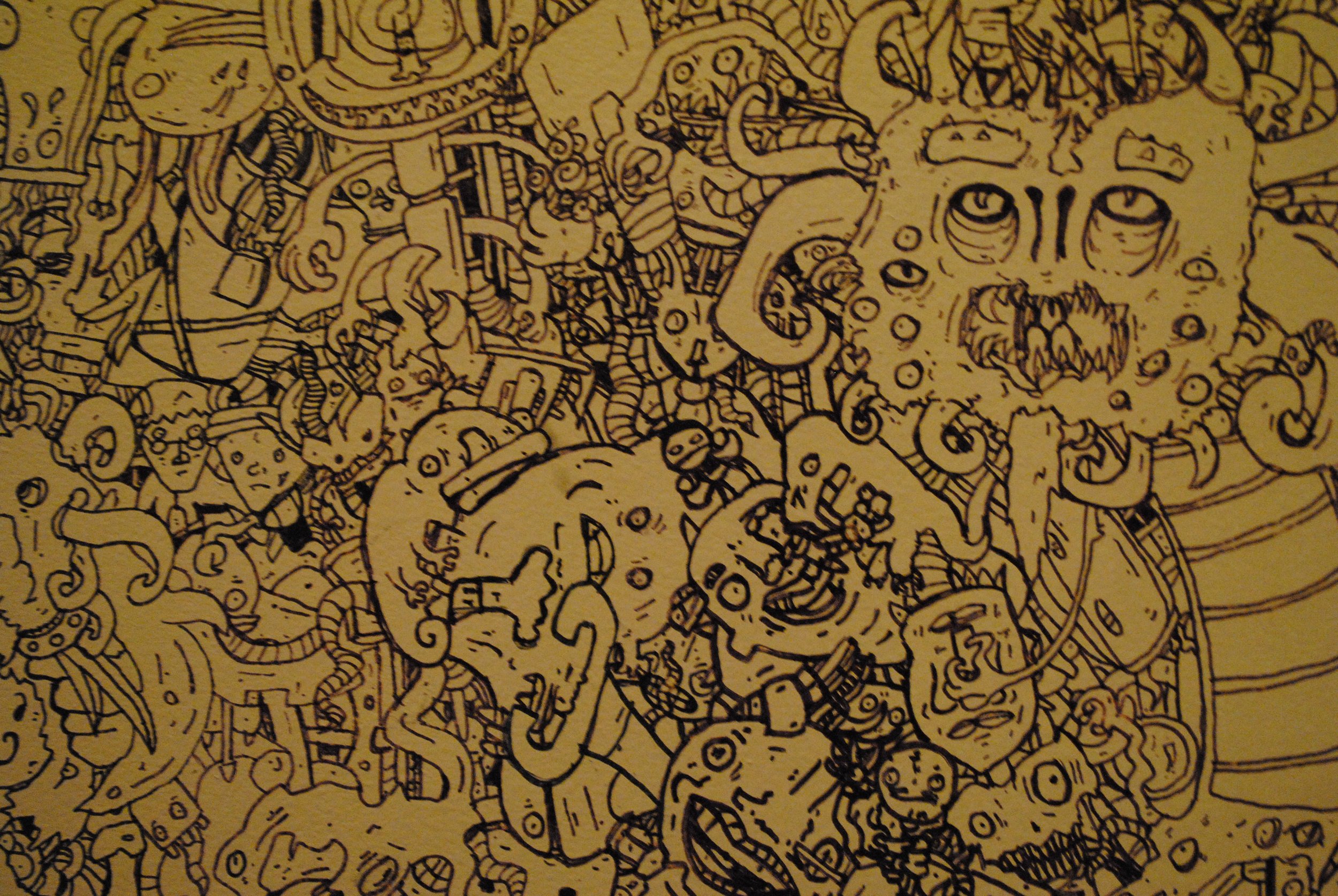
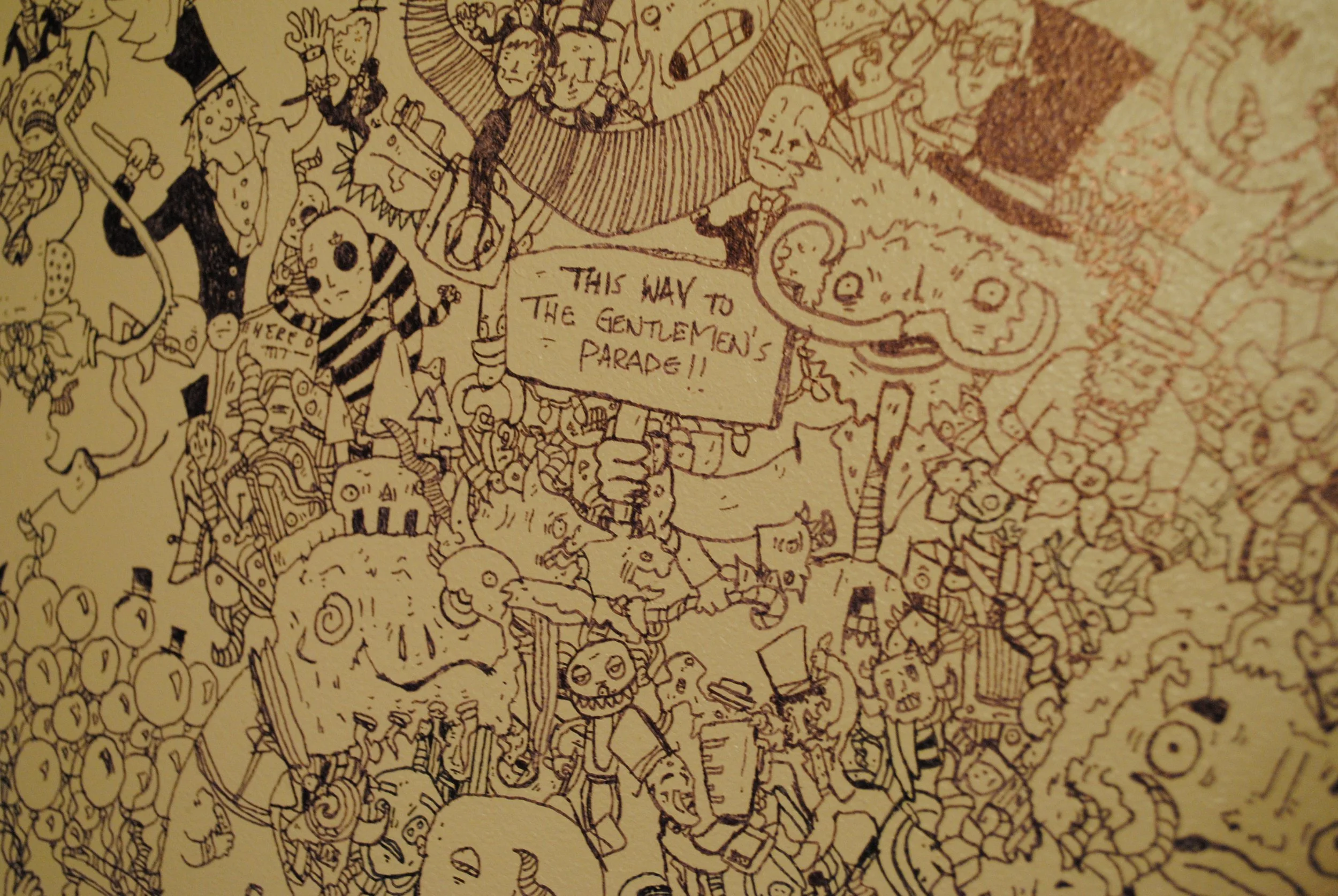
Structurally, it was built with a loose internal logic in a kind of yin-yang approach, though even that feels too tidy in retrospect. The upper portion of the door, moving down toward the center, leaned more toward order: figures arranged with a sense of procession, rules implied rather than enforced. The lower portion pushed upward with more chaos: denser imagery, less hierarchy, more noise.
The middle is where they collide.
Nothing is truly clean or truly chaotic in the piece. It’s all clutter. Though there was an intention in the imbalance. A sense that order and disorder weren’t opposites so much as pressures pushing against each other from different directions.
Once it was finished, the door didn’t stay with me.
It was handed over to Zappos and hung in their gallery space. After that, it was reportedly given to an art gallery somewhere. The details get vague from here, not because anyone is hiding them, but because I wasn’t around. I was living in China when all of that happened. Emails crossed time zones. Decisions were made without me present. The object moved on.
I’ve never seen the door again.

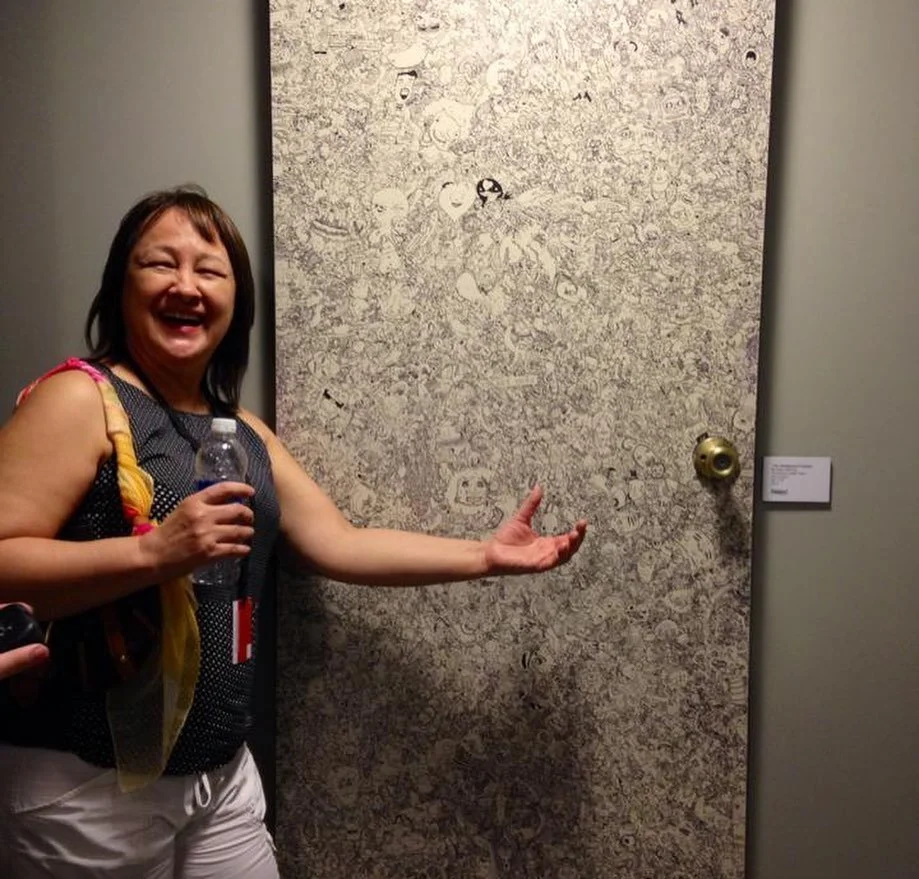
I don’t know exactly where it ended up. I don’t know who owns it now, or whether it still exists in the form I last touched. It might be hanging somewhere. It might be in storage. It might have been damaged, reframed, altered, or forgotten.
And that feels right.
The Gentleman’s Parade was never meant to be static. It came from a temporary space, was removed under pressure, finished in motion, and released without ceremony. It was part of a larger pile that keeps rearranging itself as time goes on.
I still think about that door sometimes. Not as a lost object, but as a reminder that work doesn’t need permanence to matter. Some things exist best as transitions. Some projects are defined not by where they end up, but by how they moved through the world before disappearing again.
That door did its job and I was just happy to be part of the parade.